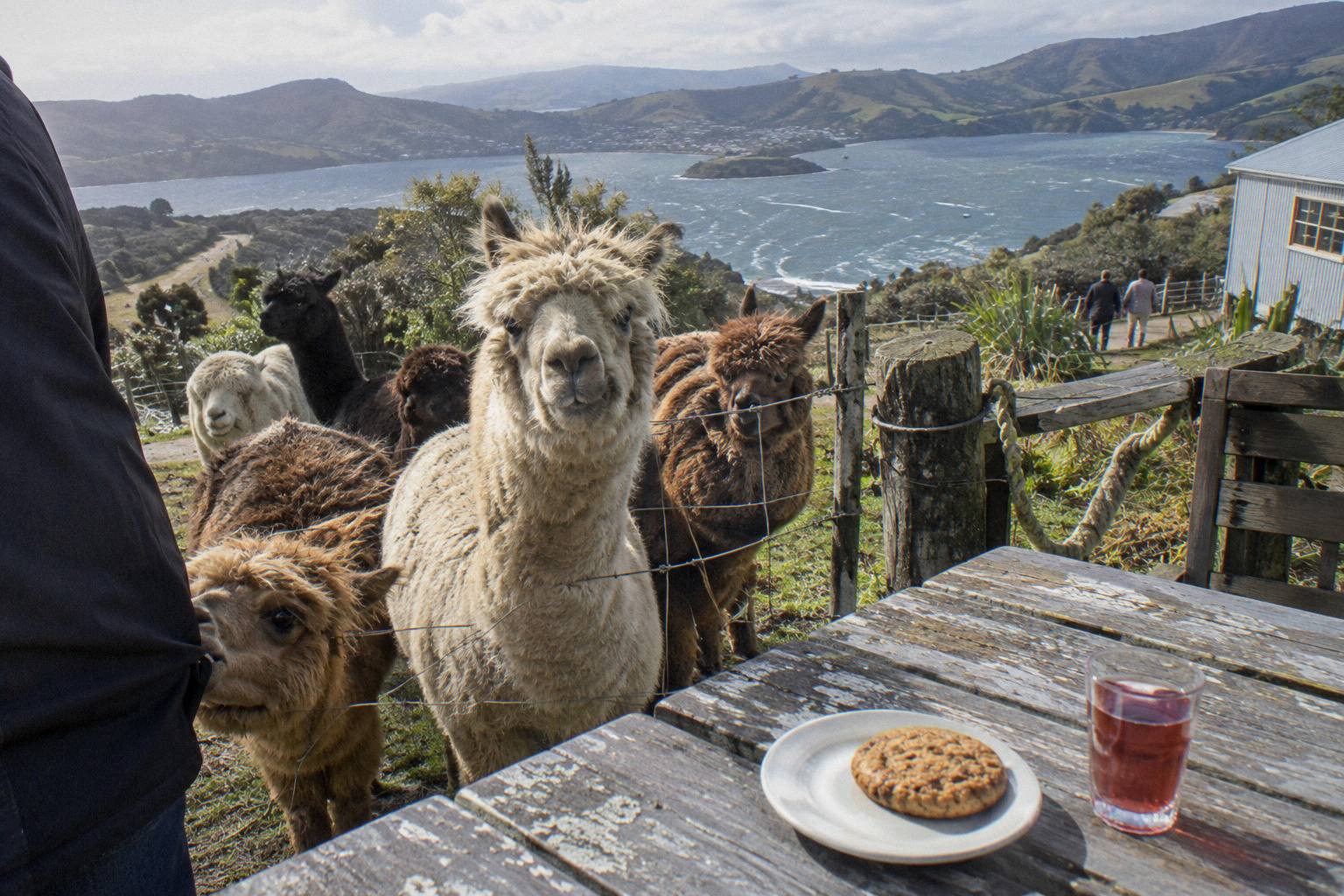
Where Can I See Llamas And Alpacas?
The honest answer for the Akaroa area: where to see alpacas near Christchurch and Akaroa, what a visit involves, and why llamas are the part of the question nobody can promise.
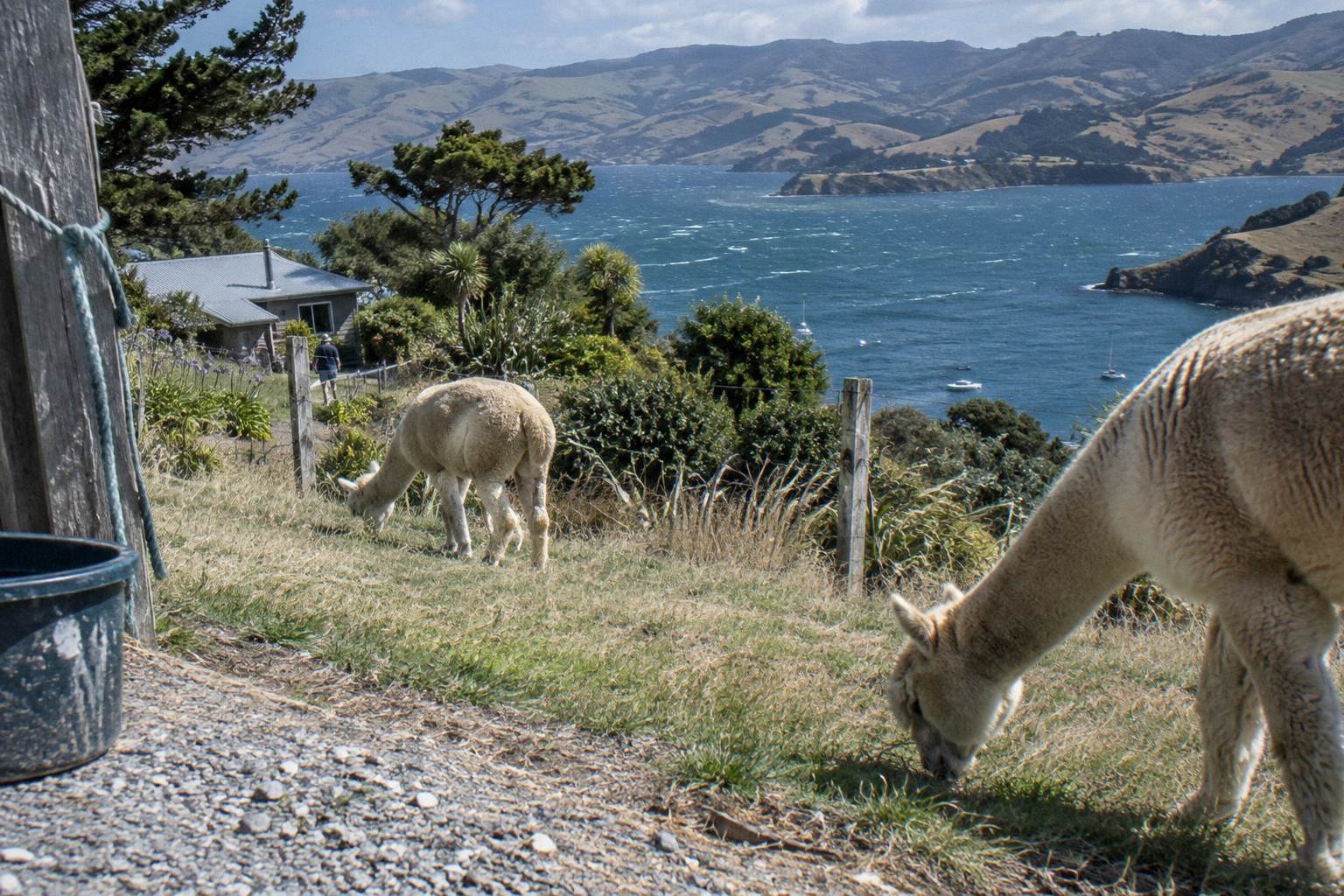
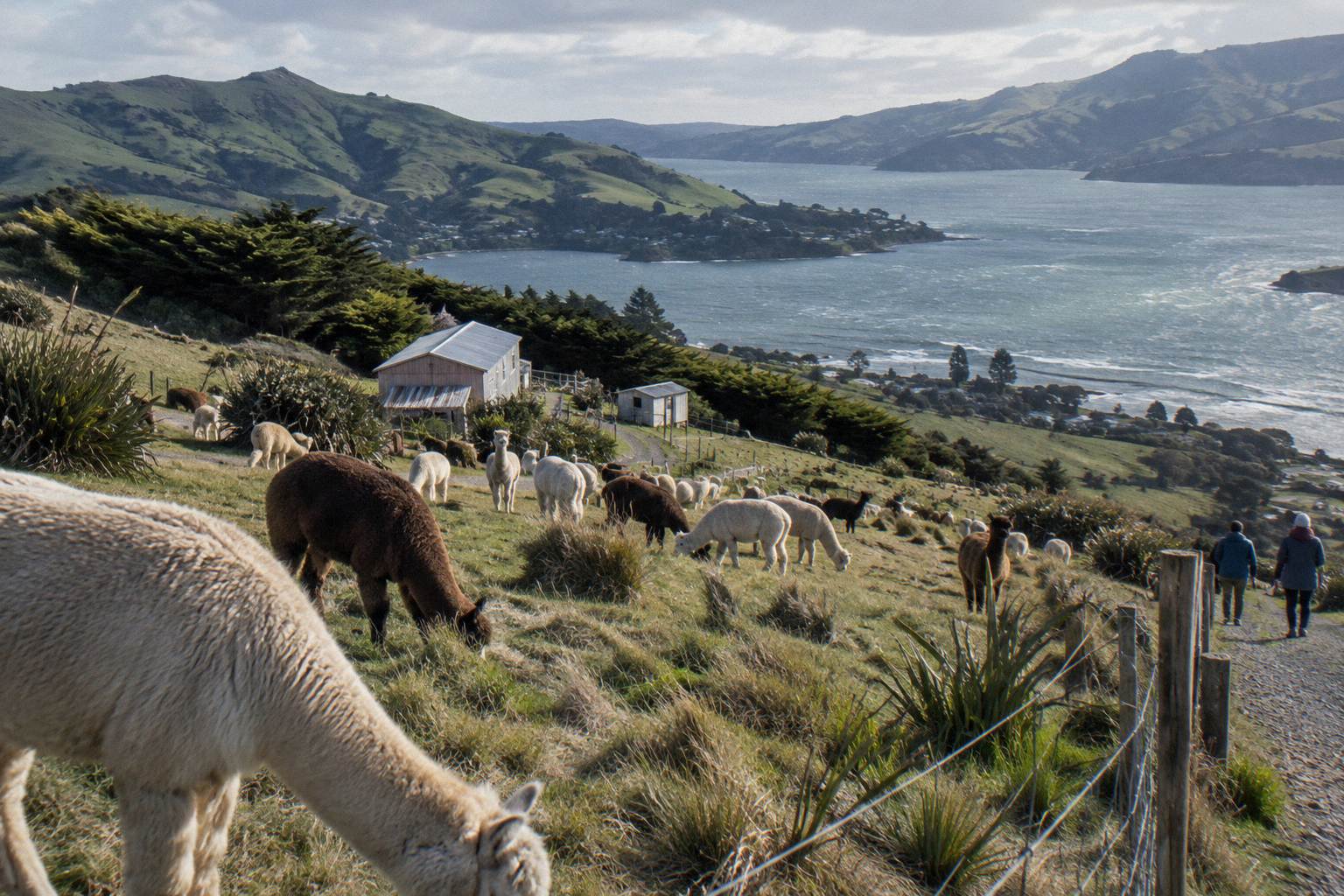
In the Akaroa area the answer is alpacas, not llamas: Shamarra Alpaca Farm at 328 Wainui Main Road, French Farm, runs guided farm visits at 11am, 1pm and 4pm, seven days a week, closed only on Christmas Day. The farm holds over 170 alpacas on a harbour-side hillside about 20 minutes from Akaroa village. No farm in this area advertises llamas to visitors, and no booking page here promises them.
Alpacas and llamas get mixed up constantly, and the confusion starts with the question itself. General references note that alpacas are often confused with llamas; the two are related South American camelids, but they are different animals, and a farm that keeps one does not necessarily keep the other. Everything you can actually book around Akaroa features alpacas. If a itinerary says "llama farm", it is worth checking whether the writer meant alpacas, because the visits on this stretch of Banks Peninsula are alpaca visits.
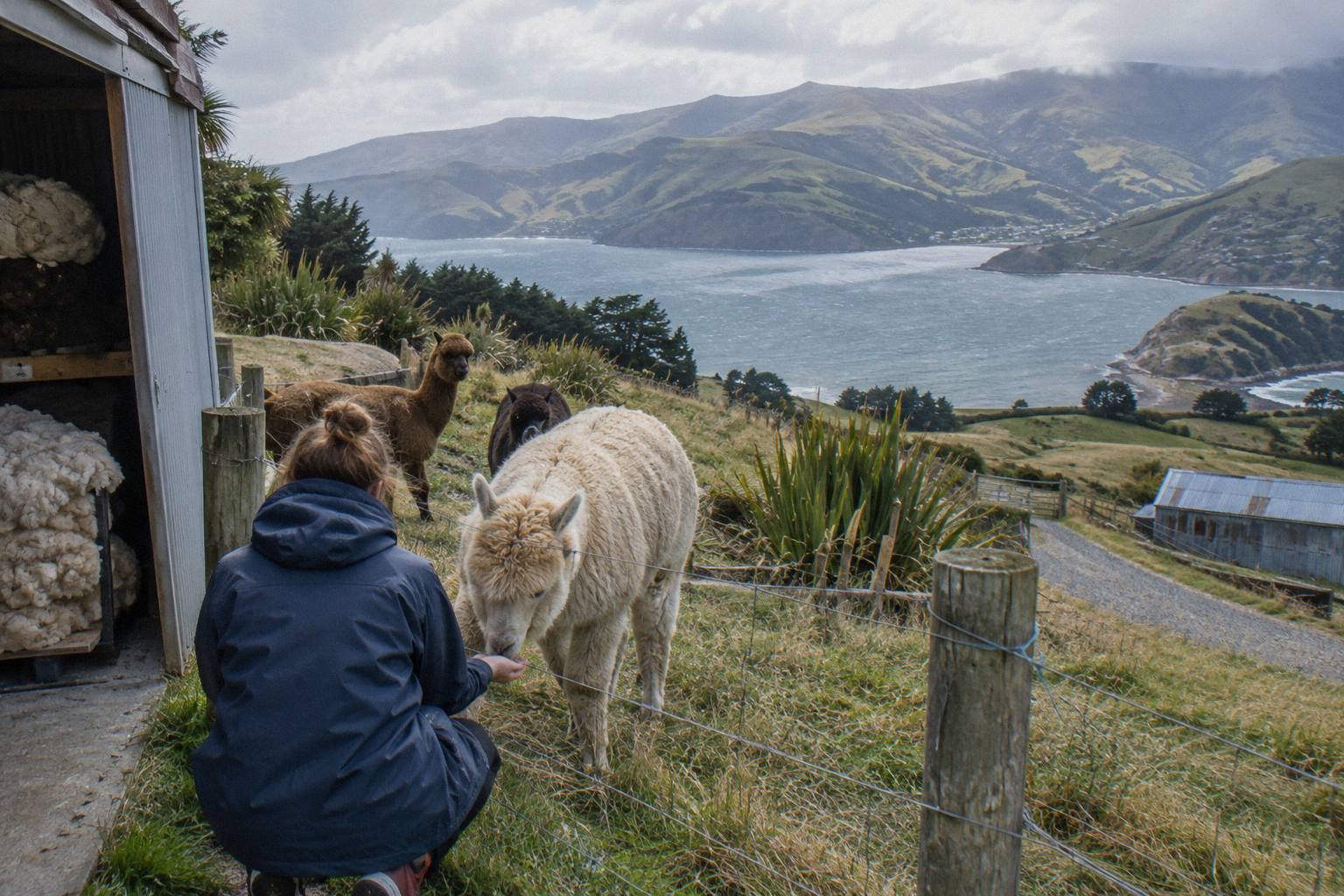
The good news is that the alpaca side of the question has a genuinely strong answer. Shamarra Alpaca Farm Tours, founded in 2004 with five alpacas and now running a herd of over 170, is the only operator in this roster with its own dedicated farm-tour page, and it opens its gate year round. Visitors get a brief introduction to the animals, a safety briefing, a walk through the herd, and the chance to feed the mothers with young, before finishing with a beverage and a home-baked cookie. Tours run in English or Mandarin.
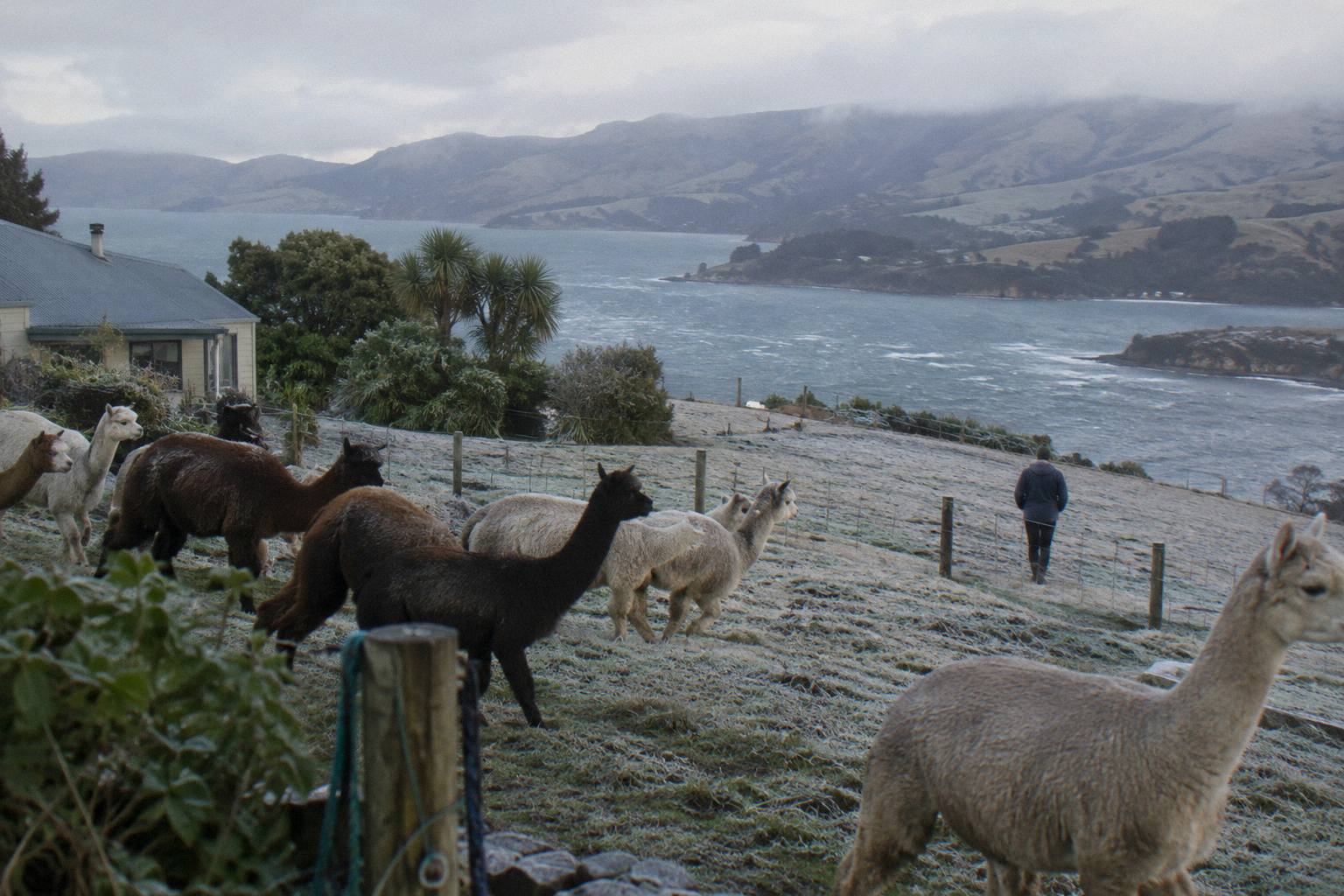
There are three practical ways to reach the alpacas, depending on where your day starts: drive yourself to the farm gate, take a private full-day trip from Christchurch that stops there, or, if you arrive on a cruise ship, pick a shore excursion built around the harbour and a working sheep farm. This page walks through each of them, plus the llama question, the spitting question and the money question, using only what the operators and booking pages actually state.
Which Farm Near Akaroa Has Alpacas You Can Visit?
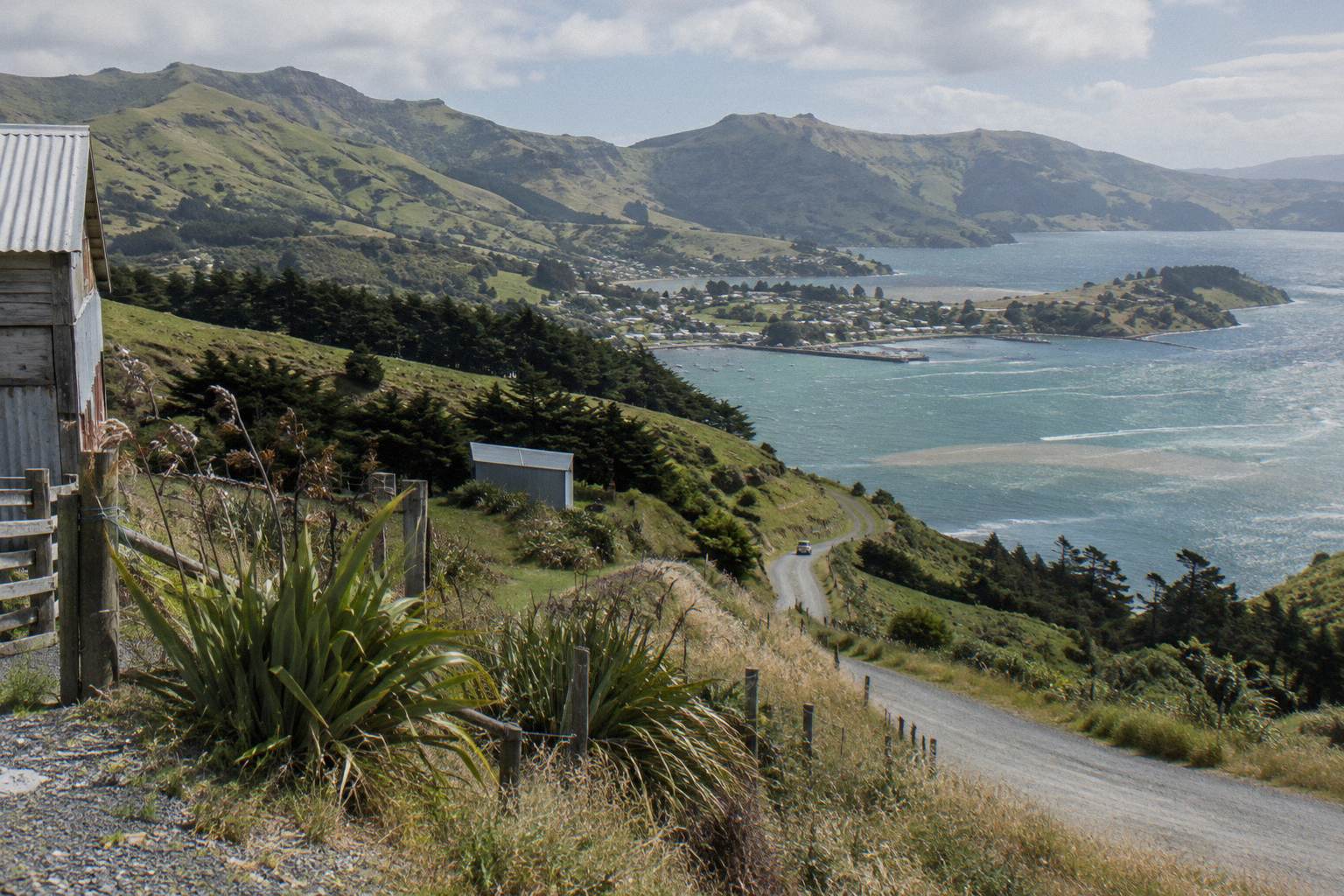
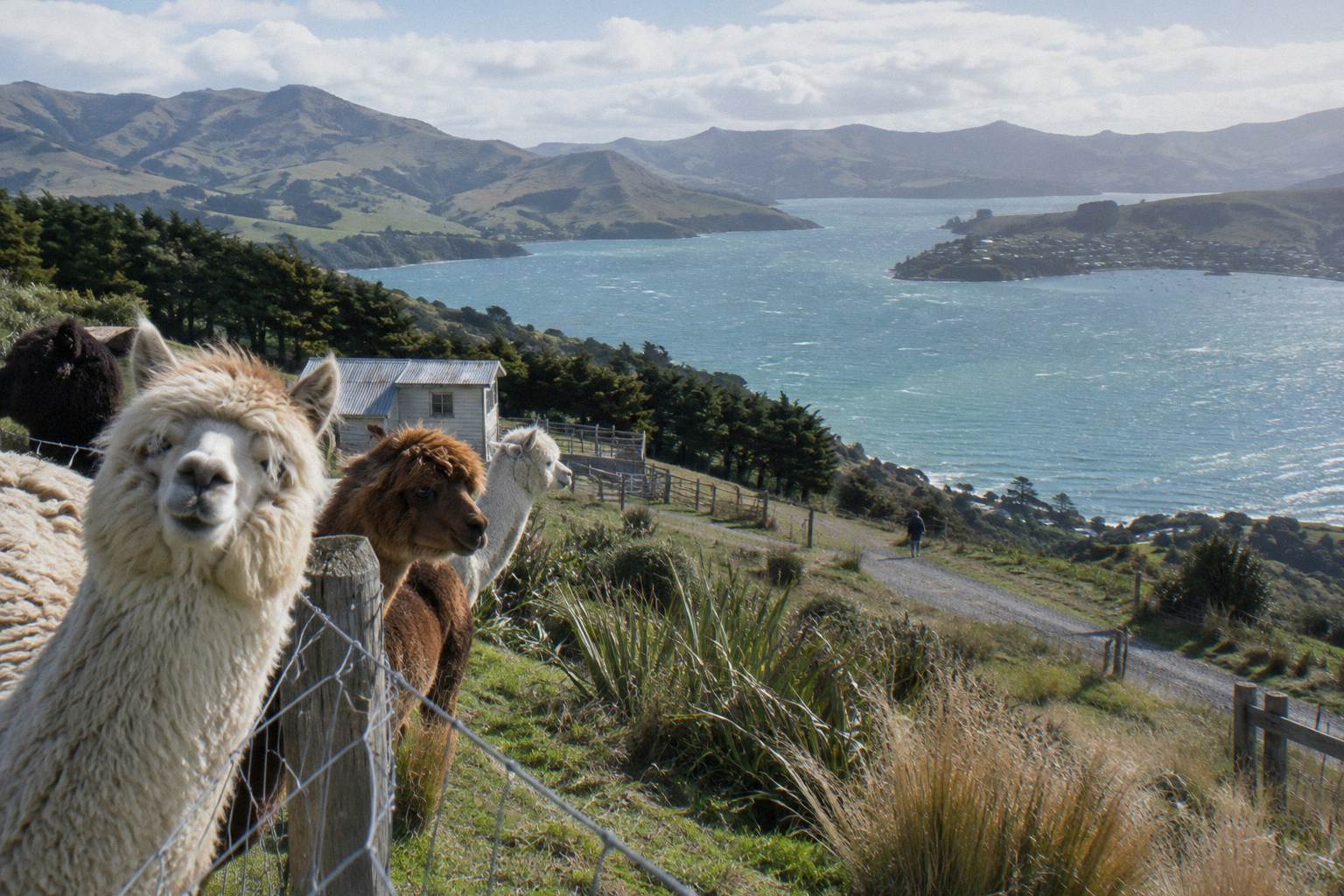
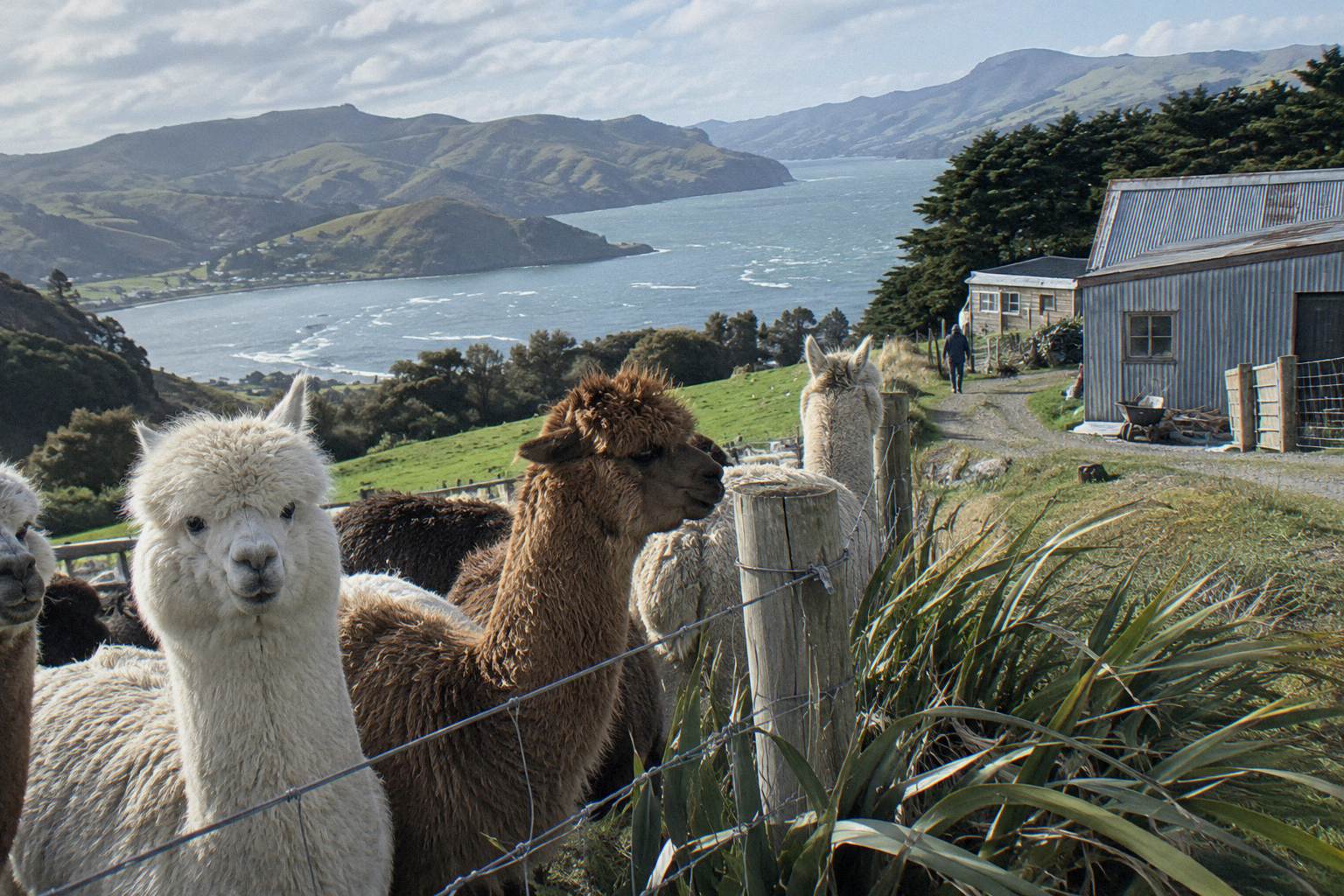
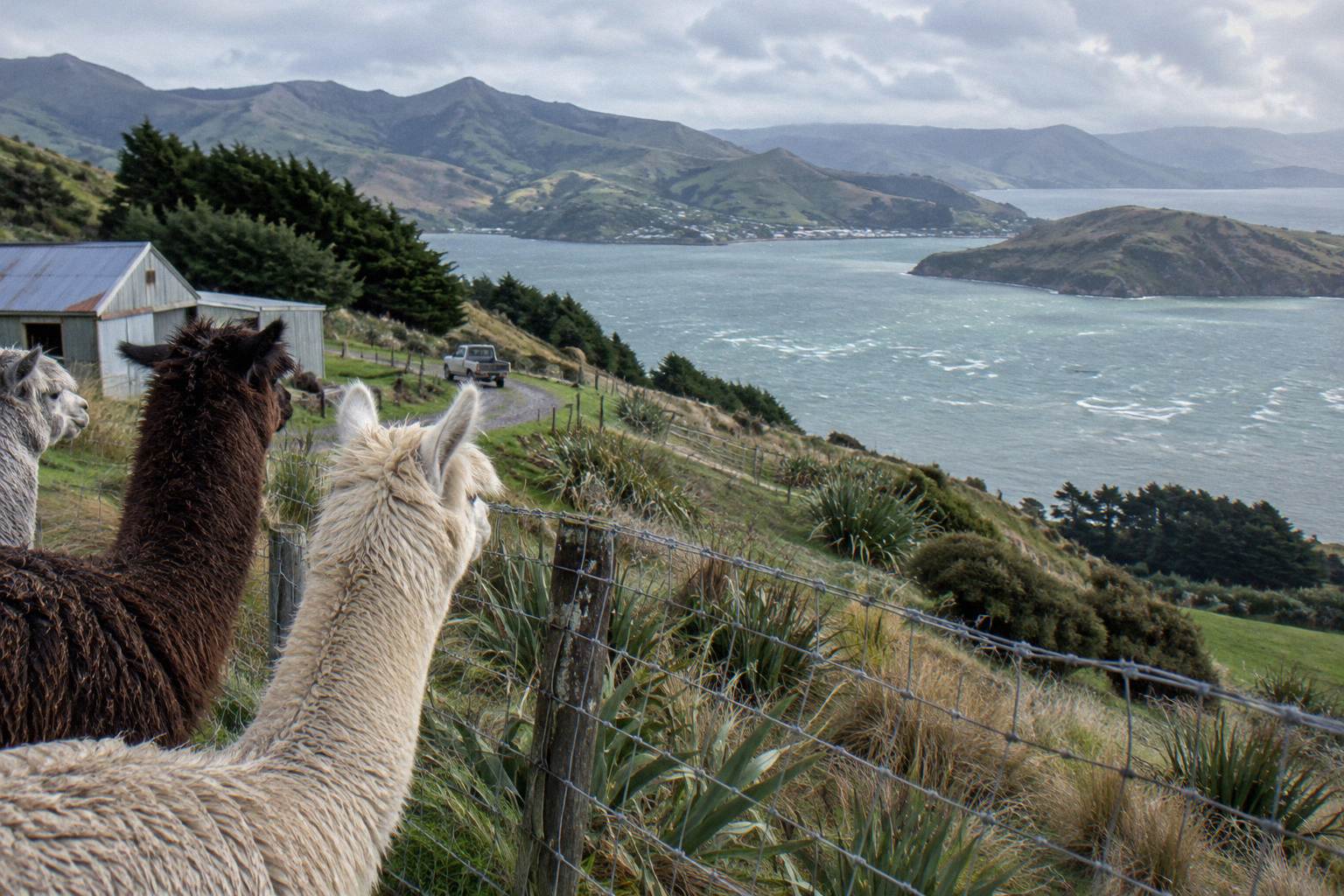
Shamarra Alpacas, at 328 Wainui Main Road, French Farm, is the farm. It sits about 20 minutes from Akaroa village and, by the operator's own directions, 73 km and just over an hour's drive from Christchurch Central. Visits take about an hour and run at 11am, 1pm and 4pm, and the operator marks bookings as essential. The setting is a hillside on an extinct volcano, looking down over Akaroa Harbour.
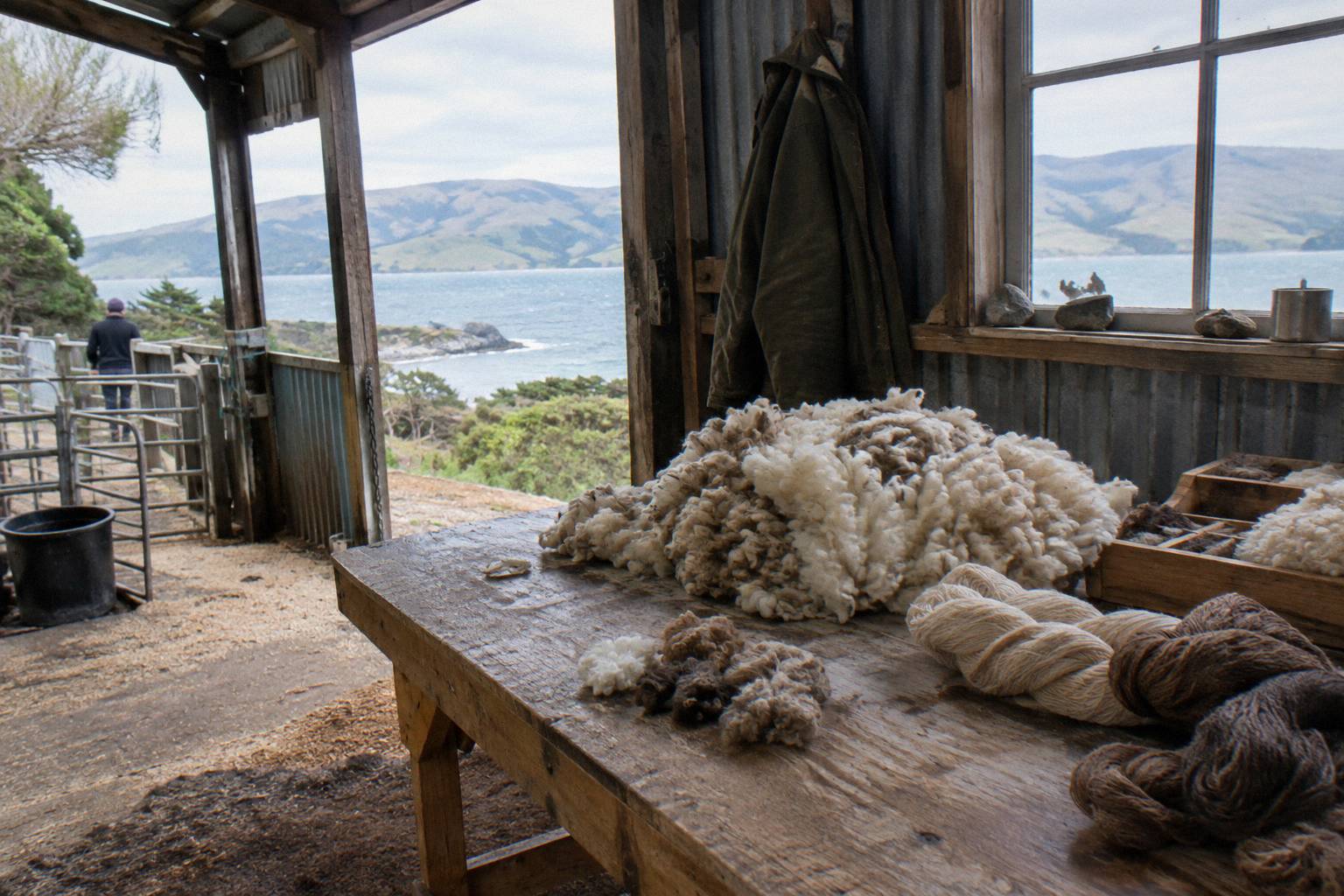
The farm is a family operation. Anya and Frank founded it in 2004 with five alpacas; the herd now numbers over 170 animals, which makes it one of the larger alpaca holdings you can visit in New Zealand. The hour follows a set shape: an introduction to alpacas, a safety briefing, award-winning fleece on display that you can feel, a walk through the herd, feeding the mothers with their young, harbour views, and then a beverage and a home-baked cookie at the end. The Shamarra shop finishes the visit, selling 100% dye-free New Zealand-made knitwear, which is what an alpaca fleece economy looks like when it is done in one place.
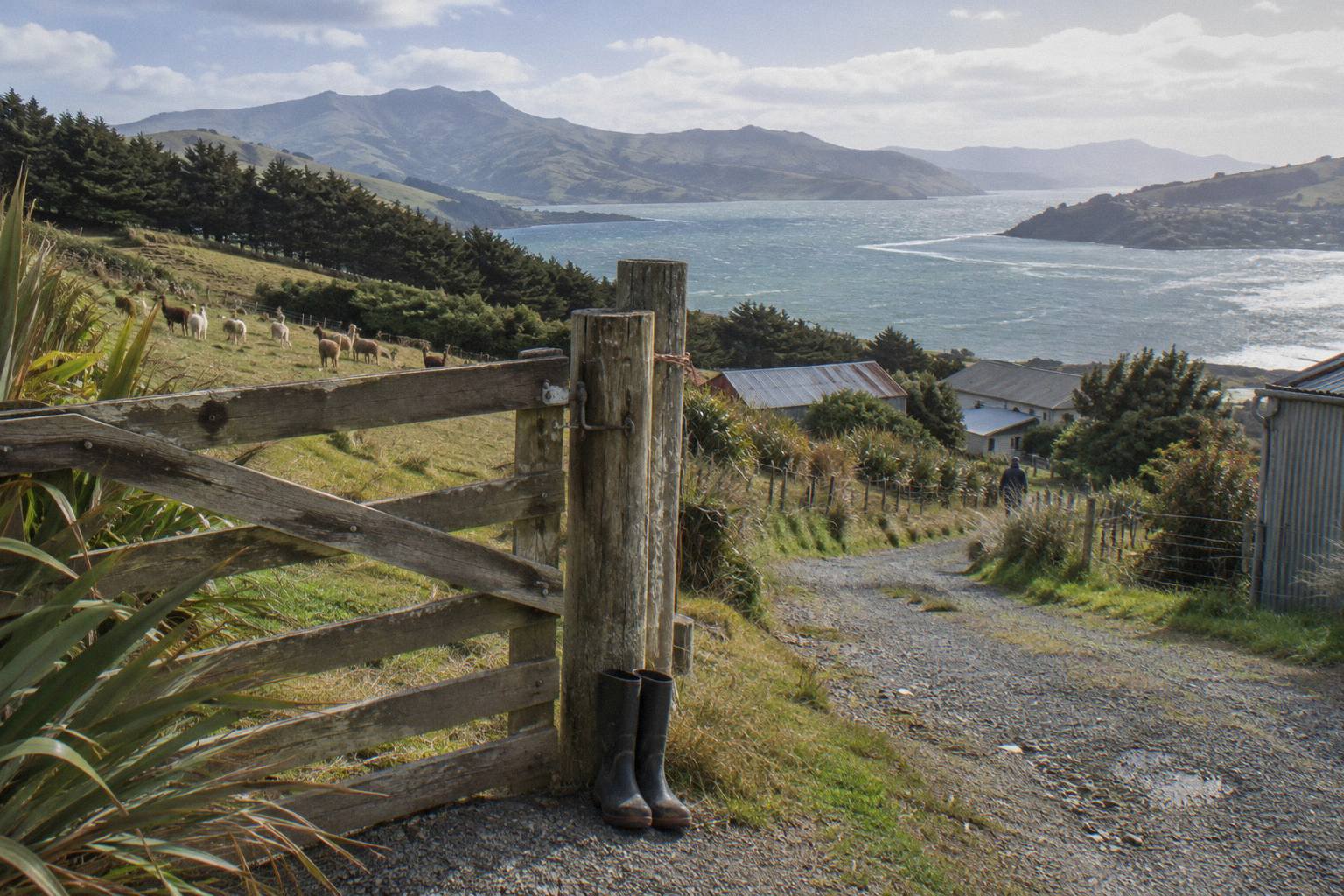
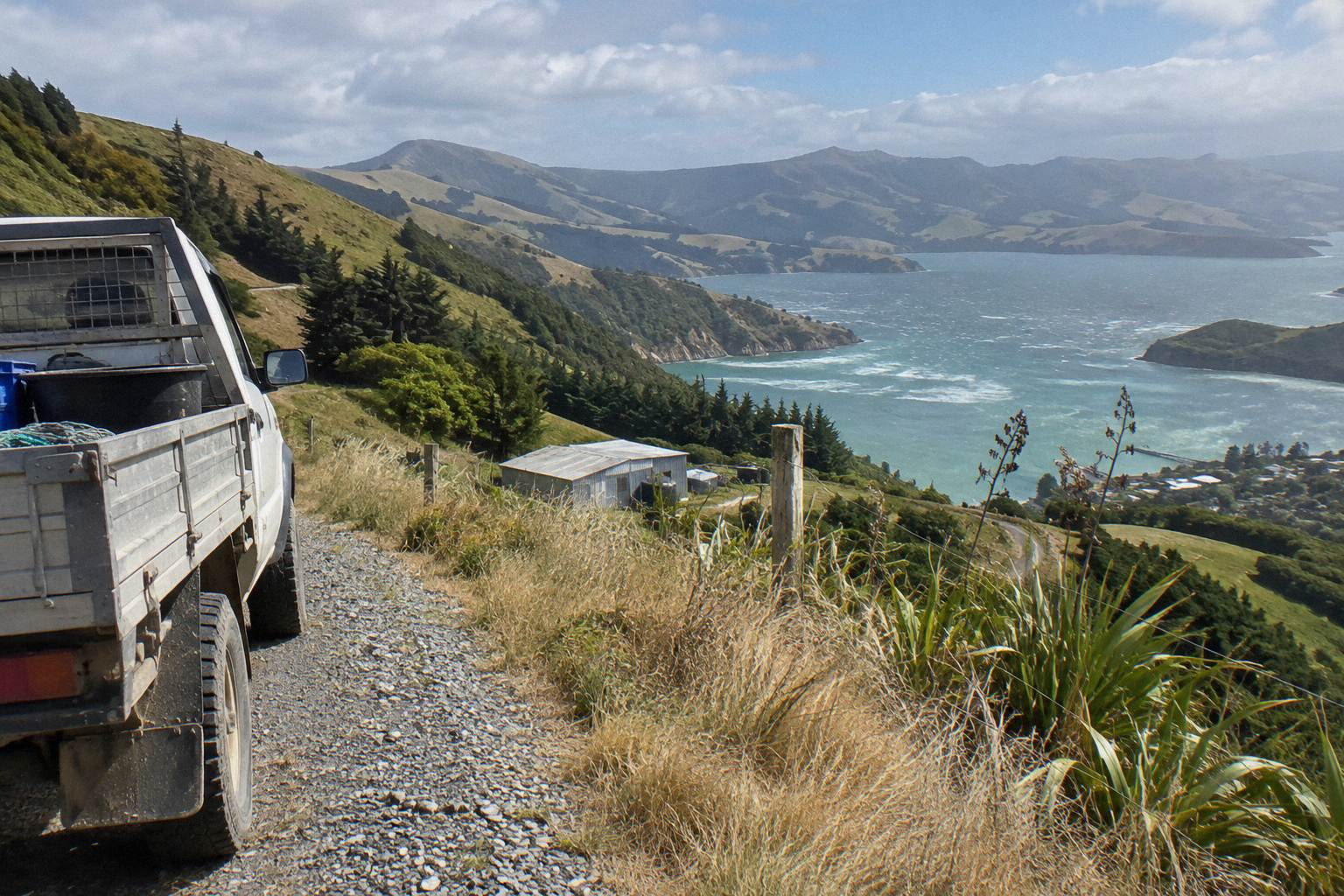
Getting there is on you. The operator provides no transport, so the visit suits self-drivers, people staying in or near Akaroa with a car, and organised tours that include the stop. If you are driving from Christchurch, the official visitor site for the region gives the run to Akaroa village as about 75 km and 90 minutes on State Highway 75 via Tai Tapu and Little River; Shamarra's own figure of 73 km and just over an hour is measured to its farm gate, which sits closer than the village. Both figures describe the same road, so treat roughly ninety minutes from central Christchurch as the realistic planning number and fill up beforehand, because the last petrol before Akaroa is at Little River. The road is sealed but winding.
The visit itself is practical about access. The booking page lists the tour as wheelchair and pushchair accessible, and cancellation is free up to 24 hours before, for a full refund. The full details on times and the operator's own prices are on the Shamarra farm tour page, and we gather the planning angles on our own guide to Shamarra alpaca farm tours.
If you would rather not drive at all, the same farm appears as a stop on a private day trip out of Christchurch, which is the second way to answer the question and the subject further down this page. The farm hour itself is identical either way; only the driving changes.
Are There Llamas In Akaroa?
No farm or tour in the Akaroa area advertises llamas to visitors, so the honest answer is no: the camelids you can reliably see here are alpacas, at Shamarra. General references note that alpacas and llamas are frequently confused, and most people asking about llamas in New Zealand are, in practice, thinking of the shaggy, herd-living animal they can actually book time with. There is no llama experience to buy on Banks Peninsula.
The confusion is worth a minute, because it changes what you search for. Alpacas, per general background on the species, are domesticated South American camelids kept in herds, with two breeds: the Huacaya, which carries crimped fibre, and the Suri, which grows straight locks. They are social herd animals that live in family groups, and their fibre is used for knitted and woven items much like sheep's wool. Llamas are the bigger cousin, bred historically as pack animals; alpacas were bred for fibre. A visitor looking at a paddock of Huacayas with a harbour behind them is looking at the fibre animal, and that is what the Akaroa visits feature.
This matters for planning in one specific way: do not book an Akaroa farm visit expecting llamas, and be sceptical of any listing that uses the word loosely. The four tours covered on this site are precise about their animals, and none of them claims llamas. The Shamarra visit is alpacas throughout, from the fleece display to the feeding. The working farms on the other tours are sheep farms. If seeing llamas specifically is a deal-breaker for your trip, that experience is not something this region offers, and it is better to know before you drive an hour and a half from Christchurch.
| Question about the animals | Short answer | Where it comes from |
|---|---|---|
| Are there llamas at Akaroa farms? | No operator here advertises llamas | Booking pages and operator sites |
| Which camelid can you see? | Alpacas, at Shamarra | Operator tour page |
| How many alpacas? | Over 170 at Shamarra | Operator tour page |
| Are they one breed? | Two breeds exist generally: Huacaya and Suri | General references |
| Do the tours promise you can hold one? | No, holding or cuddling is not stated anywhere | Roster notes |
One related question comes up so often it has its own page: whether alpacas spit at visitors. The general answer is that they can, that spitting is mostly aimed at other alpacas, and that most animals give a warning first by blowing air out, raising the head and pinning their ears back. None of that is claimed about Shamarra's own animals; what the operator itself states is a safety briefing at the start of every tour, which is where that behaviour is covered. If the topic interests you, our post on whether alpacas spit at visitors goes through it properly.
What Actually Happens On An Alpaca Farm Visit?
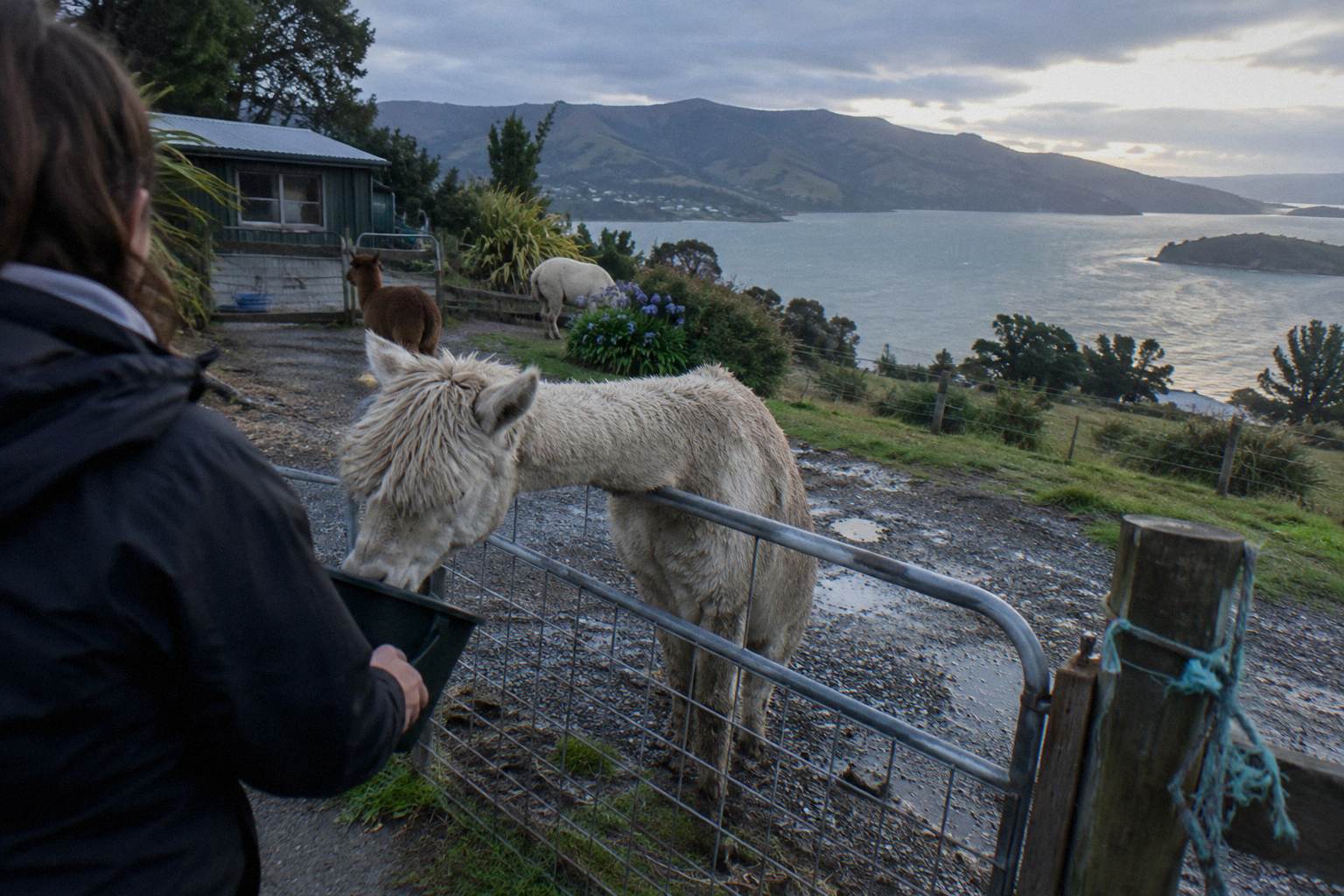
Your Shamarra visit runs about an hour on a fixed itinerary: an alpaca introduction, a safety briefing, touchable fleece, a walk through the herd, feeding mothers with young, harbour views, and a drink with a home-baked cookie before the shop. Entry, the guided tour, feeding, the treat, and shop access are all included, but holding or cuddling alpacas is not listed anywhere, so do not expect it.
The shape of the hour is worth knowing before you arrive, because it sets expectations. This is a guided walk among working farm animals, not a petting zoo. The feeding moment is the highlight for most visitors: you feed the mothers that have young at foot, which puts you inside the herd rather than at a fence. The fleece display is the quiet surprise, award-winning fleeces laid out to handle, which explains in one object why the shop at the end sells knitwear rather than novelty toys. Tours run in English or Mandarin, which covers most visitors to the region.
Time slots are 11am, 1pm and 4pm, and the operator is explicit that bookings are essential; this is not a gate you turn up to. The farm opens year round and closes only on Christmas Day, which makes it one of the few farm experiences on the peninsula with no seasonal shutdown. No lambing, shearing or breeding calendar restrictions were found in any source for these visits, so there is no time of year when the alpaca tour itself stops running. Weather is the real variable: the harbour views are part of the product, and a wet day changes the walk, though the operator runs regardless.
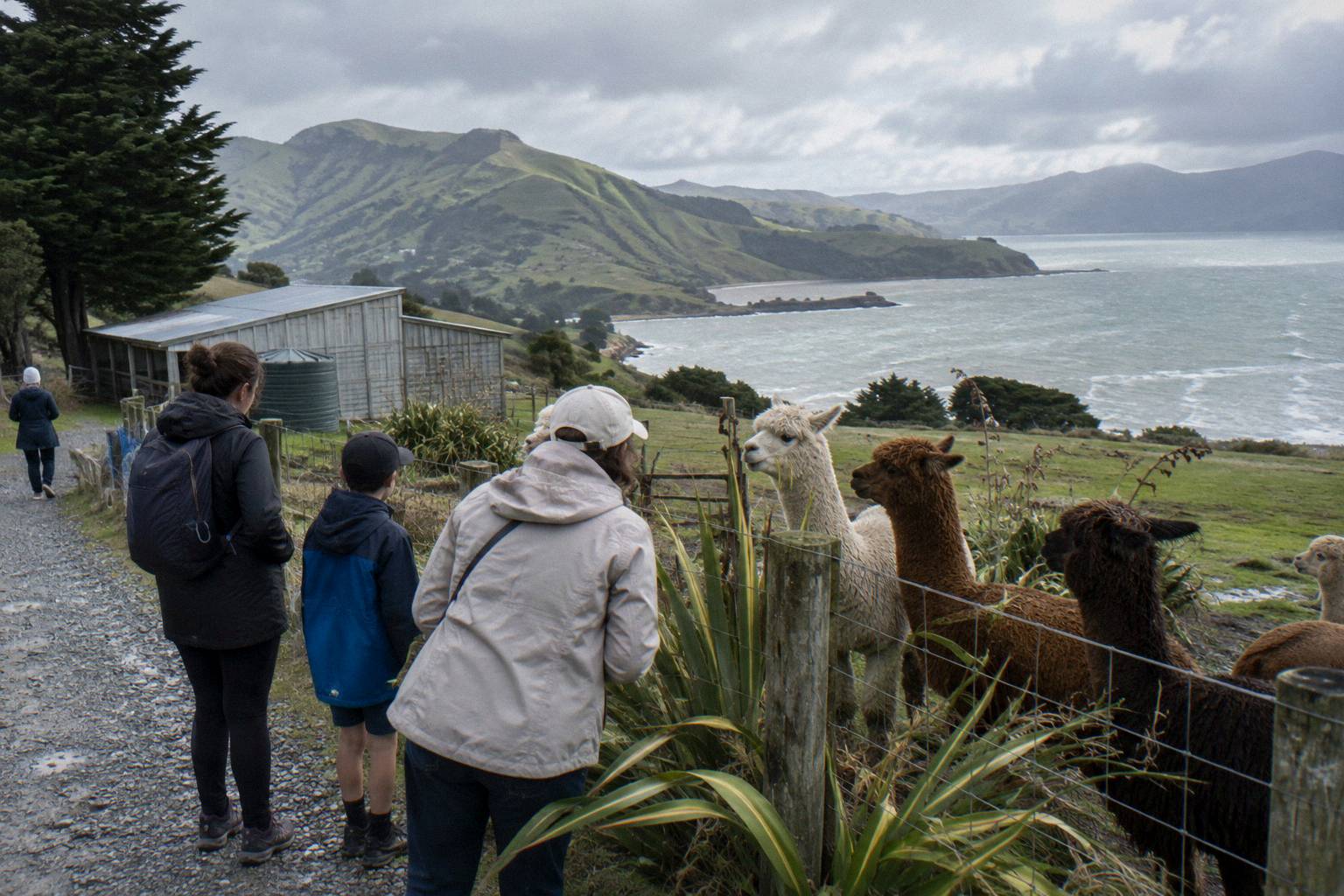
For readers weighing this against the other animal experience in town, the comparison is really between feeding alpacas and watching sheepdogs work. Our guide on choosing between an alpaca farm and a sheep farm at Akaroa sets the two side by side. And if your question is really about cost, that is coming up in its own section below.
Can You See The Alpacas On A Day Trip From Christchurch?
Yes. The Full Day Akaroa Day Trip From Christchurch With Alpaca Farm And Harbour Cruise, run by Silver Fern Luxury Tours, lists Shamarra Alpaca Farm among its stops, alongside a Banks Peninsula scenic drive, free time in Akaroa and a small-group harbour cruise. It runs about 8 hours as a private group with pickup and drop-off at your Christchurch accommodation, from a per-person price where the total depends on a minimum booking equal to four adult fares.
This is the answer for visitors based in Christchurch who want the alpacas without the rental car. The day is private: a professional driver and guide, a meet and greet, and transport in the operator's own vehicle. The stop list is the itinerary: the scenic drive over Banks Peninsula, the alpaca farm, Akaroa town with free time, and a harbour cruise in a small group. The cruise is dolphin territory, and sightings are wildlife, so no honest page will promise them. Other pages covering the same trip are gathered on Akaroa Farm Tour.
One point needs care with money. The booking page lists "tour activity costs" as excluded, along with lunch in Akaroa. So do not assume the farm admission or the cruise fare is inside the day-trip price, and do not assume it is not: read what is covered on the listing before you book, because the page itself flags the exclusion. The from-price is per person, but this is a private product with a minimum booking equal to four adult fares, so the total bill moves with that floor. Two people pay for the day as if four were travelling; check that arithmetic against your group size before committing.
The listing is new and carries no rating yet, which is worth stating plainly rather than dressing up. Cancellation is the standard generous term: up to 24 hours before, for a full refund. Start times sit on the booking page rather than in this article, because they can move. For a wider look at the options from the city, our guide on a farm day tour from Christchurch to Akaroa covers the drive, the coaches and the trade-offs.
Can Cruise Passengers See Alpacas At Akaroa?
Cruise passengers can reach the alpacas, but the dedicated shore excursion sold at Akaroa is a sheep-farm tour, not an alpaca one. The Akaroa Harbour And Sheep Farm Shore Excursion runs about 2.5 hours from 2:00pm, rated 4.5 from 11 reviews, and centres on a sheep shearing demonstration and sheepdog work at Coombe Farm with afternoon tea. Cruise passengers wanting alpacas instead need to check the Shamarra timing against their ship's hours ashore.
The mechanics of a ship day matter here. Ships anchor in Akaroa harbour and passengers tender ashore, and since the 2024-25 season the tenders have used Drummond's Jetty, about 180 m north-east of the old Main Wharf while that wharf is demolished and rebuilt; the port authority expects the new wharf in service for the 2027/28 season. A paid shuttle and hop-on hop-off bus run on cruise ship days from the wharf area. The New Zealand Cruise Association port page for Akaroa carries the current tender detail, and it is the detail shore-excursion shoppers should check rather than assuming a main-wharf arrival.
The sheep-farm excursion itself is built for the ship timetable. It meets at the Britomart Cannon on the waterfront beside the i-SITE, and cruise passengers give their ship name, docking, disembarkation and re-boarding times at booking, with the note that schedules can shift with the ship. The stop list runs 30 minutes on Akaroa Harbour, 20 at Hilltop Tavern, 15 at Barrys Bay Cheese and 60 at Coombe Farm, the working farm where the shearing demonstration and sheepdog work happen, with afternoon tea included. Port pickup and drop-off are covered. Whether that fits your day ashore is a timing question: our post on whether cruise passengers have time for an Akaroa farm visit works through it.
Note the alpaca gap. Shamarra's 11am, 1pm and 4pm slots sit on the far side of a 20-minute drive from the village with no transport provided, so a ship day that ends mid-afternoon makes the 4pm slot impossible and the 1pm tight. If alpacas are the priority on a short call, book the earliest slot that your tender time allows, and remember the 24-hour free cancellation on both products if the ship's schedule moves against you.
How Much Does It Cost To See Alpacas Near Akaroa?
At the gate, Shamarra's own prices are NZ$65 per adult, NZ$35 per child aged 3 to 15, and NZ$60 for SuperGold cardholders. On the booking page the same tour lists a from-price of US$36 per person, which is a different basis and is never directly comparable to the operator's NZ$ figures. The full-day private trip from Christchurch lists from US$165 per person with a minimum booking equal to four adult fares.
Those three numbers answer three different questions, and mixing them is the most common mistake in farm-tour budgeting. The operator's NZ$ price is what the farm itself charges for the hour, with a real child rate that makes family visits noticeably cheaper than headline adult maths suggests. The US$ from-price on the booking page is the platform's starting figure for the same experience; per this site's rules, the two are stated on different bases and neither is converted or compared here. The day-trip figure is a different product entirely, a private 8-hour day with a driver-guide, where the four-fare minimum is the number that actually determines what a couple pays.
| Option | Duration | Basis | Cost stated | Rating |
|---|---|---|---|---|
| Shamarra farm visit, operator price | About 1 hour | Per person at the farm | NZ$65 adult, NZ$35 child 3-15, NZ$60 SuperGold | 4.9 from 139 reviews |
| Shamarra farm visit, booking page | About 1 hour | Per person, from-price | From US$36 | Same tour |
| Full day trip from Christchurch | 8 hours | Private group, per-person from-price with a four-adult-fare minimum | From US$165 | New listing, no rating yet |
| Sheep farm shore excursion | About 2.5 hours | Shared group up to 22, per person | From US$65.9 | 4.5 from 11 reviews |
Two honest cautions sit beside that table. First, the shore excursion's review pool is small: eleven reviews produce the 4.5, so treat it as a thin signal rather than a settled verdict, which is why the count is printed beside it. Second, the day trip excludes tour activity costs and lunch on its own booking page, so its headline price is transport and guiding, not everything in the day. Whether advance booking is needed at all is its own question; the operator says bookings are essential, and our post on booking an Akaroa farm visit in advance covers the risk of leaving it late.
When Is The Best Time Of Year For An Alpaca Visit?
Any time of year works: Shamarra is open year round, seven days a week, and closes only on Christmas Day, with the same 11am, 1pm and 4pm slots throughout. No seasonal restrictions on these visits, no lambing calendars and no shearing-season closures were found in any source, so the practical variables are weather, daylight and how busy the slots get in peak season.
That year-round openness is rarer than it sounds. Plenty of farm experiences in New Zealand run summer-only or shut for winter, and several cruise-shore products only operate on ship days. An alpaca herd needs feeding every day regardless, which is presumably why the visit runs daily; the animals are the business, not a seasonal attraction bolted onto one. General background notes alpacas are typically sheared once a year in spring, and while nothing about public shearing displays is stated for this farm, spring is when the fleece on display will be freshest and the mothers with young most in evidence.
The other seasonal factor is Banks Peninsula itself. The farm sits on the flank of an extinct volcano looking over Akaroa Harbour, and the peninsula's economy runs on fisheries, farming and tourism. Summer brings the cruise season and fuller slots; winter brings emptier tours and changeable weather on the same winding road. The road is the one thing that does not change: sealed, winding, with the last petrol at Little River, about 90 minutes from Christchurch by the official visitor site's reckoning.
Common Questions About Seeing Llamas And Alpacas
Where Can I See Llamas And Alpacas?
You can see alpacas at Shamarra Alpaca Farm, 328 Wainui Main Road, French Farm, about 20 minutes from Akaroa village, with tours at 11am, 1pm and 4pm year round except Christmas Day. There is no llama experience advertised anywhere in this area, and no tour here promises llamas.
Are Llamas And Alpacas The Same Animal?
No. General references describe them as related but distinct South American camelids: alpacas are fibre animals with two breeds, Huacaya and Suri, while llamas are the larger cousin. The two are often confused, which is why the question gets asked so often.
Can You Hold Or Cuddle The Alpacas At Akaroa?
No source states that holding or cuddling is part of the visit. What is stated is a walk through the herd, feeding the mothers with young, touching award-winning fleece on display, and a beverage and home-baked cookie at the end.
Do I Need To Book The Alpaca Farm Visit In Advance?
Yes. The operator marks bookings as essential for the 11am, 1pm and 4pm tours. You can cancel up to 24 hours before for a full refund on the booking page.
Is The Alpaca Farm Accessible For Wheelchairs?
The booking page lists the tour as wheelchair and pushchair accessible. The Pohatu penguin and sheep-farm tour, by contrast, states it is not suitable for wheelchair users or people with mobility impairments.
How Long Does An Alpaca Farm Visit Take?
About one hour at the farm. Add travel time: roughly 20 minutes from Akaroa village, or around 90 minutes from Christchurch to the village by the official visitor site's figures, since the operator provides no transport.