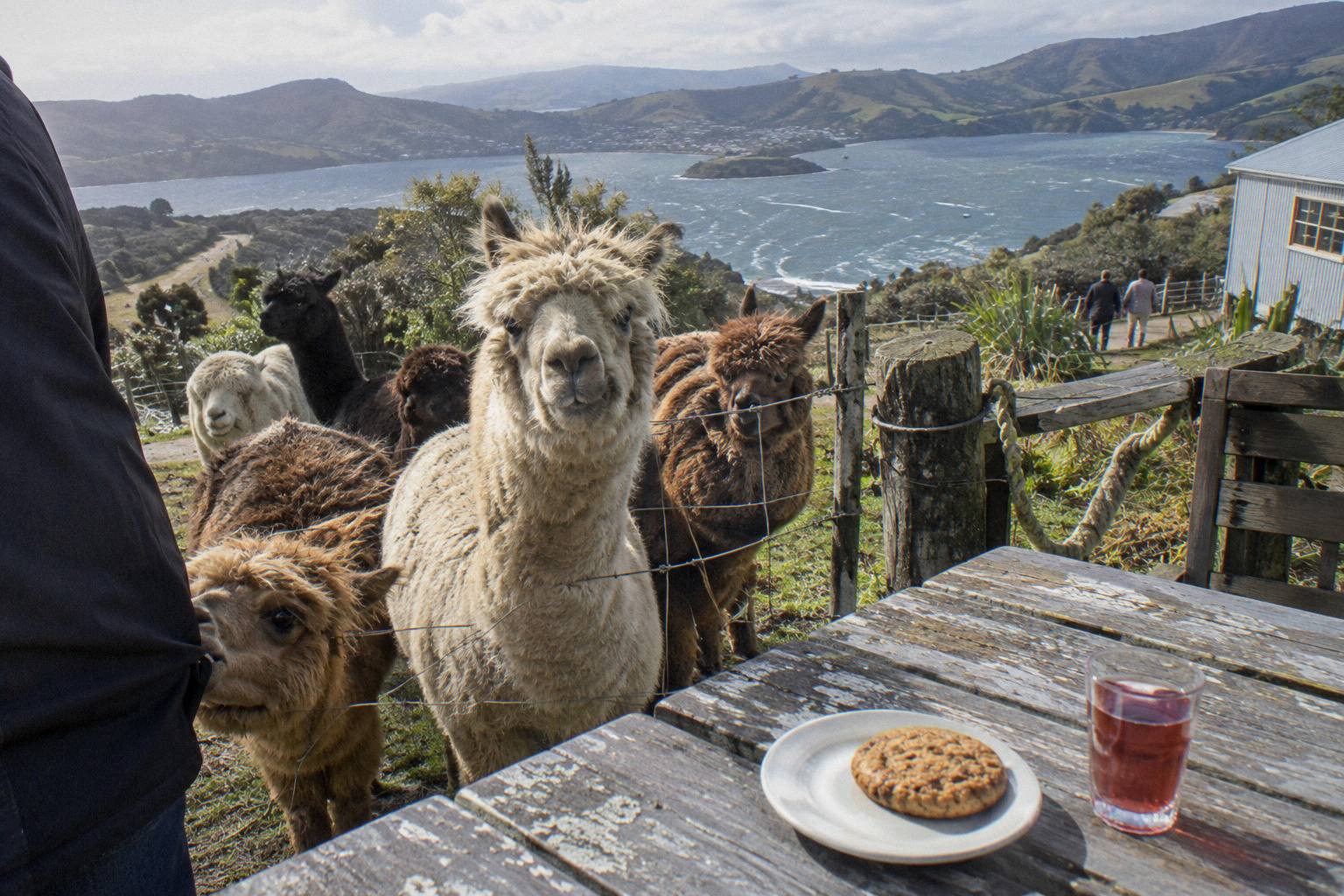
Do Alpacas Spit At Visitors On A Farm Tour?
Why alpacas spit, how rare it is at visitors, the warning signs to read, and how a guided farm tour in Akaroa keeps close contact relaxed and safe.
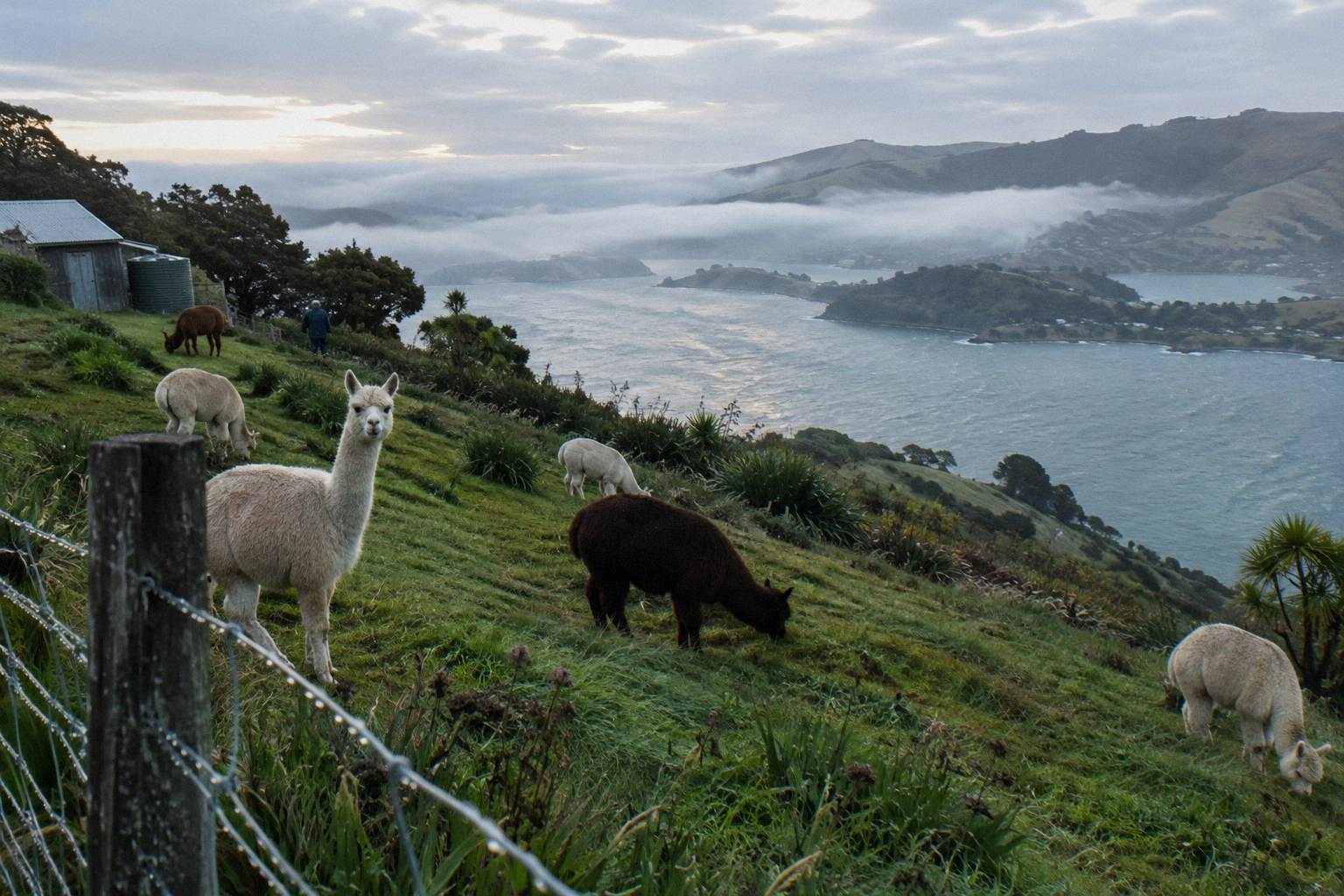
Not as a rule, no. General references on the species say every alpaca is capable of spitting, but not all of them do, and the vast majority of spitting is aimed at other alpacas rather than people. A human occasionally gets caught in it, usually after ignoring clear warning signs. On a guided farm visit, where the animals choose to approach you and a guide sets the rules, the risk sits somewhere between negligible and self-inflicted.
It is the single most common question first-time visitors ask, and it deserves a straight answer rather than a reassurance. Spitting is real behaviour, not a myth invented to scare children. It is how an alpaca says something specific: back off, that food is mine, or you are standing too close to my cria. What matters for a visitor is that the behaviour has a grammar. It is not random, it is not malicious, and it is almost never a first resort.
The distinction that matters most is the target. General references describe alpacas as social herd animals living in family groups, and within those groups they negotiate pecking order constantly. Spitting is one of the tools they use on each other, mostly at feeding time or when personal space is violated. A visitor standing calmly at a fence, or holding feed as a guide instructs, is simply not an interesting rival for status. The animals that matter to an alpaca's social life are other alpacas.
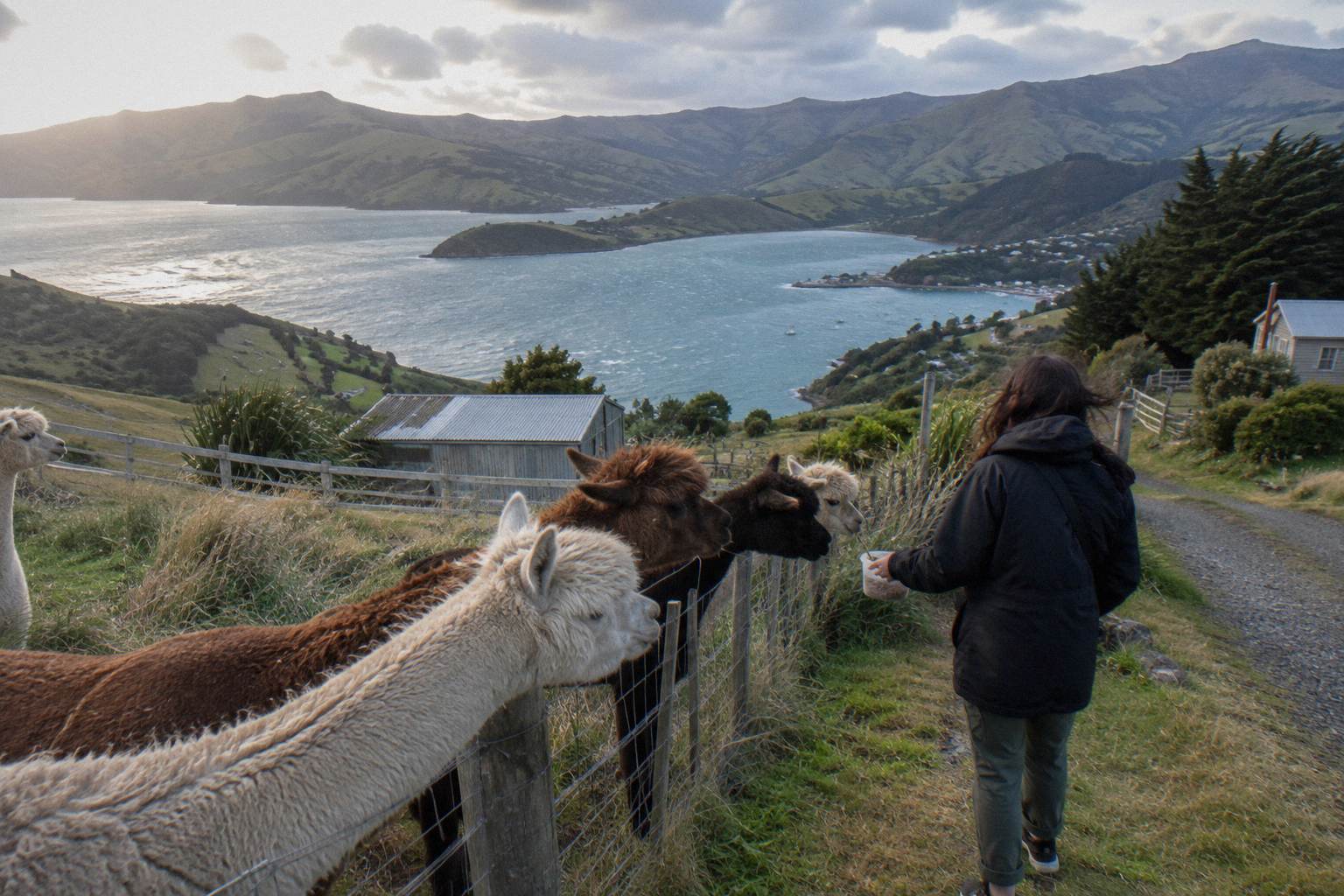
That said, "occasionally at a human" is in the general literature too, so the honest framing is not "it never happens" but "here is when it happens and how to see it coming". That is what the rest of this article does: the mechanics of spitting, the warning signs, what a tour's safety briefing actually covers, how children fit in, and what to wear and how to move so that nothing about you reads as a threat.
If you are already sold on the idea of standing in a herd of over 170 alpacas above Akaroa Harbour, the natural starting point is the Akaroa Farm Tour roster, which covers every farm visit on Banks Peninsula currently bookable in one place.
The alpaca farm tour is the close-contact one. The full-day trip from Christchurch is a private driving day that includes the alpaca farm plus town time and a harbour cruise, so contact happens on your terms inside a bigger itinerary. The shore excursion is a sheep-farm afternoon with shearing and sheepdog work, where you watch skilled animals work rather than feeding anything by hand. None of the three requires you to be brave.
Why Do Alpacas Spit At All?
Spitting is a communication behaviour, not aggression for its own sake. General references describe it as a dominance and distress signal used when an alpaca feels fearful, agitated or challenged, most often over food or space. It is aimed overwhelmingly at herd mates, and an alpaca that spits is usually defending something small and immediate: a mouthful of feed, a spot at the trough, a standing position it does not want to give up.
To understand why a visitor rarely features, it helps to understand what an alpaca actually is. The species is a domesticated South American camelid, kept in herds, and there are two breeds: the Huacaya with crimped fibre and the Suri with straight locks. Their fibre is used for knitted and woven items much like sheep's wool, which is the economic reason herds of over 170 animals exist on a single Banks Peninsula farm at all. Alpacas are typically sheared once a year in spring, according to general references, which is worth knowing if you visit and notice some animals looking noticeably fluffier than others.
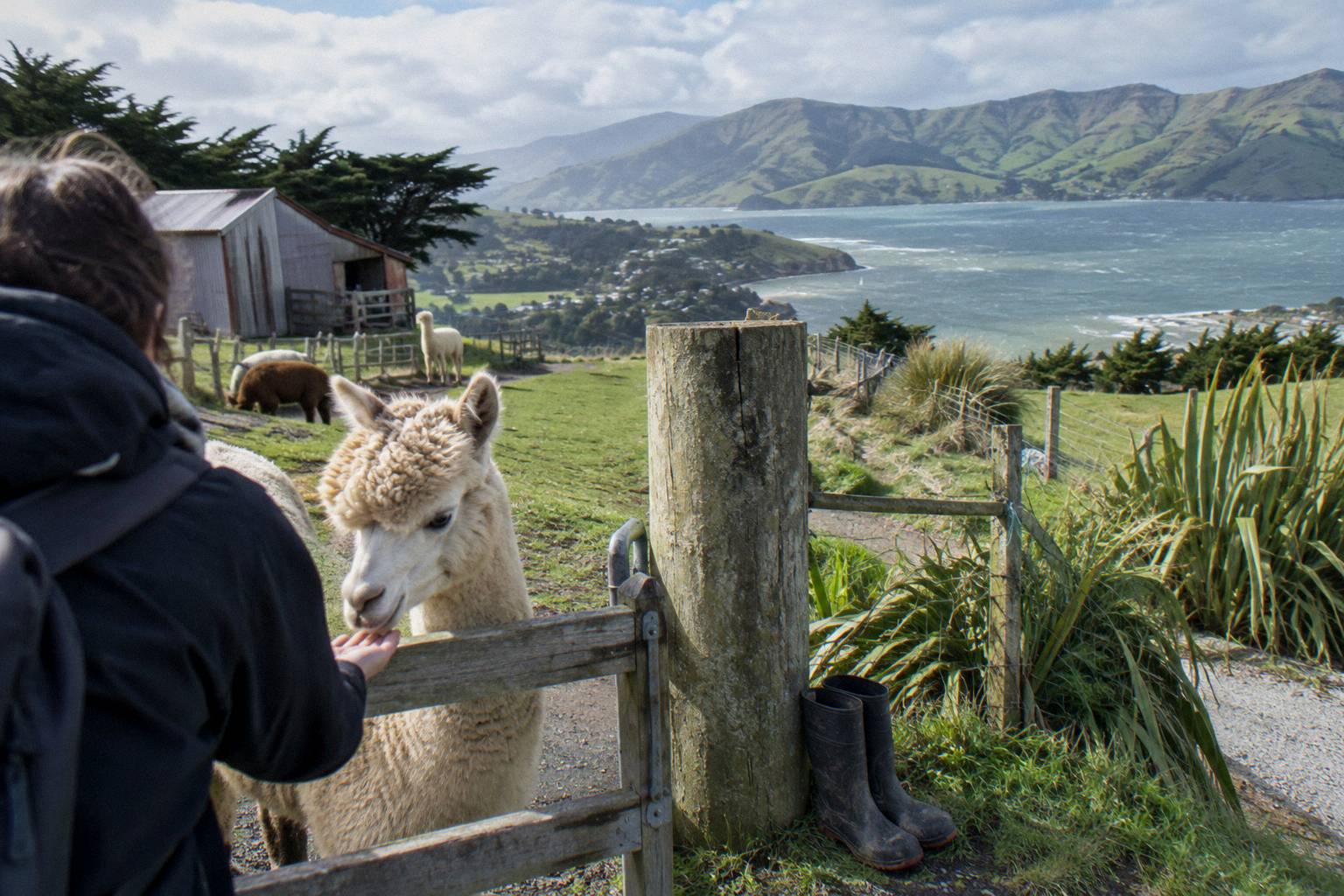
Within the herd, communication runs through body language first and spitting last. General references note that alpacas can spit to show dominance when distressed, fearful or agitated, that not all alpacas spit but all are capable of it, and that spitting is mostly aimed at other alpacas, occasionally at a human. Read that sentence again in the order it was written: the default target is another alpaca. A human getting hit is the exception in the literature, not the pattern.
The classic human-triggered scenario goes something like this. A visitor insists on patting an alpaca on the head, which the animal reads as a dominance move from above. Or a hand waves feed, withdraws, offers again, teases. Or someone corners a mother with a young cria at her side. In each case the alpaca runs through its warning sequence first, and only escalates if the warning is ignored. The behaviour is a consequence, and on a guided tour the guide's job is to make sure nobody sets up the consequence.
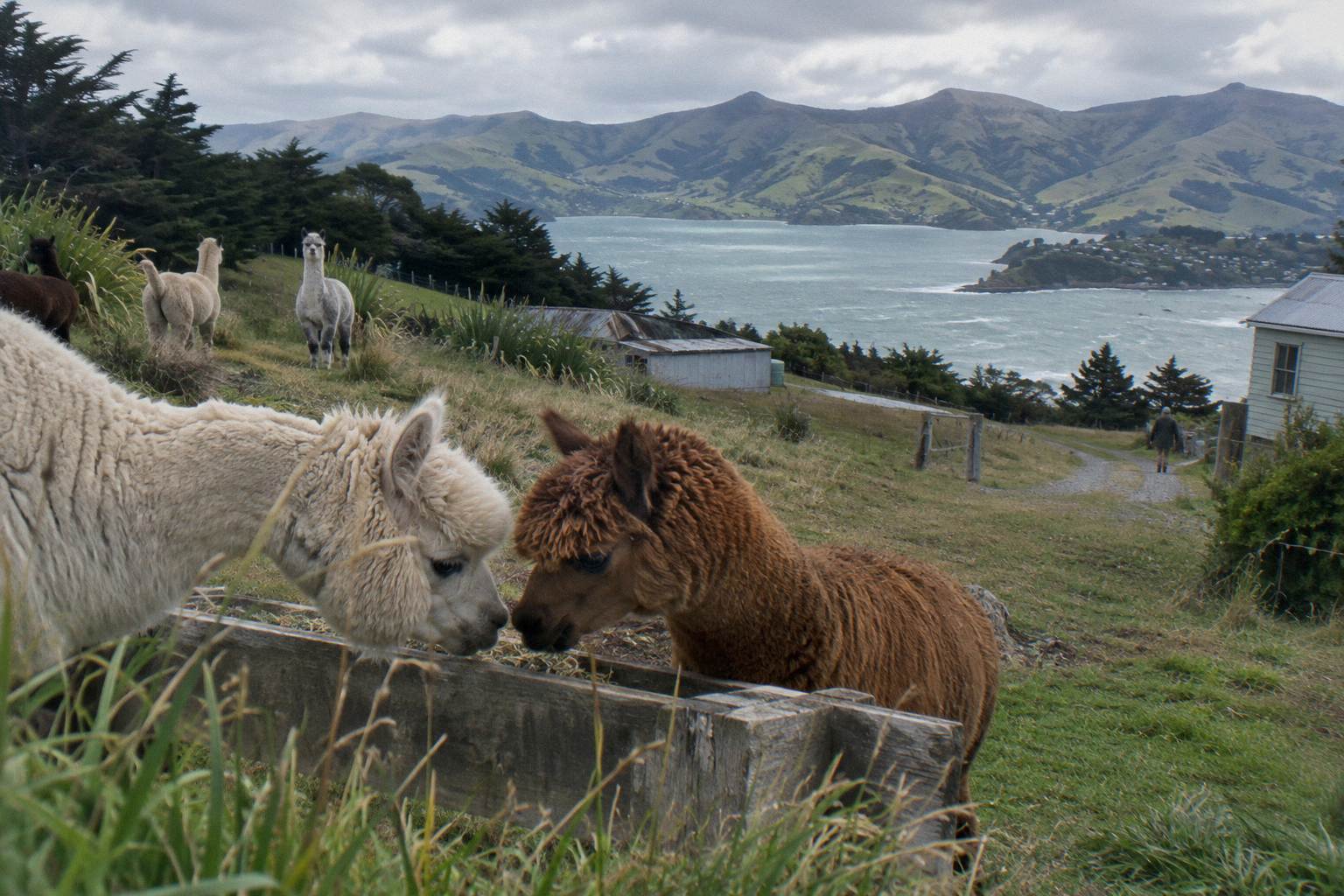
One confusion worth clearing up while we are here: alpacas are often confused with llamas. Llamas are roughly twice the size, are used as guard animals, and have a reputation, fair or not, for more assertive spitting at people. If your mental image of spitting comes from a llama story, check whether the animal in the story was actually an alpaca. General references flag the confusion as common, and it does alpacas a disservice.
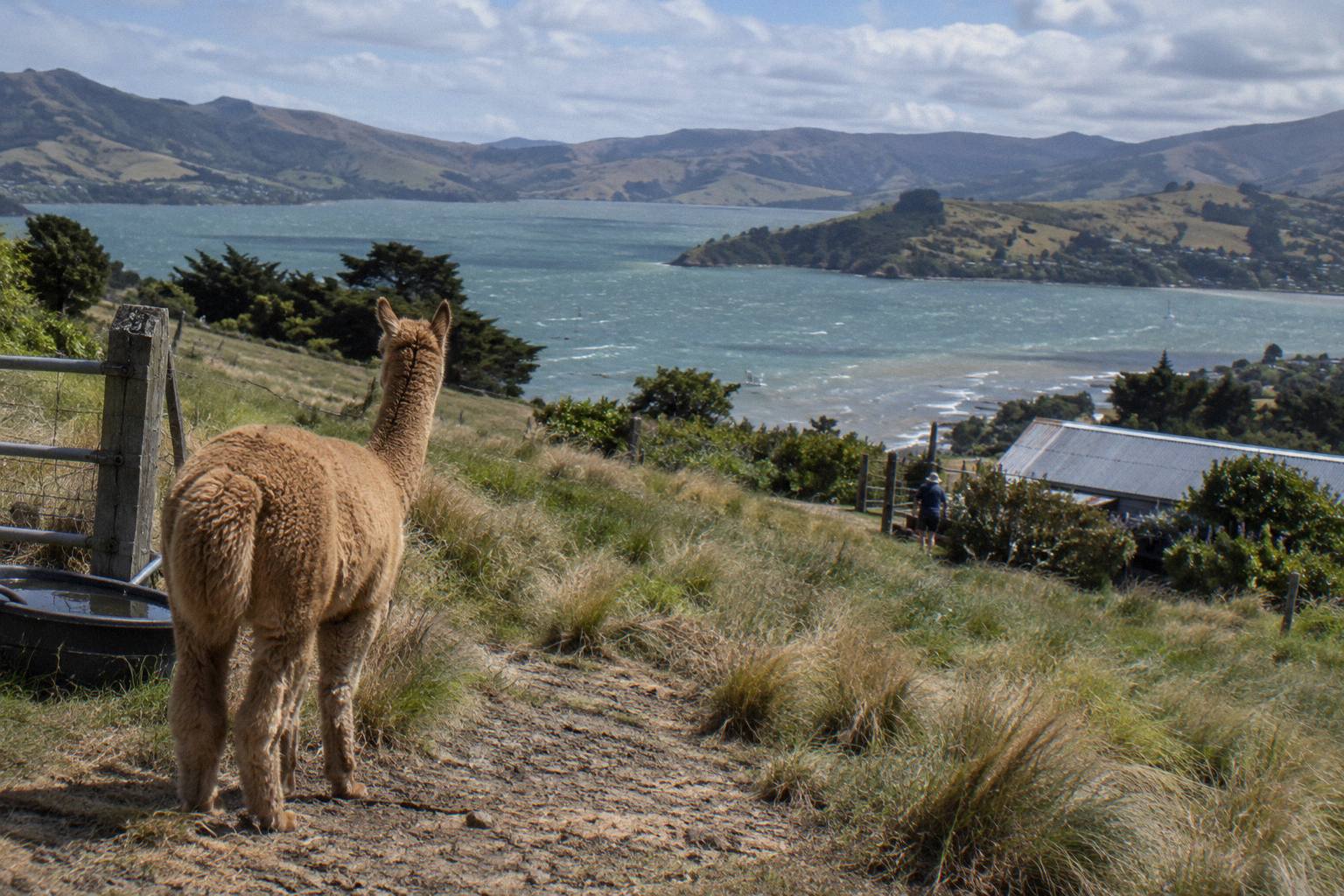
The operator-side answer to all of this is structure. The Shamarra Alpaca Farm Tour, the only operator in this roster with its own official farm-tour page, begins its listed itinerary with a brief intro to alpacas followed by a safety briefing, then a walk through the herd and feeding the mothers with young. That order is deliberate: the briefing comes before the contact. The tour runs about an hour at 11am, 1pm and 4pm, seven days a week and year round, closed only Christmas Day, with bookings essential. The operator's prices are NZ$65 per adult, NZ$35 per child aged 3 to 15, and NZ$60 for SuperGold cardholders; the live listing shows a from-price of US$36 per person on its own basis.
If standing inside a herd is what you want from the day, that hour is the product.
What Warning Signs Do Alpacas Give Before Spitting?
Most alpacas give a visible warning first. General references describe three signals: blowing air out, raising the head, and pinning the ears back. An alpaca that does all three while you are reaching toward it is telling you, plainly, to stop. Back away and the sequence ends there. Visitors who get spit on almost always missed or overrode a warning that was already in progress.
Book the Akaroa alpaca farm tour
The warning signs are worth learning properly because they turn an unpredictable animal into a readable one. Here is what each signal tends to mean in practice.
| Signal | What it looks like | What it usually means | What you should do |
|---|---|---|---|
| Blowing air out | A short, sharp exhalation, often with a slight head toss | Mild irritation; you are too close or too sudden | Pause, stay still, let the animal relax |
| Raising the head | The neck lifts and the nose points up and away | Escalation; the alpaca is preparing to defend space or food | Stop reaching, step back one pace |
| Ears pinned back | The ears flatten against the neck | Clear final warning before spitting | Withdraw calmly, do not turn it into a chase |
| Relaxed posture, ears forward, soft hum | The animal is curious and comfortable | Safe to continue as the guide directs | Enjoy it; this is most of a farm visit |
Notice what is absent from that table: stealth. There is no signal that means "surprise spit incoming with no preamble". General references describe the escalation as a gradient, which is exactly why guided contact works. A guide who watches a group for an hour develops a feel for which animals are relaxed and which are having a hard day, and routes the group accordingly. Solo wandering among unfamiliar livestock gives you none of that, which is a decent argument for booking a tour rather than leaning over a roadside fence.
Body language runs both directions, and the alpaca is reading you the whole time. Sudden arm movements, loud squealing, running, and looming over an animal's head all read as pressure. Quiet voice, slow hands, feed held flat and low, and letting the animal come to you all read as safety. The memorable irony of a farm visit is that the people most worried about being spat on, who stand calm and wait, are the least likely to experience it. The ones who chase a photo generally learn something.
The warning-sign literacy also travels. Families who learn to read pinned ears on an alpaca generally get better at reading livestock everywhere, from the sheepdog demonstration on a working farm to the horses on the next holiday. It is the single most transferable skill a one-hour farm tour hands you, and it costs nothing but attention.
How Likely Are You To Actually Get Spit On?
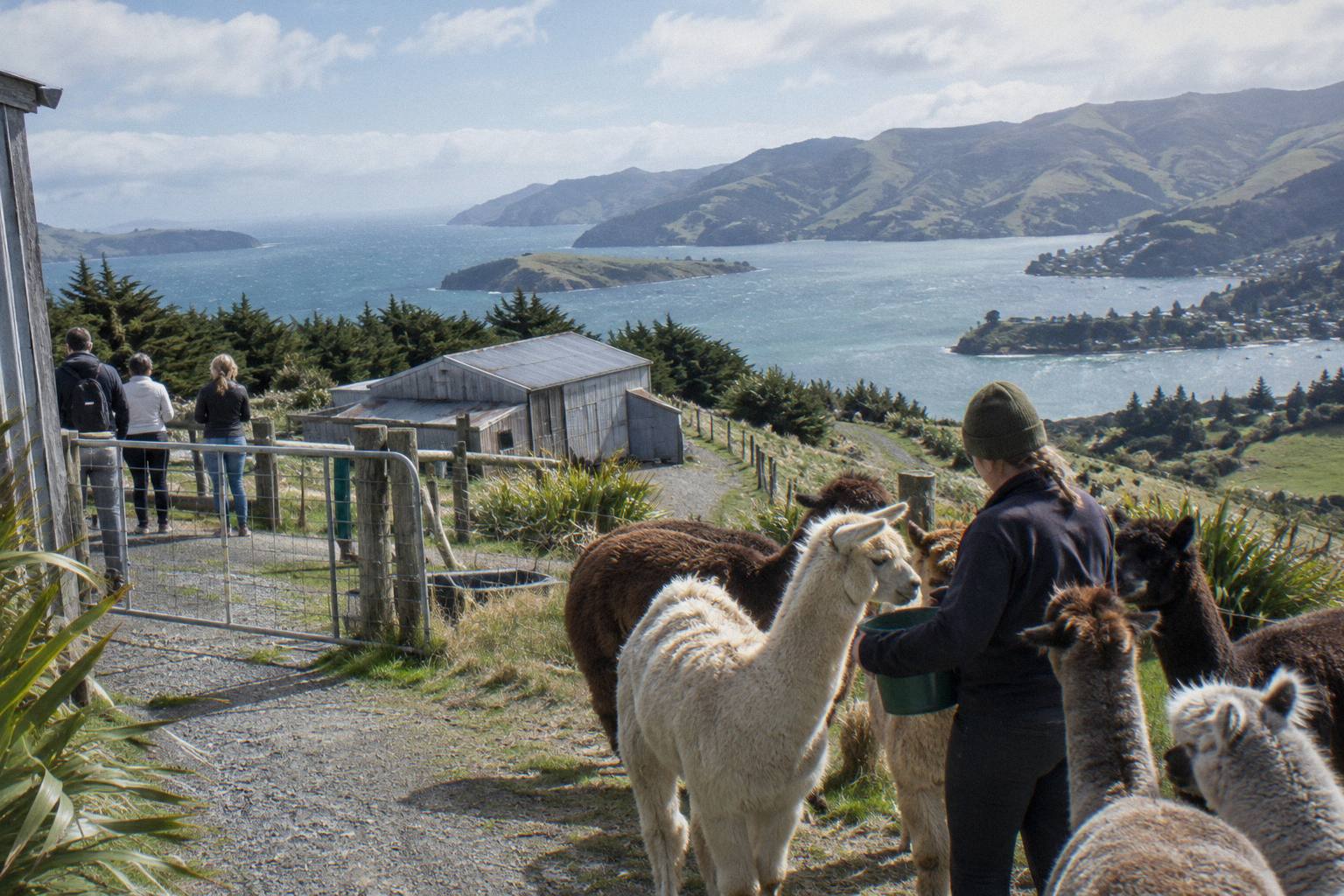
On a guided tour, very unlikely, and the species-level statistics are on your side. Spitting at humans is described in general references as occasional, not routine, and the main risk factor is visitor behaviour rather than animal temperament. Guests who follow the briefing, feed as instructed and keep hands away from heads rarely have a story to tell. The people who do get hit almost always earned it.
For perspective on how gentle these visits are in practice, the Shamarra Alpaca Farm Tour is rated 4.9 from 139 reviews, and its listed inclusions are calm by design: entry to the farm, a guided tour, an opportunity to feed the alpacas, a beverage and a home-baked cookie at the end, and access to the farm shop with its 100% dye-free New Zealand-made knitwear. Nothing in that list involves restraint, riding, or forcing contact. The tour is wheelchair and pushchair accessible, and the operator runs tours in English or Mandarin. The farm sits at 328 Wainui Main Road, French Farm, about 20 minutes from Akaroa village, and the operator describes the setting as a harbour hillside on an extinct volcano. No transport is provided, so you self-drive or arrange your own.
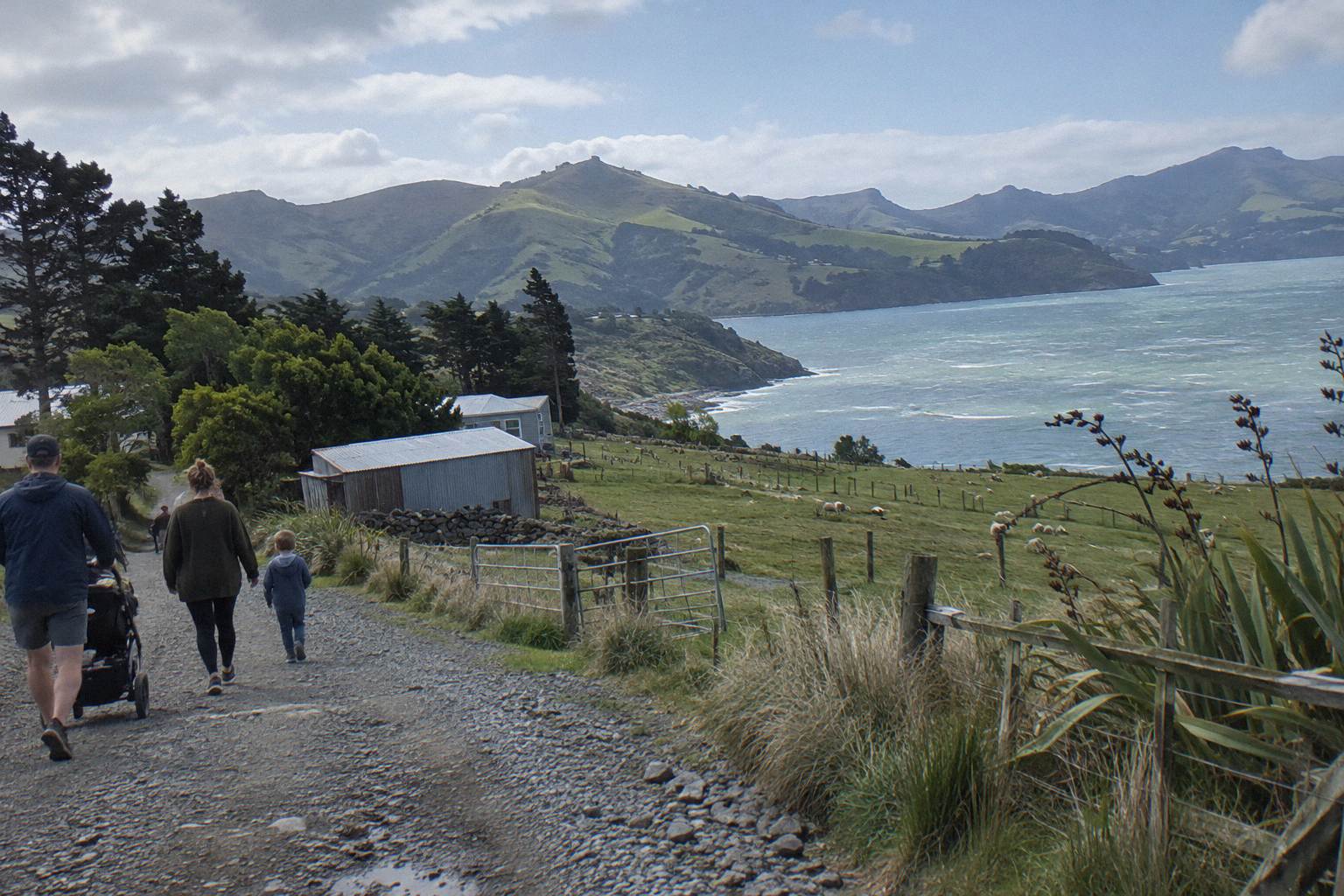
The farm's own scale matters to the odds too. Founded in 2004 with five alpacas, it now carries over 170 animals, which means the herd is large enough that mothers with young can be given space, feeding happens in managed groups, and individual animals having an off day can simply be elsewhere. A visit is not one alpaca and forty strangers squeezed into a pen.
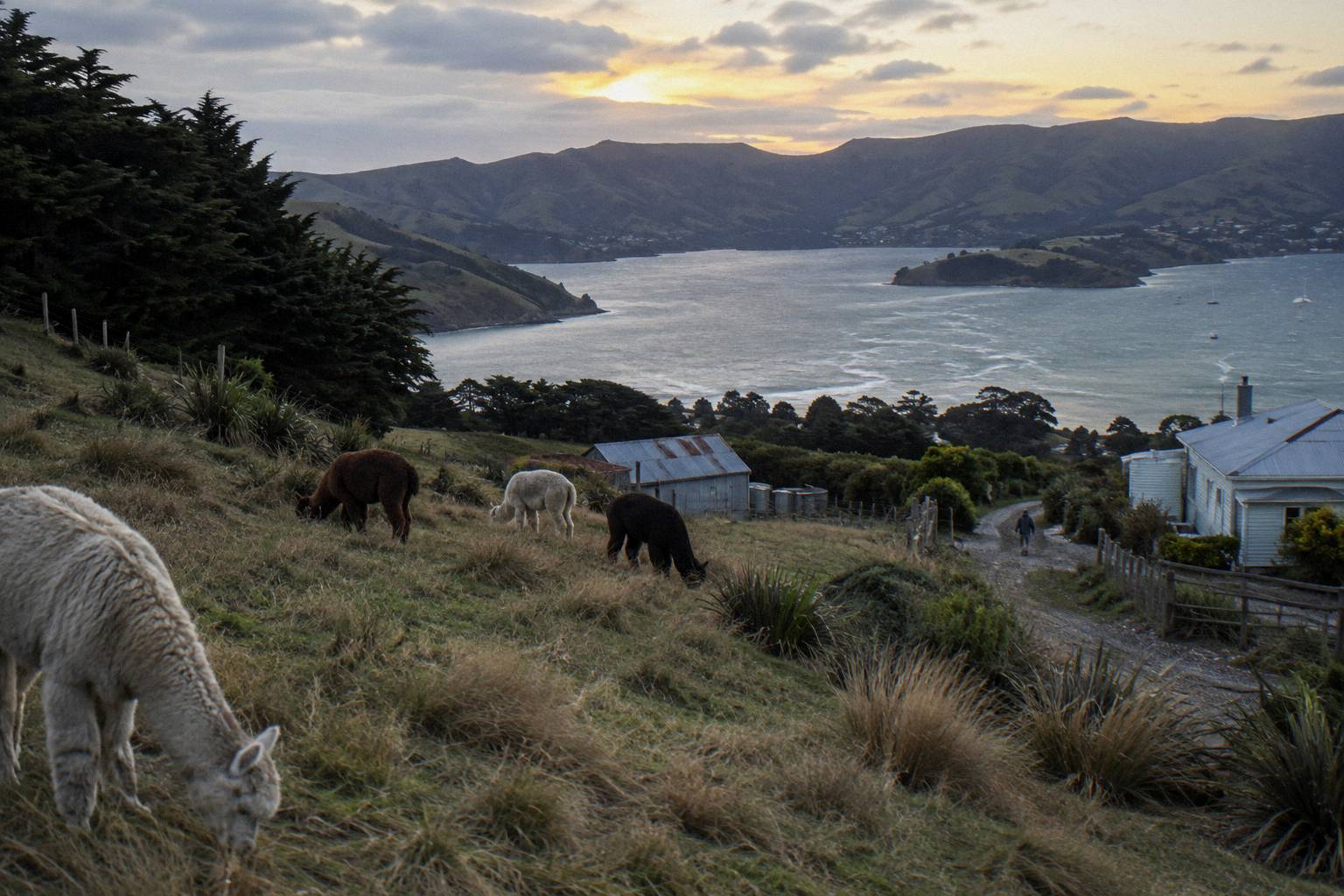
If close contact is simply not your day out, there are farm-adjacent options where you keep a vehicle between yourself and the livestock. The Pohatu Penguins Scenic Nature Tour With A Working Sheep Farm, run by Pohatu Penguins and Sea Kayaking, is a 2 or 4 hour 4WD minivan tour with photo stops, a guide and live commentary, visiting Pohatu Bay, a working sheep farm and penguin colony, a crater rim lookout at 700 m, and, on the 4-hour version only, the Akaroa Heads Lighthouse Reserve, with tea, coffee and a muffin or cake included on the longer option. It meets at 8 Rue Balguerie in Akaroa. It is rated 4.8 from 136 reviews, the live listing's from-price of US$58 per person covers the 2-hour tour, and the 4-hour version costs more. Note the listing's own accessibility line: it is not suitable for wheelchair users or people with mobility impairments. Cancellation is a full refund up to 24 hours ahead, with no refund inside 24 hours unless the local partner cancels.
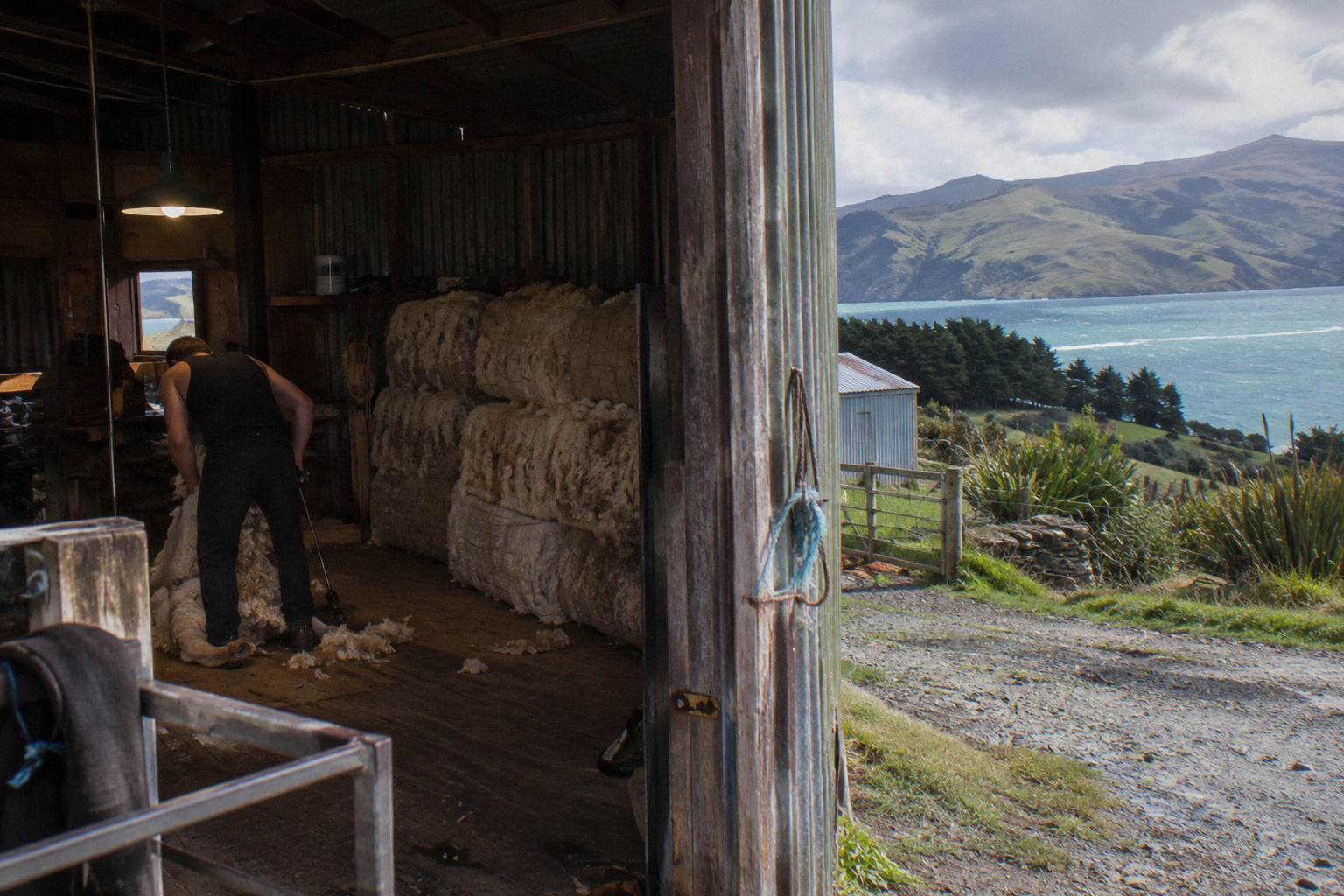
That tour still satisfies the "farm" half of the brief: Pohatu Bay is a working sheep farm, and the booking page treats the penguin colony and the farm as the same stop. But the animals are observed from a moving vehicle and at photo stops rather than fed by hand, which suits anyone whose answer to this article's question is "I would rather not find out".
Is It Safe To Bring Children To Feed Alpacas?
Yes, with structure. The operator's child pricing covers ages 3 to 15, and the tour is listed as pushchair accessible, both of which signal a family-shaped operation. The general-rules approach for small children is simple: an adult holds the feed, the child stands beside, and the alpaca comes to the hand. Children who are taught the warning signs first generally do better with animals than adults who skip that step.
The feeding design helps enormously here. Feeding the mothers with young is a listed part of the itinerary, and mothers with crias at foot are among the most food-motivated and most habituated animals on any farm. A child holding a flat palm under an adult's hand gets the magic moment without the risk profile of independent negotiation with a 170-strong herd. The briefing at the start of the tour is the moment to raise a nervous child, by the way; guides can adjust expectations and position the family where the calmest animals are.
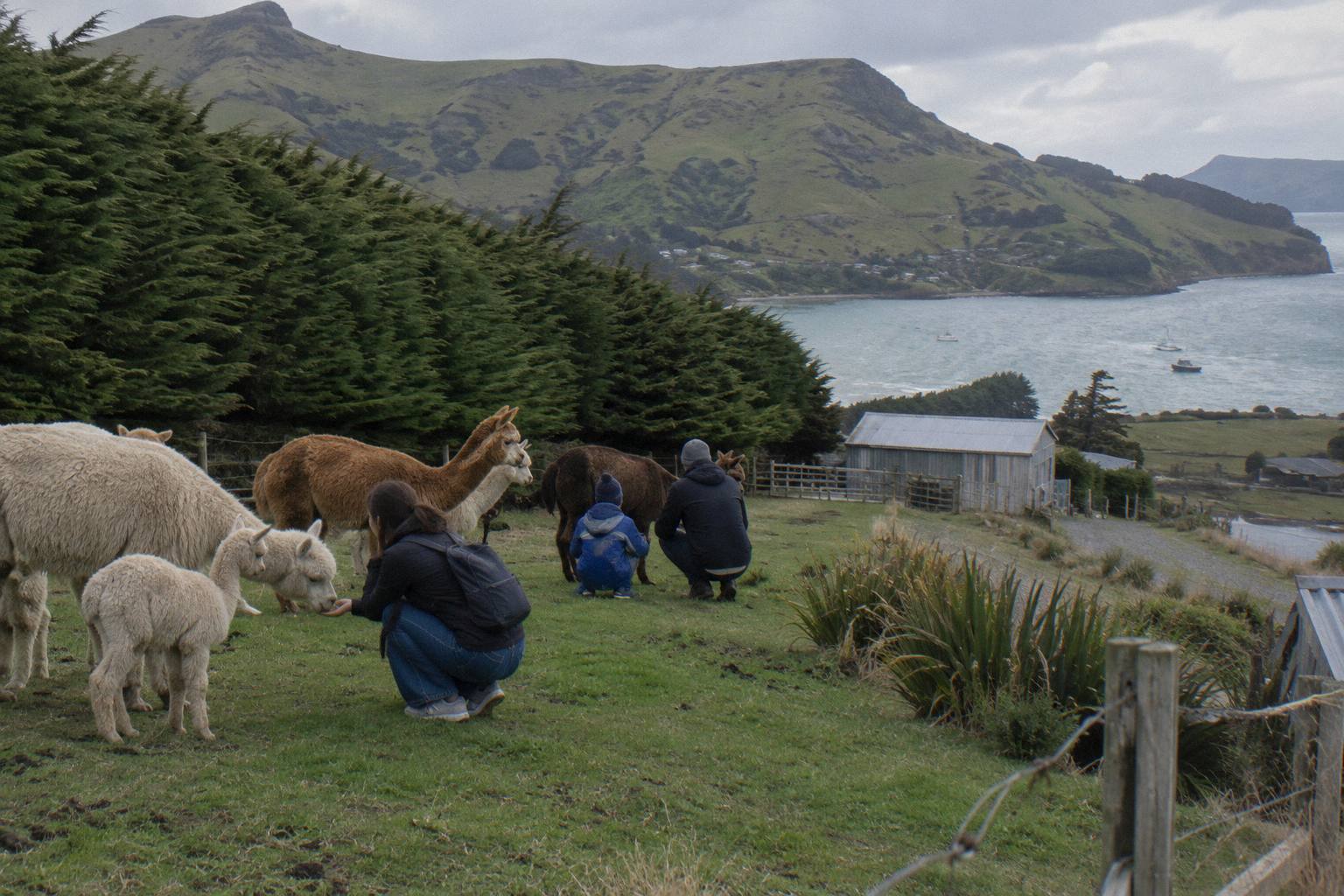
Practicalities for families: the tour is about an hour, which is roughly the attention span of a primary-schooler before the cookie at the end rescues the visit. Operator prices are NZ$35 per child aged 3 to 15. The booking page does not list an infant or under-3 policy, so check before booking if you are carrying a baby; the listing says nothing on it, and it is better to ask than assume. Cancel up to 24 hours in advance for a full refund on the booking page terms, which gives weather-sick families an exit.
Two honest caveats belong here. First, no source states whether visitors can hold or cuddle alpacas, so promise a child feeding and seeing, not hugging. Second, the difference between an alpaca and a llama is worth explaining to kids before arrival, because the spitting folklore they have heard at school is probably llama folklore. General references list the confusion as common. If your children are at the question-asking age, this site's piece on whether Akaroa farm visits suit toddlers covers the age question in more depth, and the answer to whether you can hold and feed alpacas in Akaroa sets out exactly what contact is on the table.
What Should You Wear And How Should You Behave?
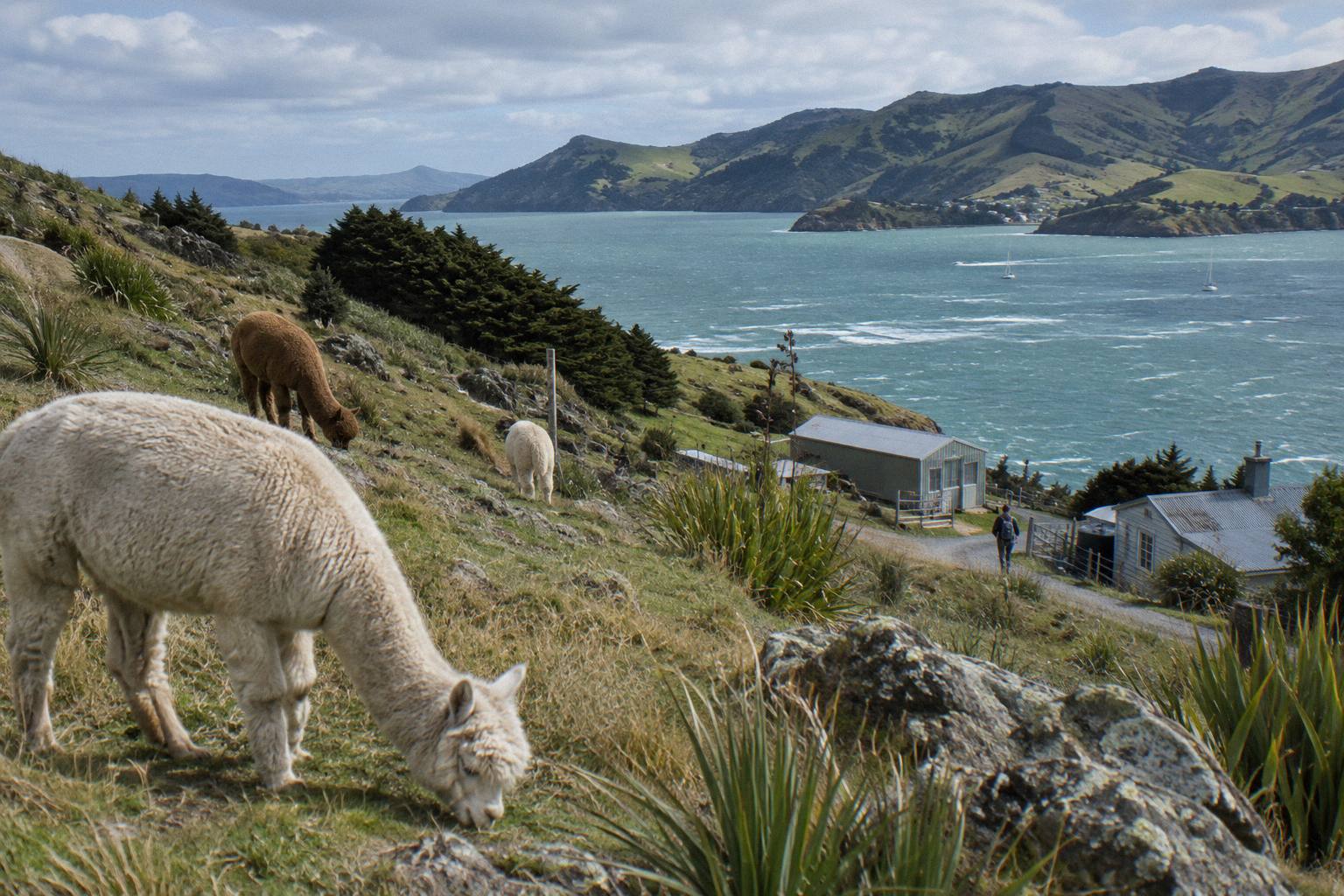
Wear closed shoes and layers you do not mind brushing against fur, and behave like a guest in someone else's paddock: slow movements, quiet voice, feed flat on the palm, hands off heads. General references frame spitting as a response to feeling threatened or challenged, so every behaviour choice that avoids reading as a threat cuts the already small risk further. None of this is onerous; it is mostly ordinary farm etiquette.
Banks Peninsula weather does the rest of the work of deciding your outfit. The peninsula, whose Māori name is Te Pātaka o Rākaihautū, is formed by two now-extinct volcanoes covering roughly 1,200 square kilometres, and Akaroa sits at the head of one of its two deep harbours. Hillside paddocks above a harbour mean wind, and wind means layers. For a fuller treatment of kit, the guide to what to wear on an Akaroa farm visit is the dedicated answer.
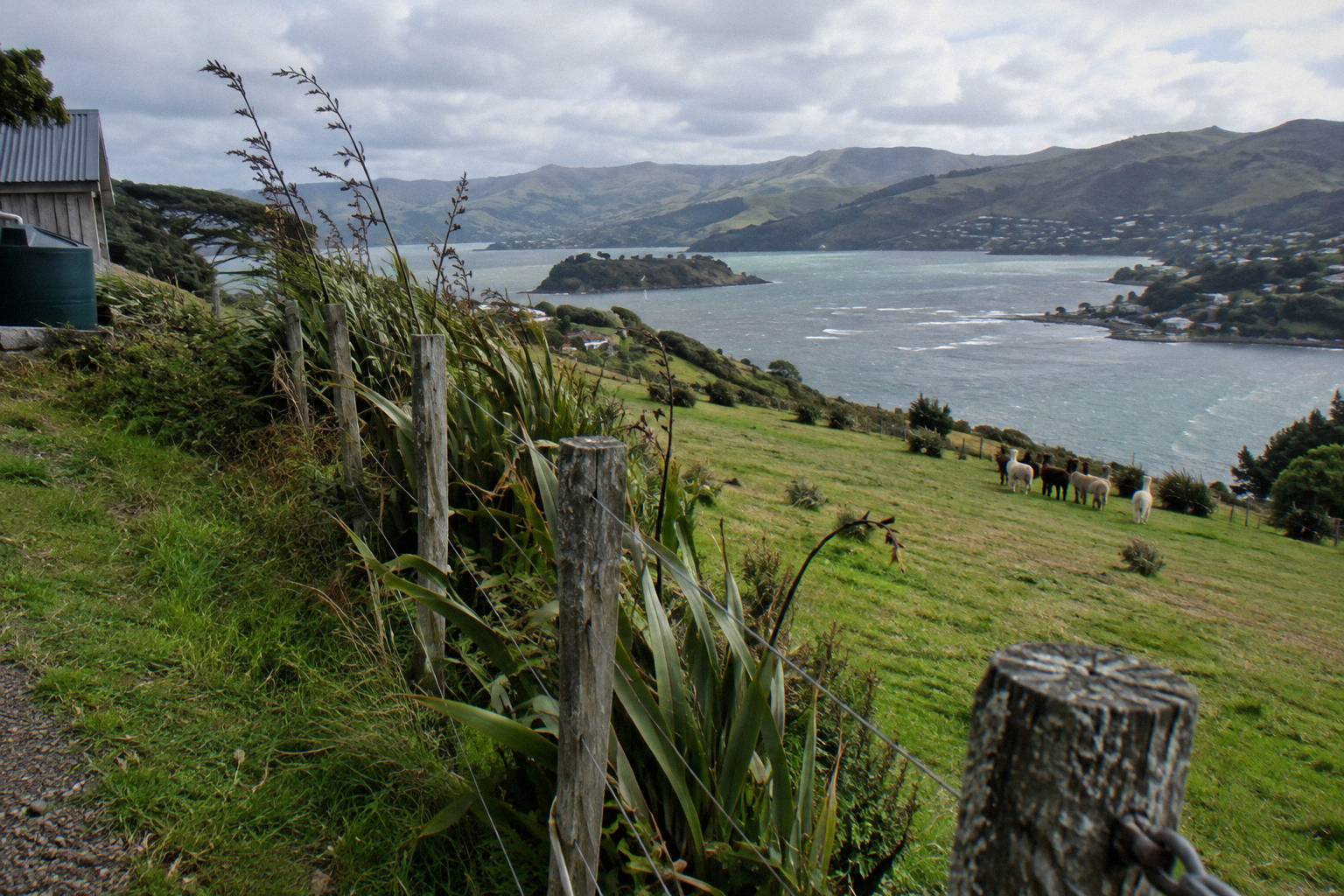
Behaviour divides neatly into do and do not, and the table is short enough to memorise on the drive out.
| Do | Do not |
|---|---|
| Let the alpaca approach you first | Chase an alpaca for a photo |
| Hold feed flat on an open palm | Wave feed, then pull it away as a game |
| Touch the neck and back if invited | Pat the top of the head |
| Move slowly and speak quietly | Squeal, run or lunge |
| Watch ears and head position | Stare at a phone instead of the animal |
| Give mothers with young extra room | Corner any animal against a fence |
That middle row, heads, is the one most visitors get wrong. A hand descending from above onto an alpaca's skull mimics exactly how a dominant herd mate asserts itself, and it is the fastest way to trigger the pinned-ears warning. Necks and backs, offered side-on at the animal's eye level, read as grooming rather than dominance. If you remember one physical rule from this whole article, make it that one.
The last behavioural point is about phones. A visitor staring at a screen while extending a hand is blind to every signal in the escalation sequence, which is how a warning gets missed. Take the photo, then put the phone away and pay attention to the animal in front of you. The alpaca is doing you the courtesy of reading your body language; return it.
What Does A Close-Contact Alpaca Tour Actually Feel Like?
An hour, a briefing, a walk through the herd, feeding, a hot drink and a cookie, and a shop full of knitwear on the way out. The Shamarra itinerary, as published by the operator, reads as gentle and staged rather than thrilling, and that is the point: structured, unhurried contact is precisely what keeps spitting a non-event. Most visitors leave with fibre on their sleeves and nothing on their faces.
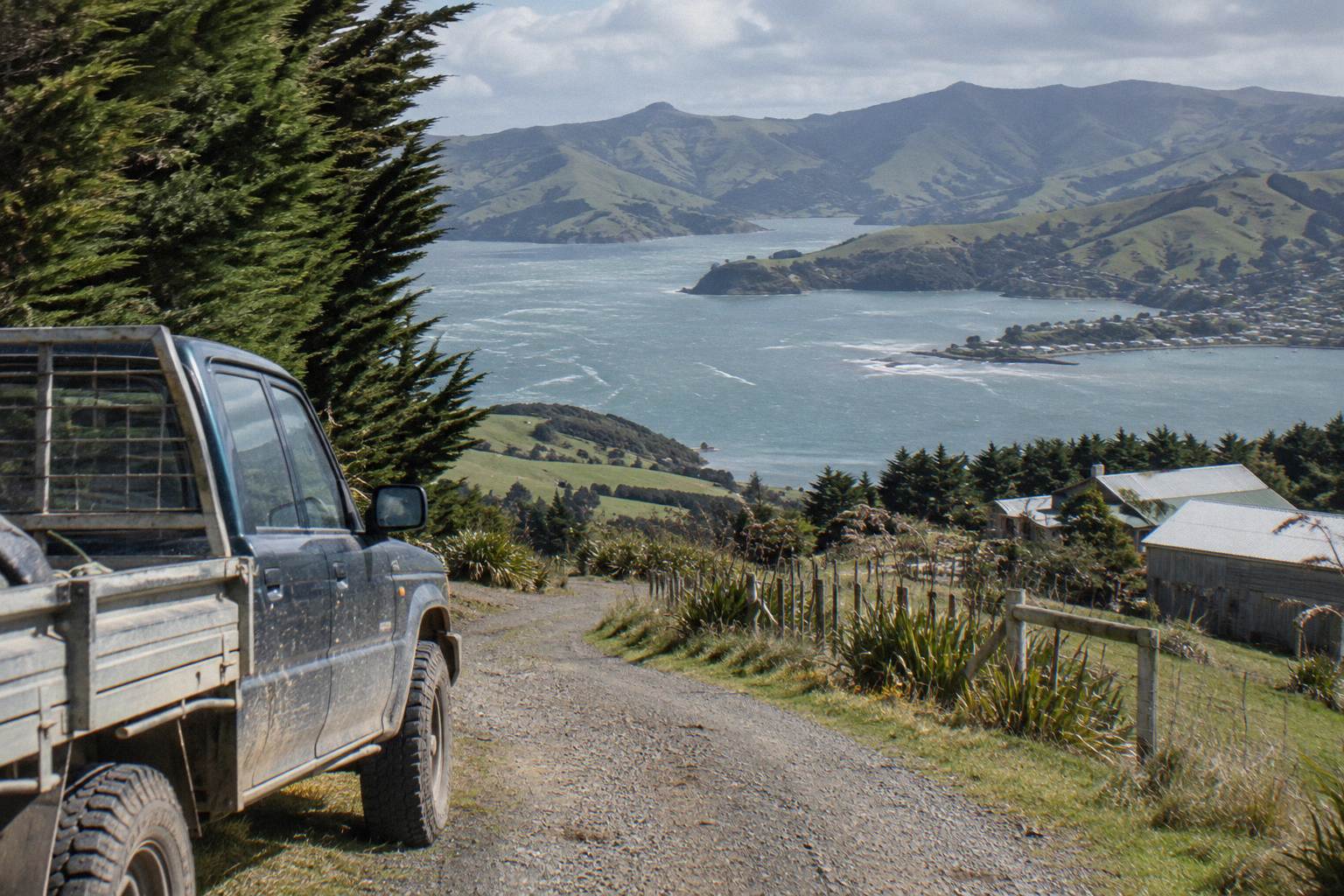
Walking through it in order helps set expectations. The published itinerary starts with a brief introduction to alpacas, then the safety briefing, then award-winning fleece on display to feel, which is a smart sequencing move: you learn what the animal is for before you meet it. Then comes the walk through the herd, harbour views from the hillside, feeding the mothers with young, and the beverage and home-baked cookie to finish, with the shop, selling 100% dye-free New Zealand-made knitwear, as the exit. The farm was founded in 2004 with five alpacas and now runs over 170.
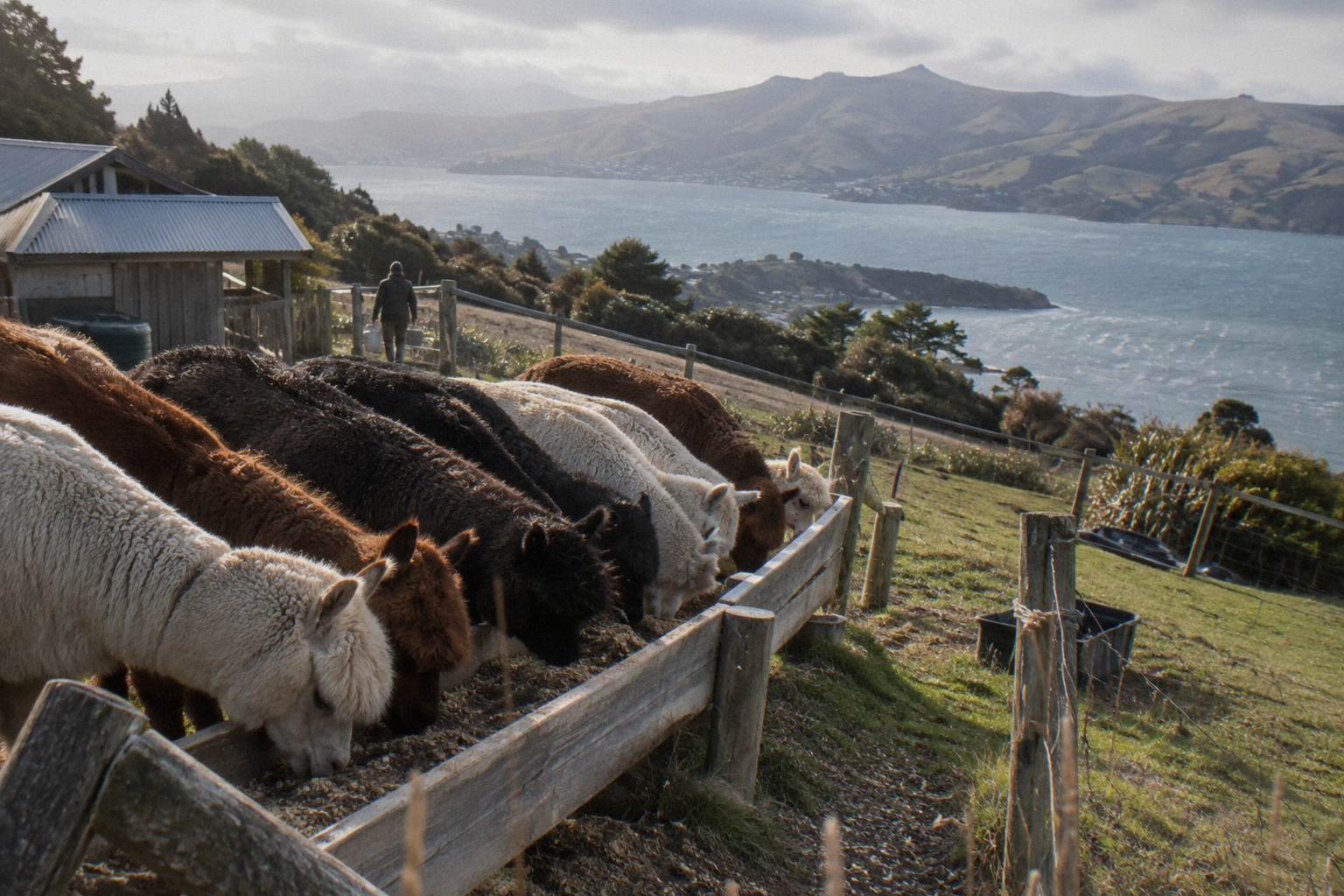
Getting there is on you, which is the one logistical note. No transport is provided to the farm; it is about 20 minutes from Akaroa village, and the operator gives 73 km, just over an hour's drive, from Christchurch Central. Note that this is the operator's own figure to its farm gate, which sits nearer than the village; the official visitor site gives the Christchurch to Akaroa village drive as about 75 km and roughly 90 minutes on State Highway 75, sealed but winding, with the last petrol before Akaroa at Little River. Do not mix the two numbers; they measure different endpoints.
Booking ahead is genuinely required rather than a soft suggestion: the operator states bookings are essential, with sessions at 11am, 1pm and 4pm. On the practical side of whether to pre-book at all, the piece on whether you need to book an Akaroa farm visit in advance works through the timing logic for each operator. For cruise passengers with a fixed afternoon window the answer is more constrained; the shore-excursion question is covered below.
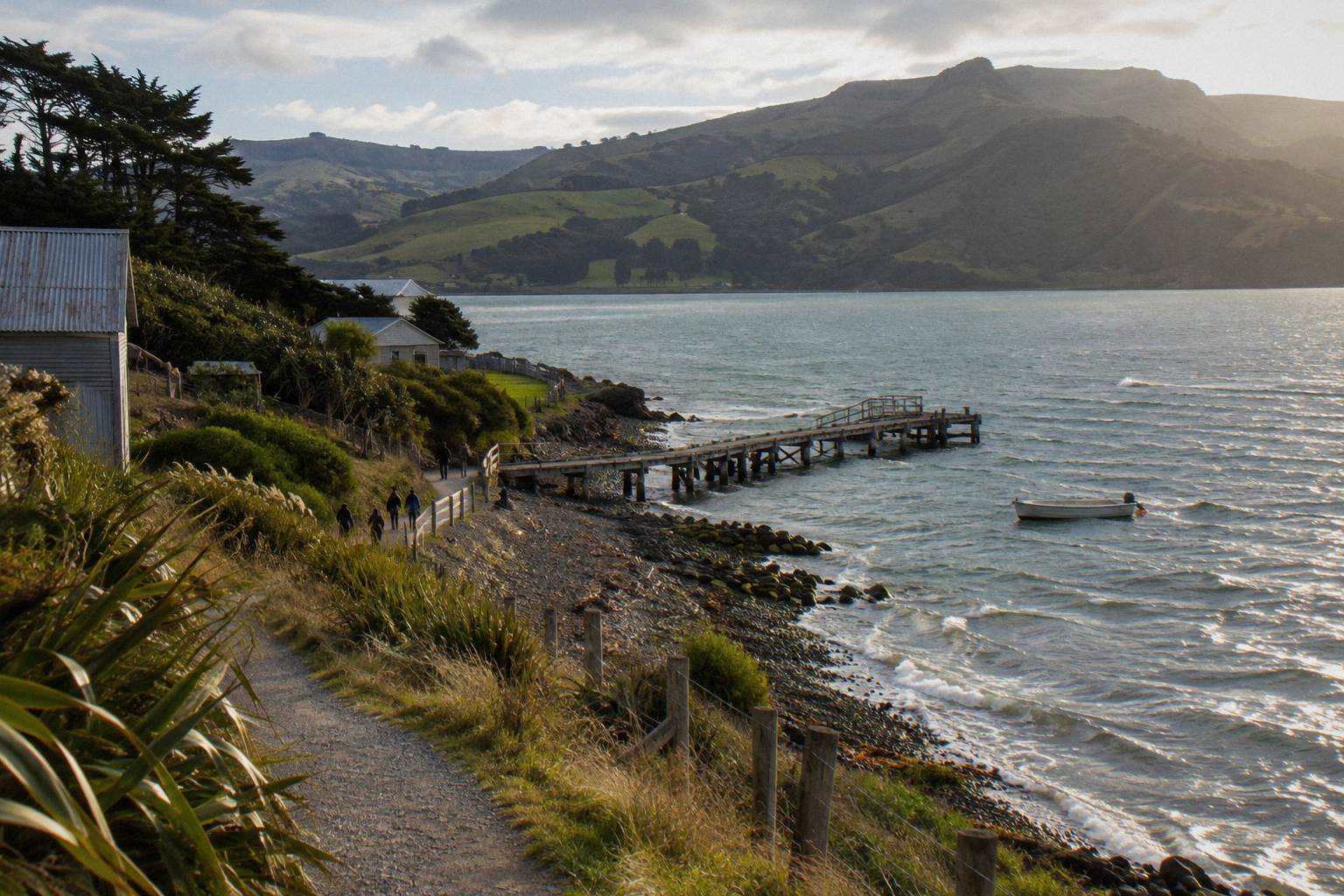
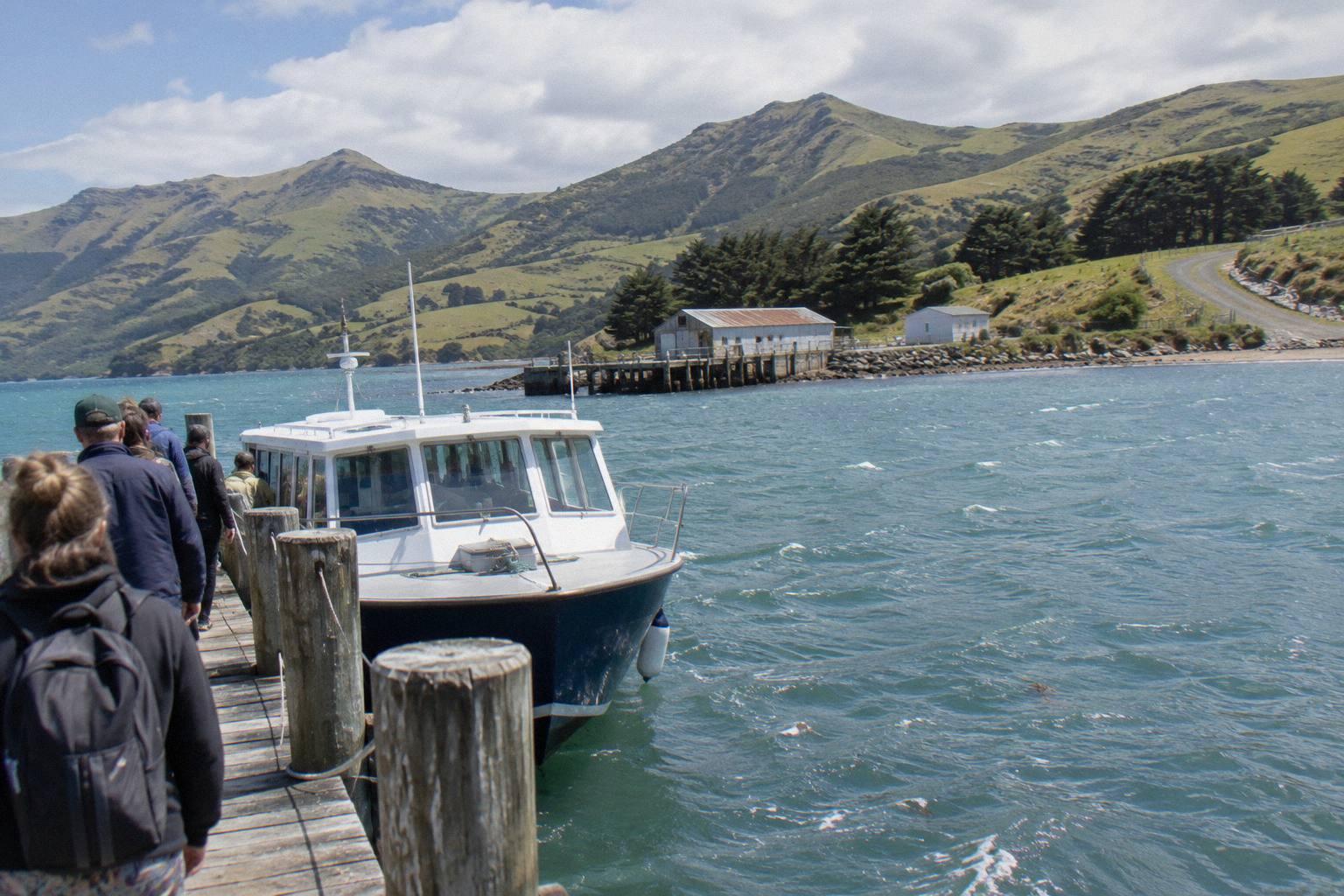
The cruise-day option is a different animal entirely, in both senses. The Akaroa Harbour And Sheep Farm Shore Excursion runs about 2.5 hours from 2:00pm, meeting at the Britomart Cannon on the Akaroa waterfront beside the i-SITE, in a shared group of up to 22. Its stops, per the booking page, are 30 minutes on Akaroa Harbour, 20 at Hilltop Tavern, 15 at Barrys Bay Cheese and a full 60 at Coombe Farm, the sheep-farm stop, with a shearing demonstration and sheepdog work, afternoon tea, and port pickup and drop-off included. It is rated 4.5 from 11 reviews, a small base, and the live listing's from-price is US$65.9 per person. Cruise passengers give their ship name, docking, disembarkation and re-boarding times at booking, and schedules can shift with the ship timetable; in the 2026/27 season tenders come ashore at Drummond's Jetty while the Main Wharf is rebuilt, per the New Zealand Cruise Association port page. It is wheelchair and pushchair accessible, service animals are allowed, and cancellation is a full refund up to 24 hours ahead.
One caution that belongs to honesty rather than alarm: the farm named on that excursion's booking page, Coombe Farm, presents itself publicly as a bed and breakfast and guesthouse, and its own official site carries no day-visitor shearing offer. The sheepdog and shearing visit exists through the shore-excursion listing, which is why booking the tour rather than turning up at a farm gate is the only version of this that works anywhere on Banks Peninsula. The same logic governs alpacas: the close-contact experience is a booked, briefed, guided hour, not a roadside stop.
For species background beyond the tour, the general reference on alpacas covers herd structure, the two breeds and the shearing cycle, and the operator's own farm-tour page lists the current times, prices and itinerary. Between those two sources and a good briefing on the day, you will know more about why alpacas spit than almost anyone else on the hillside.
Whichever shape of farm day suits you, the choice below is really about how close you want to stand to the animals.
Common Questions About Alpaca Spit And Farm Tours
Do Alpacas Spit At Visitors On A Farm Tour?
Rarely. General references say all alpacas are capable of spitting but not all do, that it is mostly aimed at other alpacas, and that humans are occasional targets, usually after warning signs are ignored. On a guided tour with a safety briefing and structured feeding, the practical risk is very small.
What Are The Warning Signs An Alpaca Is About To Spit?
Most give a slight warning first: blowing air out, raising the head, and pinning the ears back. Back away calmly when you see these and the sequence almost always ends there.
Is Alpaca Spit Dangerous?
No. It is unpleasant, being partly regurgitated stomach contents, but it is not venomous or injurious. Wash it off and carry on; the tour is not over.
Is Spitting The Same In Alpacas And Llamas?
No. The two species are often confused, but llamas are much larger and are the ones with the stronger folklore for spitting at people. Alpaca spitting is described in general references as mostly herd-directed.
Do Children Get Spit On More Often Than Adults?
There is no data on that split, and none should be claimed. What is stated: child pricing on the Akaroa alpaca tour covers ages 3 to 15, the tour is pushchair accessible, and children who are taught the warning signs and feed with an adult beside them are behaving the way guides recommend.
Can I Do A Farm Visit With No Close Animal Contact At All?
Yes. The Pohatu Penguins scenic nature tour visits a working sheep farm and penguin colony by 4WD minivan with photo stops, so you observe from a vehicle rather than feeding by hand.