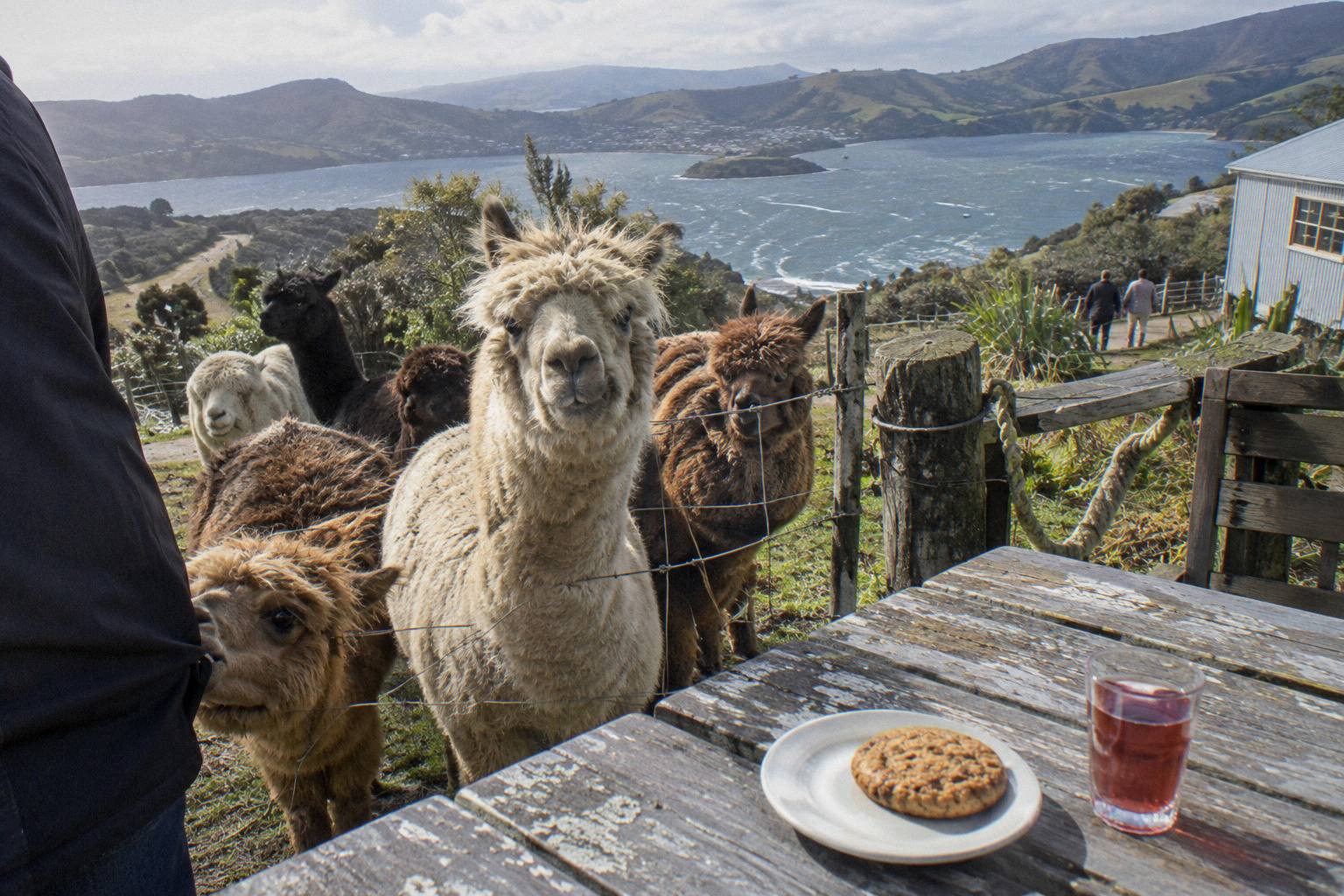
Shamarra Alpaca Farm Tours: What The Visit Involves
Shamarra Alpacas runs a one-hour guided farm tour on the shores of Akaroa Harbour, with herd walking, feeding, a drink and a home-baked cookie. Here is what the visit involves, what it costs, and how it fits an Akaroa or Christchurch day.
Short answer
The Shamarra Alpaca Farm Tour takes about 1 hour, runs at 11am, 1pm and 4pm seven days a week, and costs NZ$65 per adult, NZ$35 per child aged 3 to 15 and NZ$60 NZ SuperGold from the operator, with a US$36 per person from-price on the booking page. It is rated 4.9 from 139 reviews.
What Is The Shamarra Alpaca Farm Tour?
The Shamarra Alpaca Farm Tour is a guided, roughly one-hour visit to a working alpaca farm at 328 Wainui Main Road, French Farm, on the shores of Akaroa Harbour on Banks Peninsula. The operator, Shamarra Alpaca Farm Tours, runs it at 11am, 1pm and 4pm, seven days a week, year round, closed only Christmas Day. It is rated 4.9 from 139 reviews, and bookings are essential.
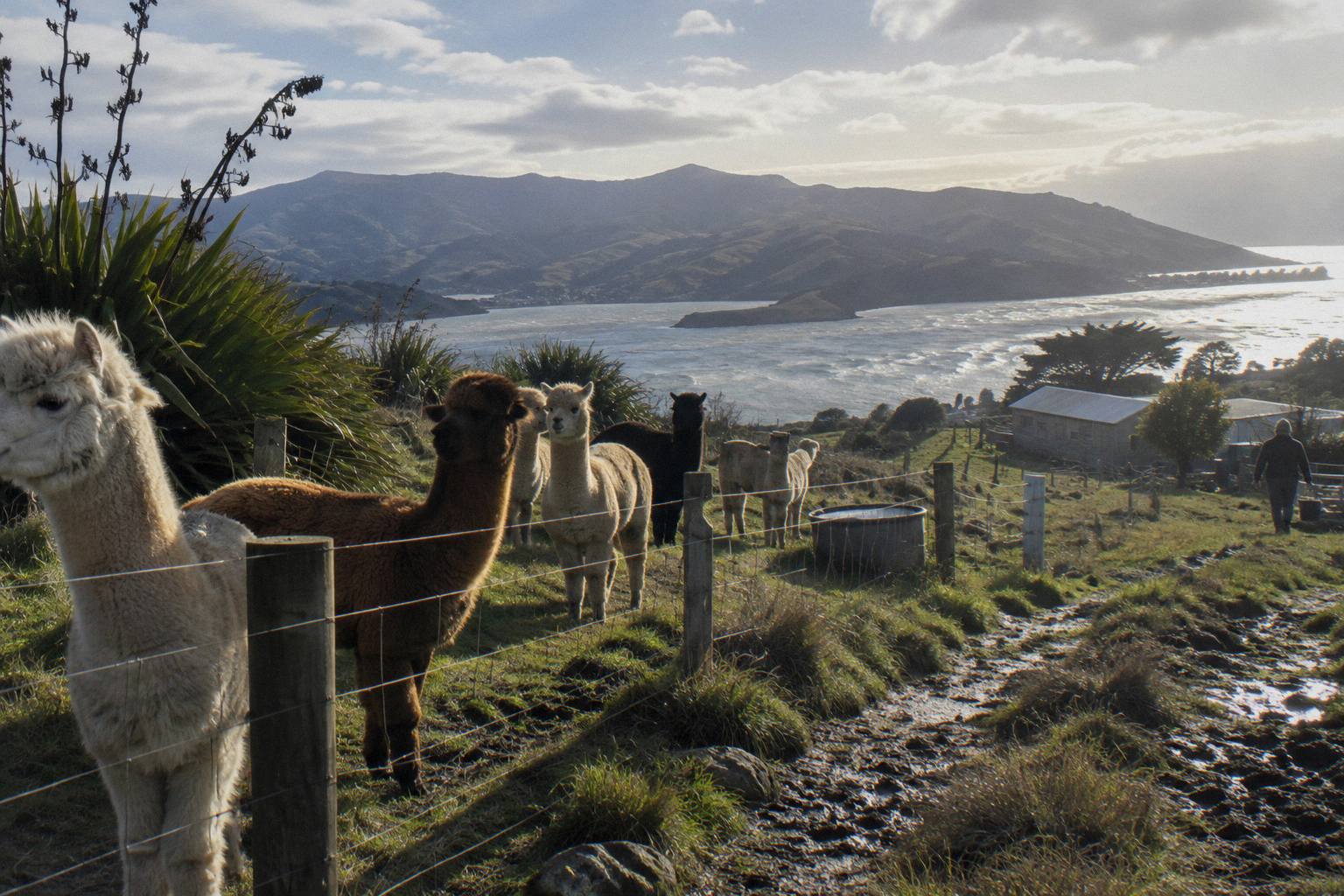
Shamarra is unusual among Akaroa farm attractions in one respect that matters for planning: it is the only operator in this area with its own official farm-tour page, which means the times, prices and itinerary below come straight from the operator rather than second-hand description. The farm was founded in 2004 by Anya and Frank with five alpacas, and the herd now numbers over 170 animals. Tours run in English or Mandarin.
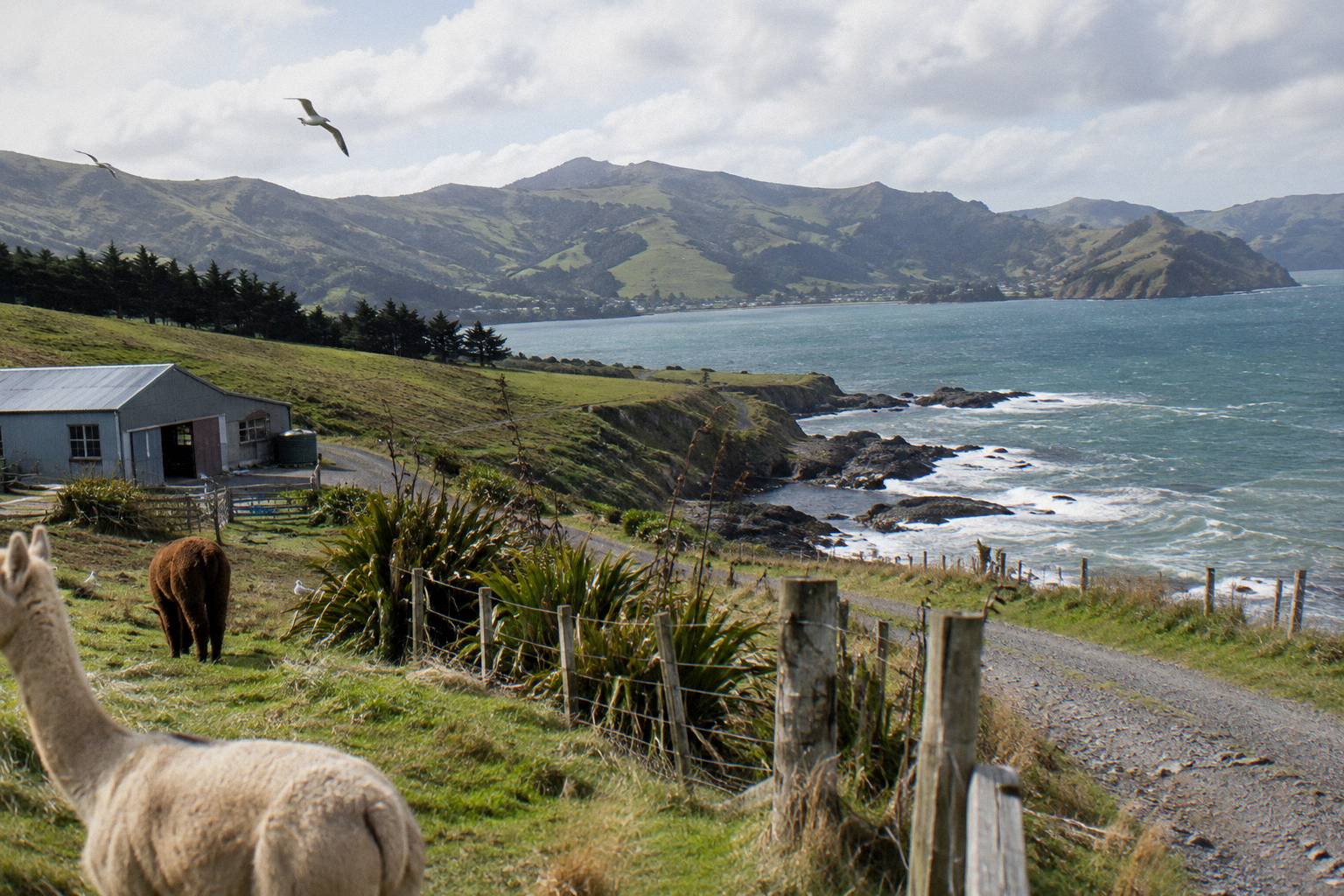
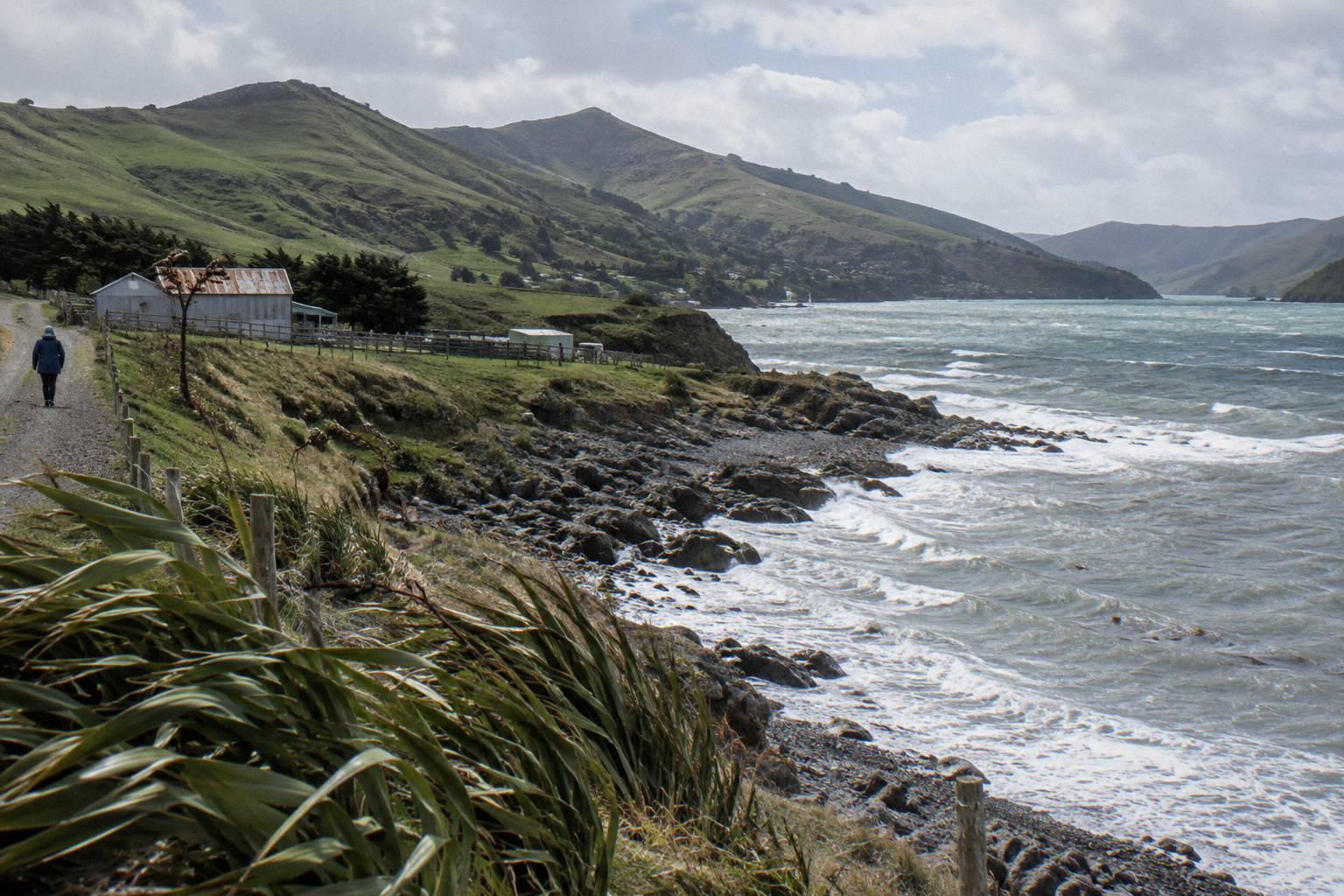
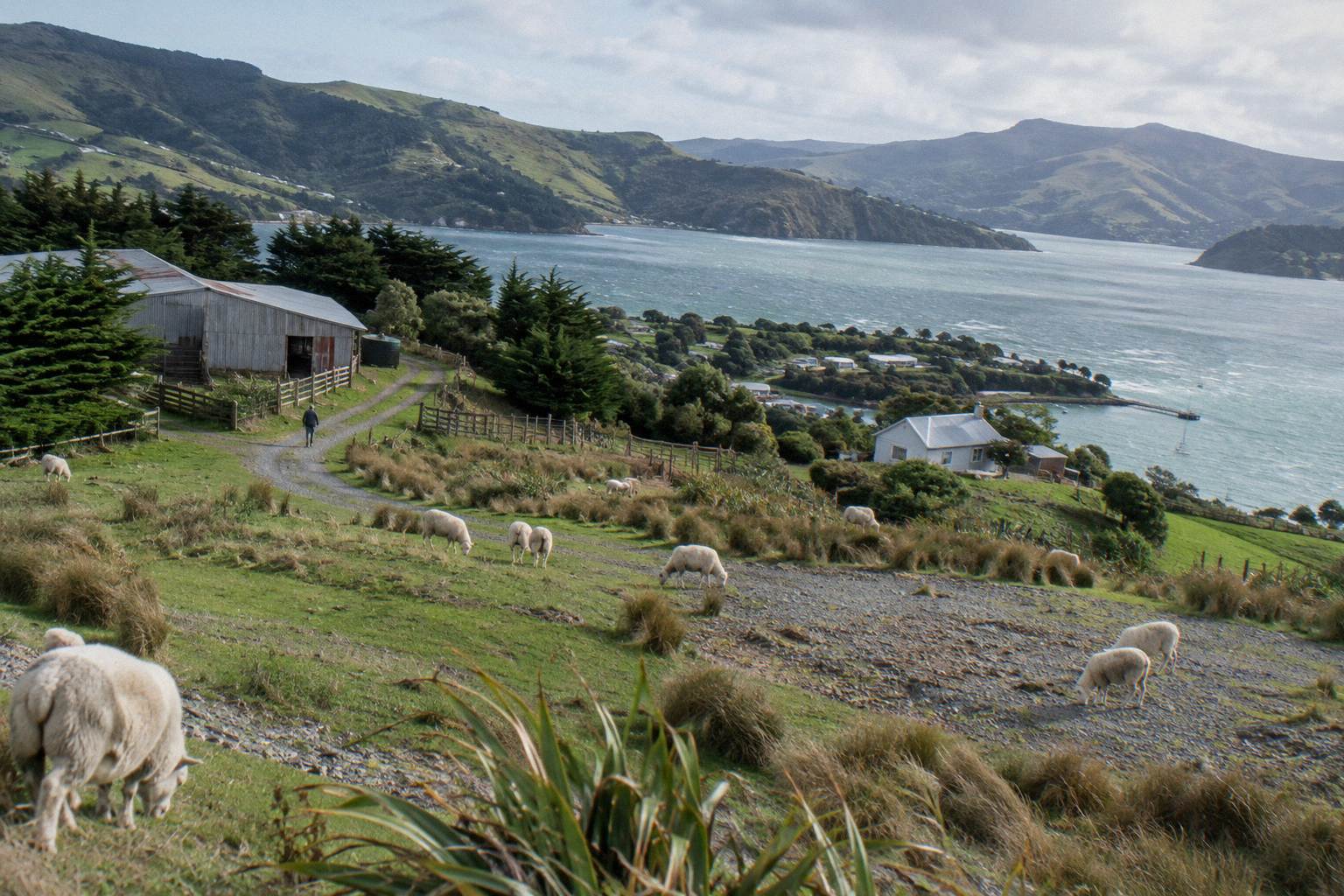
The setting is part of the draw. The farm sits in a harbour-side position on an extinct volcano, and the operator's own description of the visit includes harbour views as a distinct stage of the tour, not a lucky bonus. General references on Banks Peninsula note that the harbour is one of two deep harbours carved into the peninsula, which formed around two now-extinct volcanoes, so the drive to the farm gate is itself part of the experience.
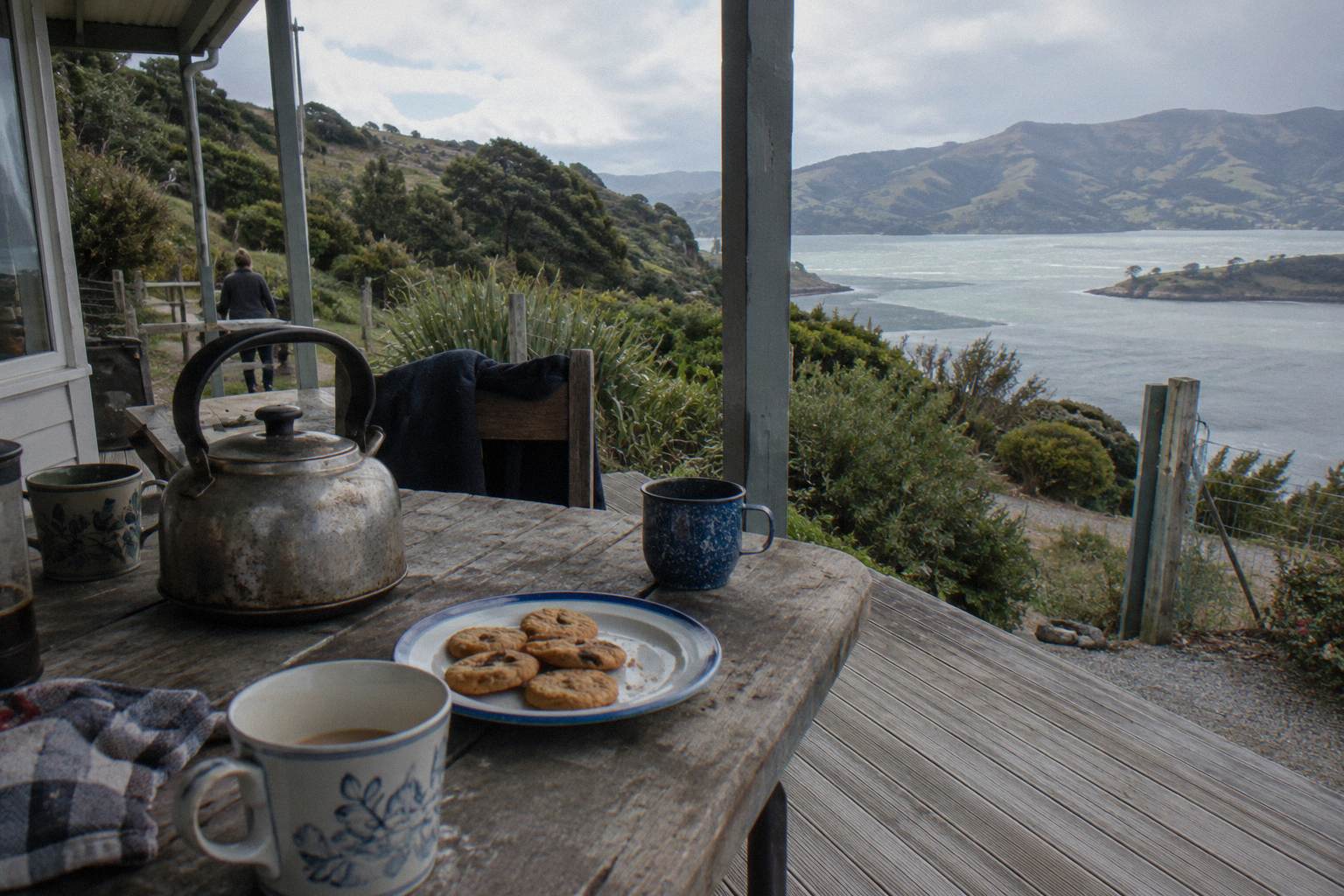
The core of the visit, in the operator's own words, is a walk through the herd and a chance to feed the mothers with young. There is also a brief introduction to alpacas, a safety briefing, and award-winning fleece on display that visitors can feel. The tour ends with a beverage and a home-baked cookie, followed by access to the alpaca shop, which sells 100% dye-free New Zealand-made knitwear. If you are weighing this against other options, our overview of Banks Peninsula farm visits sets out the full field.
One point worth pausing on before you read further: almost everything on this page is verifiable against a single primary source, the operator's own tour page, and that is rarer than it sounds in this corner of New Zealand tourism. The sheep-farm side of Akaroa, by contrast, is bookable only through reseller listings with no official operator page behind them, which is why this guide can say more, and say it with more confidence, about the alpaca visit than about any other farm stop on the peninsula.
Where Is The Farm And How Do You Get There?
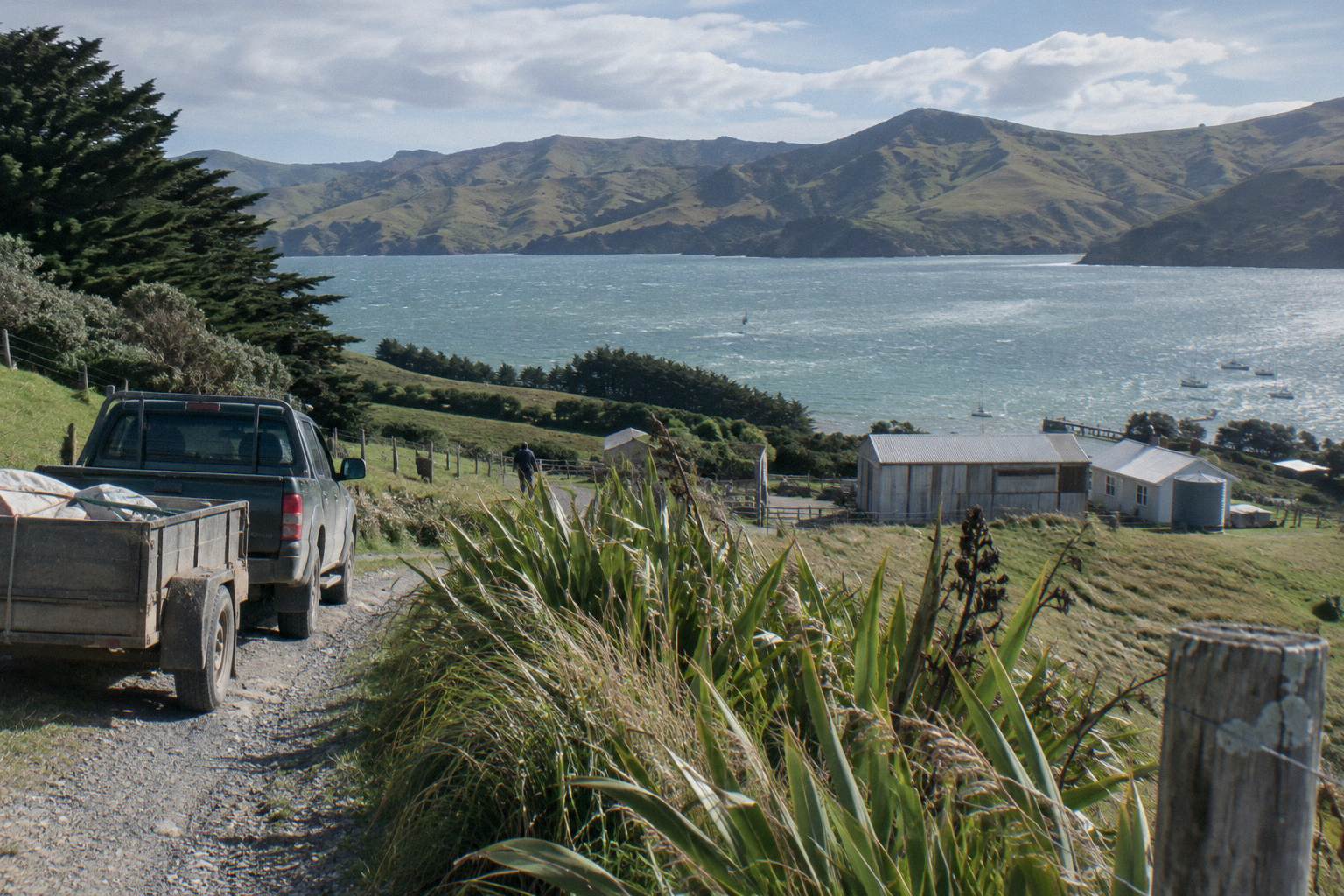
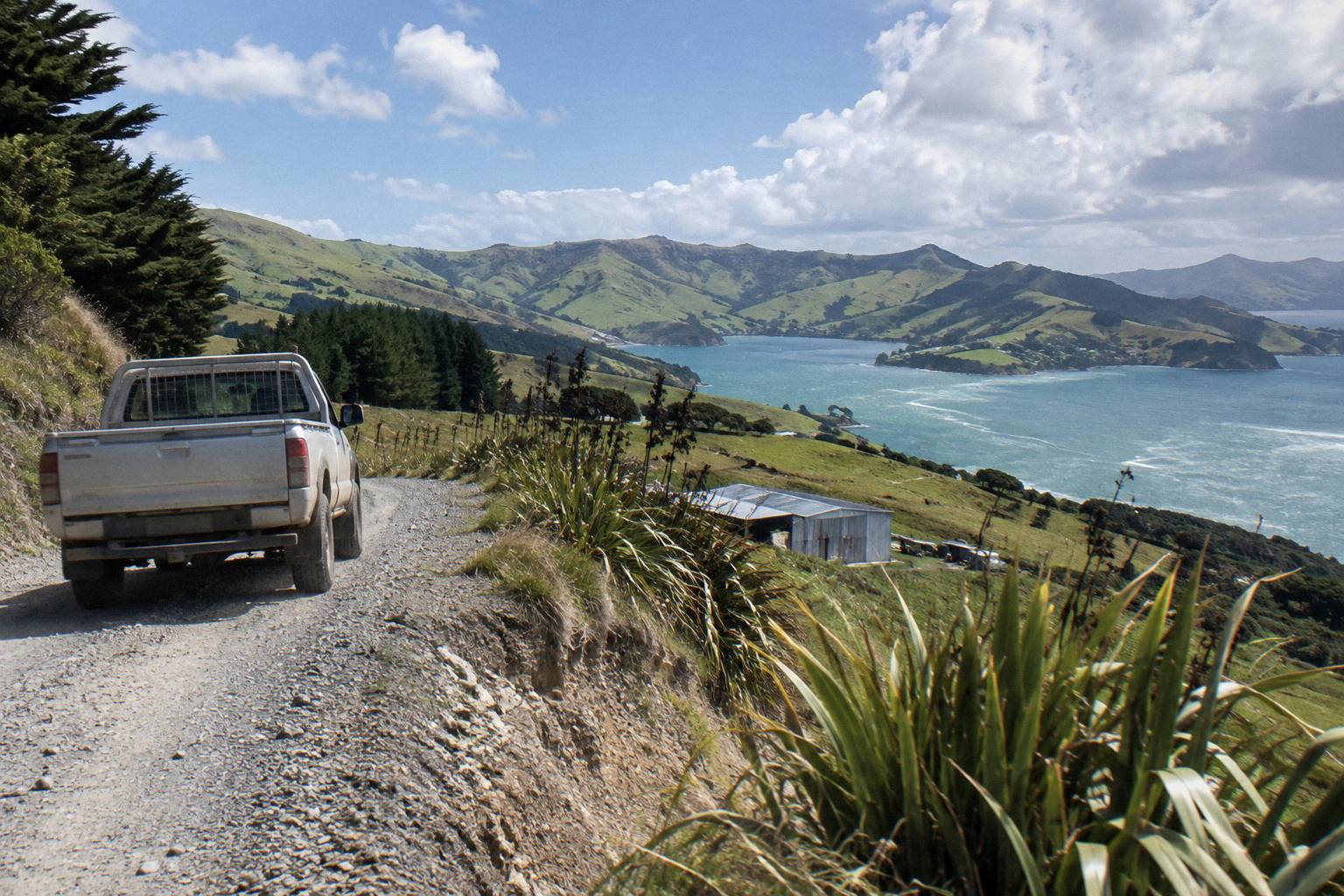
The farm is at 328 Wainui Main Road, French Farm, Akaroa, about 20 minutes' drive from Akaroa village, and the operator gives 73 km, just over an hour's drive, from Christchurch Central to its own farm gate. No transport to the farm is provided on any listing, so you self-drive or arrange your own transfer. Bookings are essential.
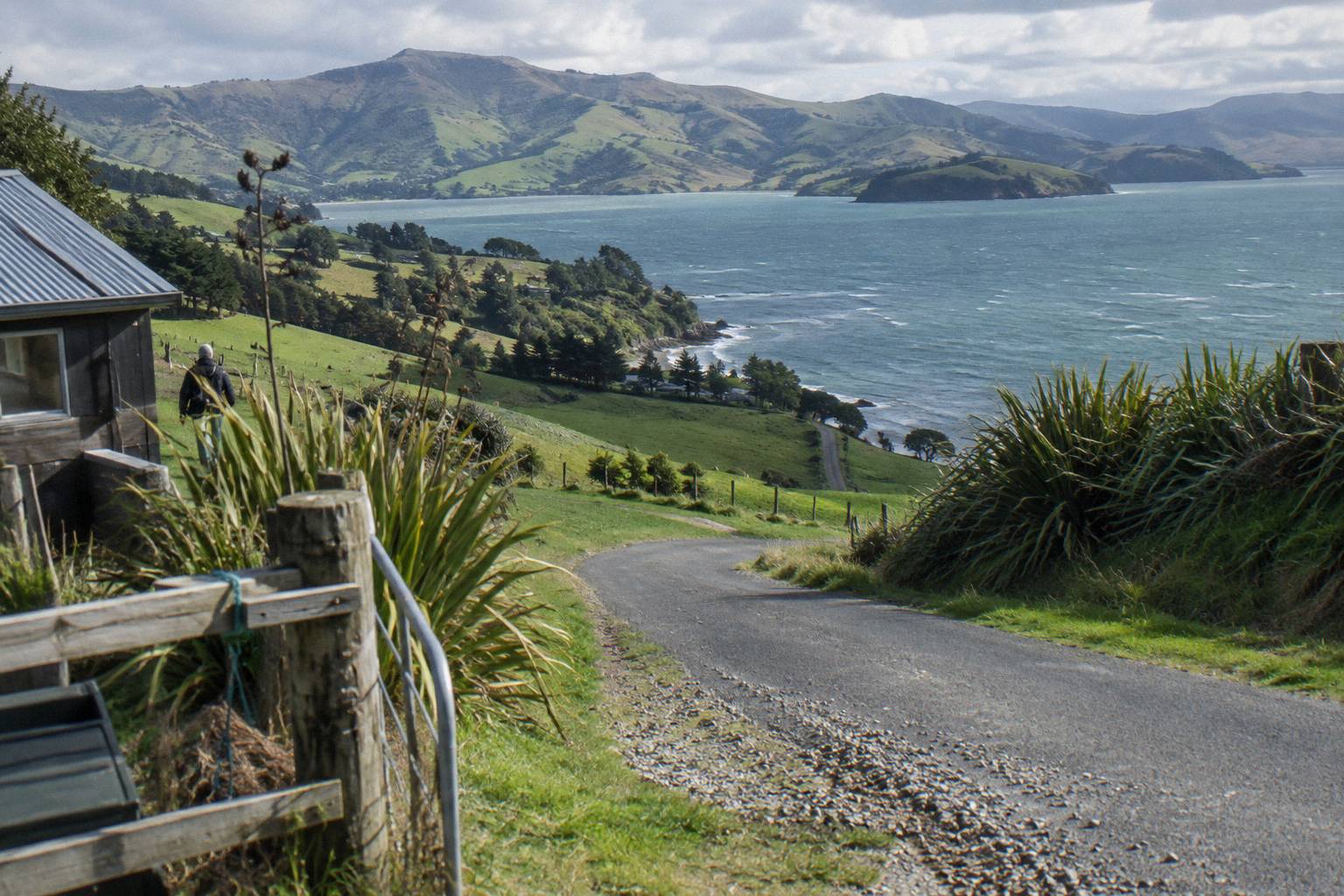
Getting the distances right matters here because two different figures circulate and they describe two different journeys. The official Akaroa visitor site gives about 75 km and an approximate drive time of 90 minutes for Christchurch to Akaroa village, travelling State Highway 75 via Tai Tapu and Little River. Shamarra's own figure, 73 km and just over an hour, is from Christchurch Central to the farm gate, which sits closer than the village. Use the visitor-site figure for the village, the operator's figure for the farm, and do not mix them. The road is sealed but winding, and the last petrol before Akaroa is at Little River, so fill up there if you are running low. The details are on the official Akaroa maps and planning page.
The French Farm position is worth a sentence of its own, because it changes the shape of a day. The farm sits on the northern side of the harbour basin, which means a visitor coming from Christchurch on State Highway 75 reaches the farm turn-off before descending into Akaroa village itself. In practical terms, an 11am booking does not require you to have already been into town; you can drive straight to the gate, do the hour, and then carry on to the village for lunch. Visitors starting from Akaroa face the reverse: a twenty-minute run back out along the harbour shore to reach the farm.
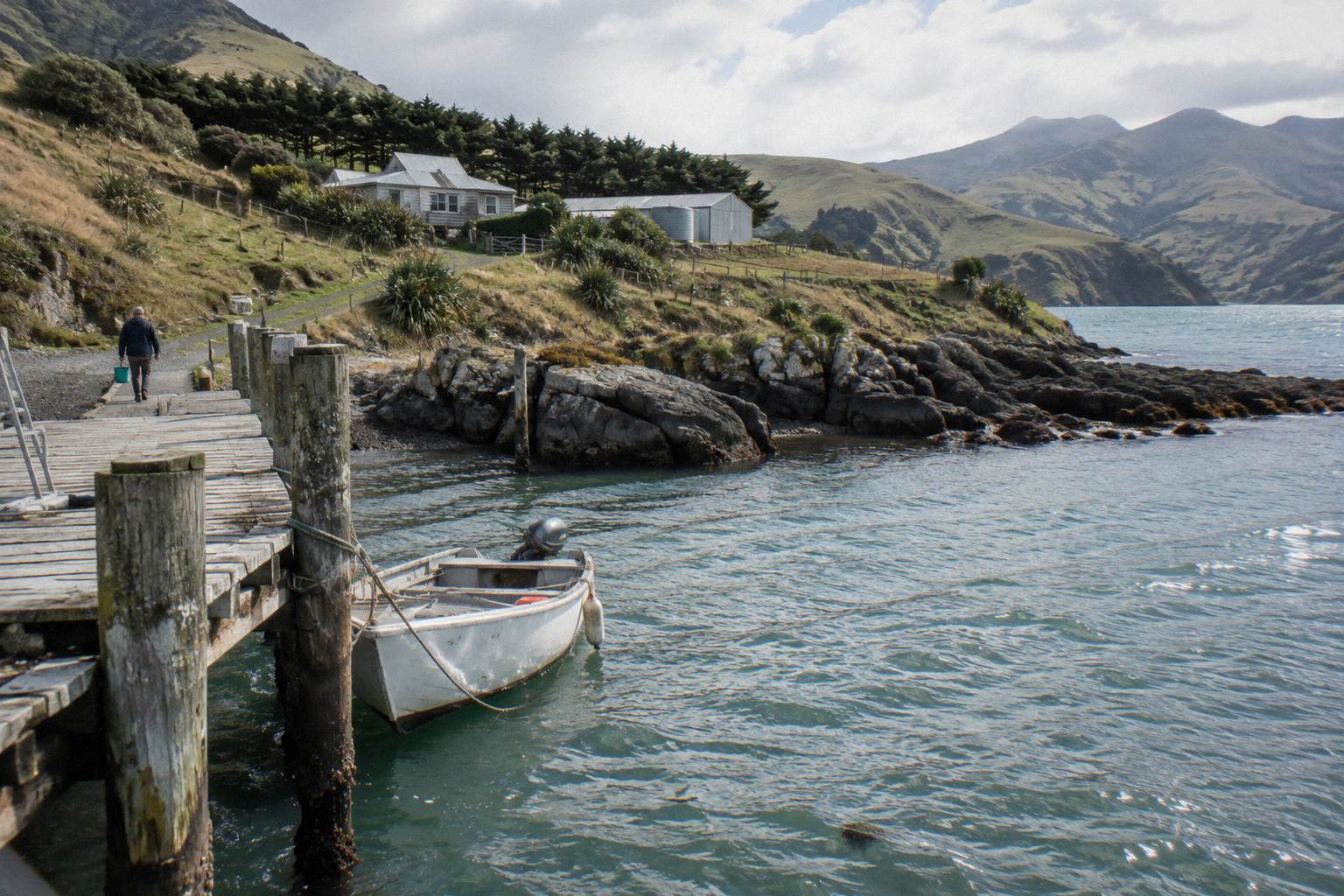
If you would rather not drive, the visitor site names two coach options for the Christchurch to Akaroa run: Akaroa French Connection and Canterbury Trails. Neither takes you to the farm gate, so from Akaroa village you still need a taxi, a rental car or a pre-arranged ride for the final 20 minutes. Cruise passengers face the same arithmetic, and the question of whether a ship call leaves enough time is covered in our piece on whether cruise passengers have time for an Akaroa farm visit.
For visitors who want the farm visit without any driving at all, there is one option that stops at Shamarra itself: the Full Day Akaroa Day Trip From Christchurch With Alpaca Farm And Harbour Cruise, a private eight-hour day trip run by Silver Fern Luxury Tours, picks up and drops off at your Christchurch accommodation and lists Shamarra Alpaca Farm among its stops, along with the Banks Peninsula scenic drive, free time in Akaroa town and a small-group harbour and dolphin cruise. Note carefully what the booking page says about costs: it lists tour activity costs and lunch as excluded, so check what is covered before booking. The full timings are on the booking page.
How Much Does A Shamarra Visit Cost And What Is Included?
Direct from the operator, the tour costs NZ$65 per adult, NZ$35 per child aged 3 to 15, and NZ$60 with an NZ SuperGold card. The booking page carries a separate US$36 per person from-price on its own basis; the two figures are priced differently and are never converted or compared. Included are entry, the guided tour, a feeding opportunity, a beverage and cookie, and shop access.
Treat those two price bases as exactly that, two bases. The operator's NZ$ figures are the farm's own prices, published on its official tour page, and the child rate applies to ages 3 to 15. The US$36 figure is the booking page's from-price per person, and a from-price is exactly what it says: the floor, not a quote. Neither number tells you the whole cost of your day, because transport is excluded everywhere. No listing provides transport to the farm.
| Cost basis | Adult | Child (3 to 15) | SuperGold | What it covers |
|---|---|---|---|---|
| Operator's own price (farm gate) | NZ$65 | NZ$35 | NZ$60 | Entry, guided tour, feeding, beverage and cookie, shop access |
| Booking-page from-price | US$36 per person | on the listing | on the listing | Same inclusions as listed; transport not provided |
What the visit does not promise is worth stating plainly, because these are the questions people ask most. No source states an infant or under-3 policy, a group size, transfers, lambing or pregnancy restrictions, private tours, or any holding or cuddling of alpacas. If a claim along those lines matters to your decision, the booking page is the place to verify it, and if it is not there, treat it as not offered. Our guide to Akaroa farm visit prices works through the same discipline for every farm option on the peninsula.
The child pricing deserves a note for families. The NZ$35 child rate applies from age 3, and the operator's page gives no under-3 policy at all, so a family with a toddler should read the live listing before assuming anything about infants. For a family with two adults and two children aged 3 to 15, the operator-price arithmetic works out to NZ$200 at the farm gate, and the booking-page from-price basis will differ because it is per person in US dollars on its own terms. Again, the two are never converted or compared.
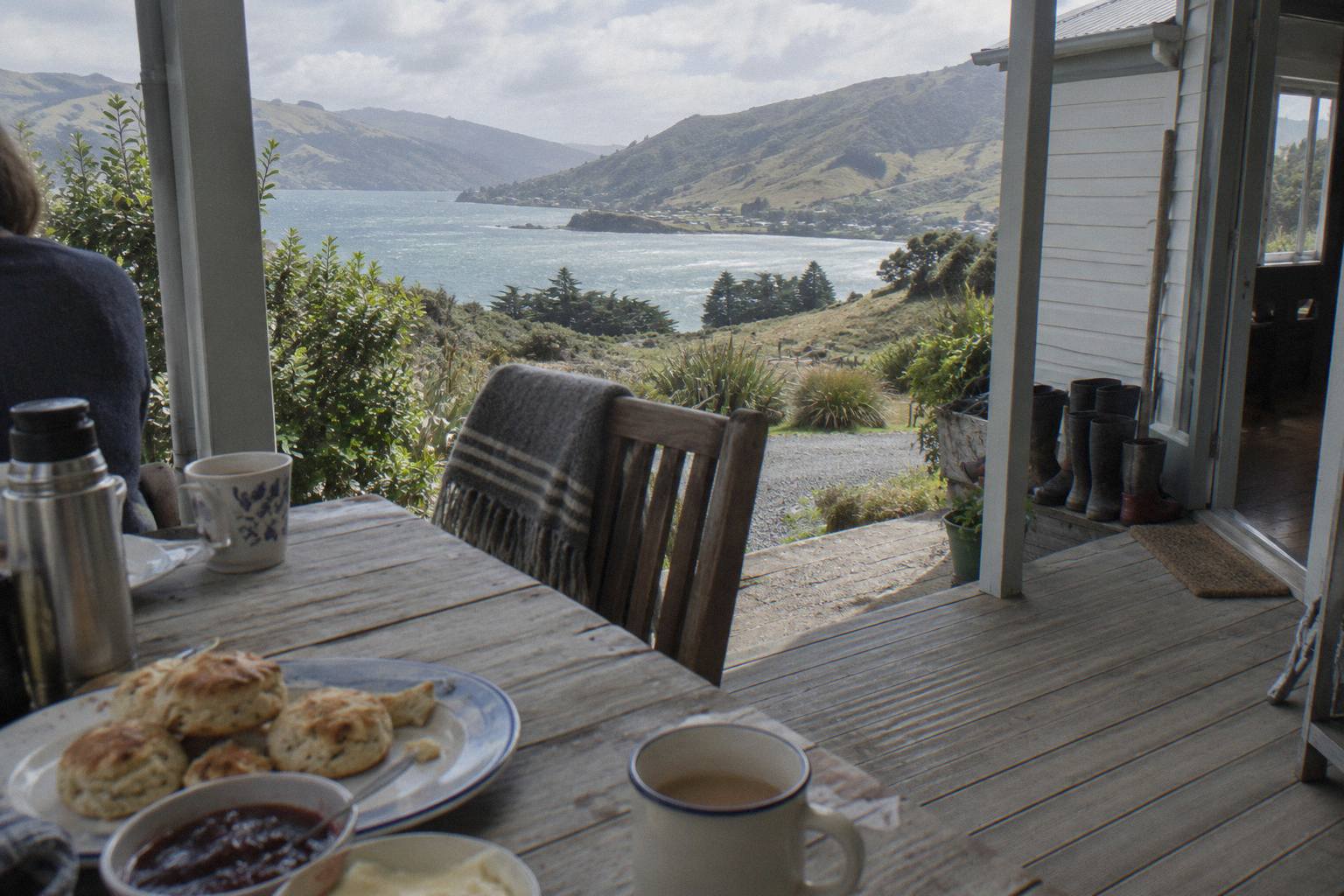
Cancellation is generous on the booking page: cancel up to 24 hours in advance for a full refund. The farm is open year round and closed only Christmas Day, so a winter visit is a real option, though hours of daylight and the winding road both argue for the earlier 11am or 1pm slots in the shorter months.
What Actually Happens During The One-Hour Tour?
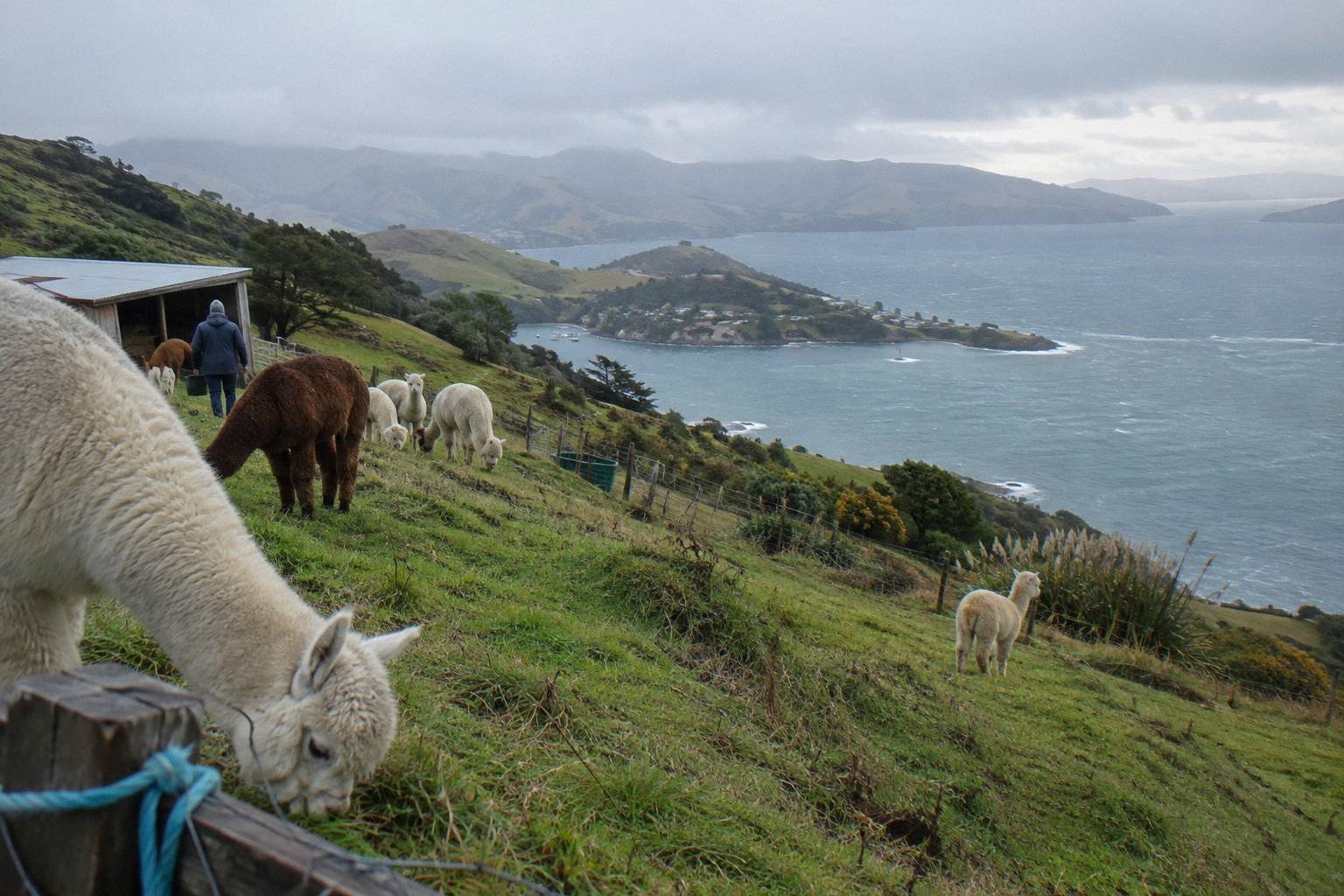
The operator's published itinerary runs in clear stages: a brief introduction to alpacas, a safety briefing, award-winning fleece on display to feel, then a walk through the herd, feeding the mothers with young, harbour views, and a beverage with a home-baked cookie before the shop. The whole visit takes about an hour, led by a guide in English or Mandarin.
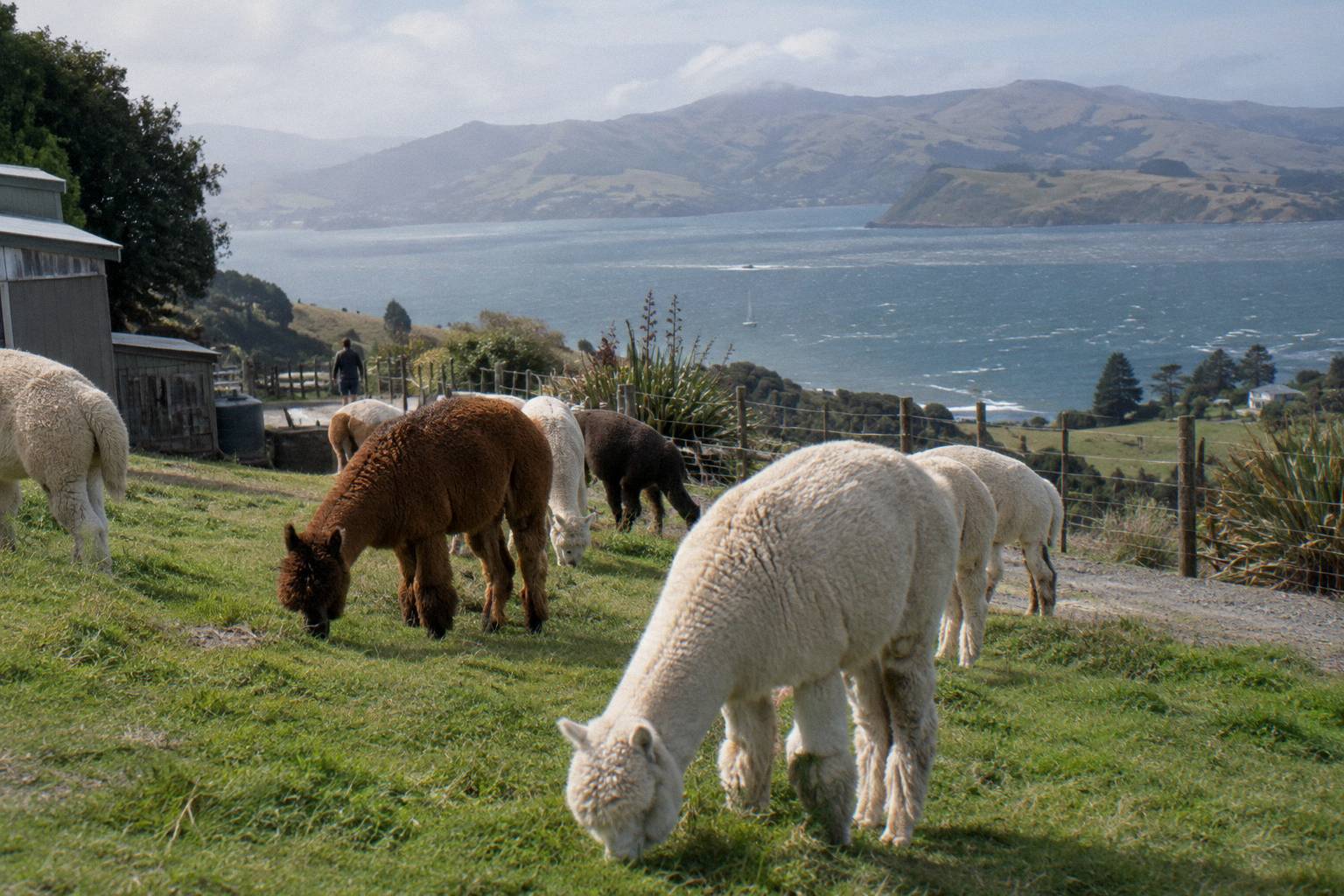
The safety briefing at the start is the operator's own line, and it exists for a reason that general references explain well. Alpacas are domesticated South American camelids, social herd animals that live in family groups, and they communicate through body language. They can spit to show dominance when distressed, fearful or agitated; not all alpacas spit, but all are capable of it, and it is mostly aimed at other alpacas, occasionally at a human. Most give a slight warning first by blowing air out, raising the head or pinning the ears back. None of this is a claim about Shamarra's own animals, but it is why a farm that walks visitors through a large herd starts with a briefing rather than a gate. Our longer piece on whether alpacas spit at visitors covers the behaviour in full.
| Stage of the visit | What happens |
|---|---|
| Introduction | A brief intro to alpacas and the farm |
| Safety briefing | Operator-led guidance before entering the herd |
| Fleece display | Award-winning fleece on display to feel |
| Herd walk | A walk through the herd, in the operator's words |
| Feeding | Feeding the mothers with young |
| Harbour views | A look out over Akaroa Harbour |
| Finish | A beverage and a home-baked cookie, then the alpaca shop |
Two breeds matter if you are interested in the fleece side of things. General references describe the Huacaya, with crimped fibre, and the Suri, with straight locks, and note that alpaca fibre is used for knitted and woven items much like sheep's wool, with animals typically sheared once a year in spring. The shop at the end of the tour ties directly into this part of the visit, since it sells 100% dye-free New Zealand-made knitwear, which is a reasonable prompt to look at the fleece display with your hands rather than your eyes. Alpacas are also often confused with llamas, which is a running joke on every alpaca farm; if you have wondered where you can see llamas and alpacas around New Zealand, this is the visit that settles the difference in person. Full tour details and booking are on the Shamarra live listing, and Check availability.
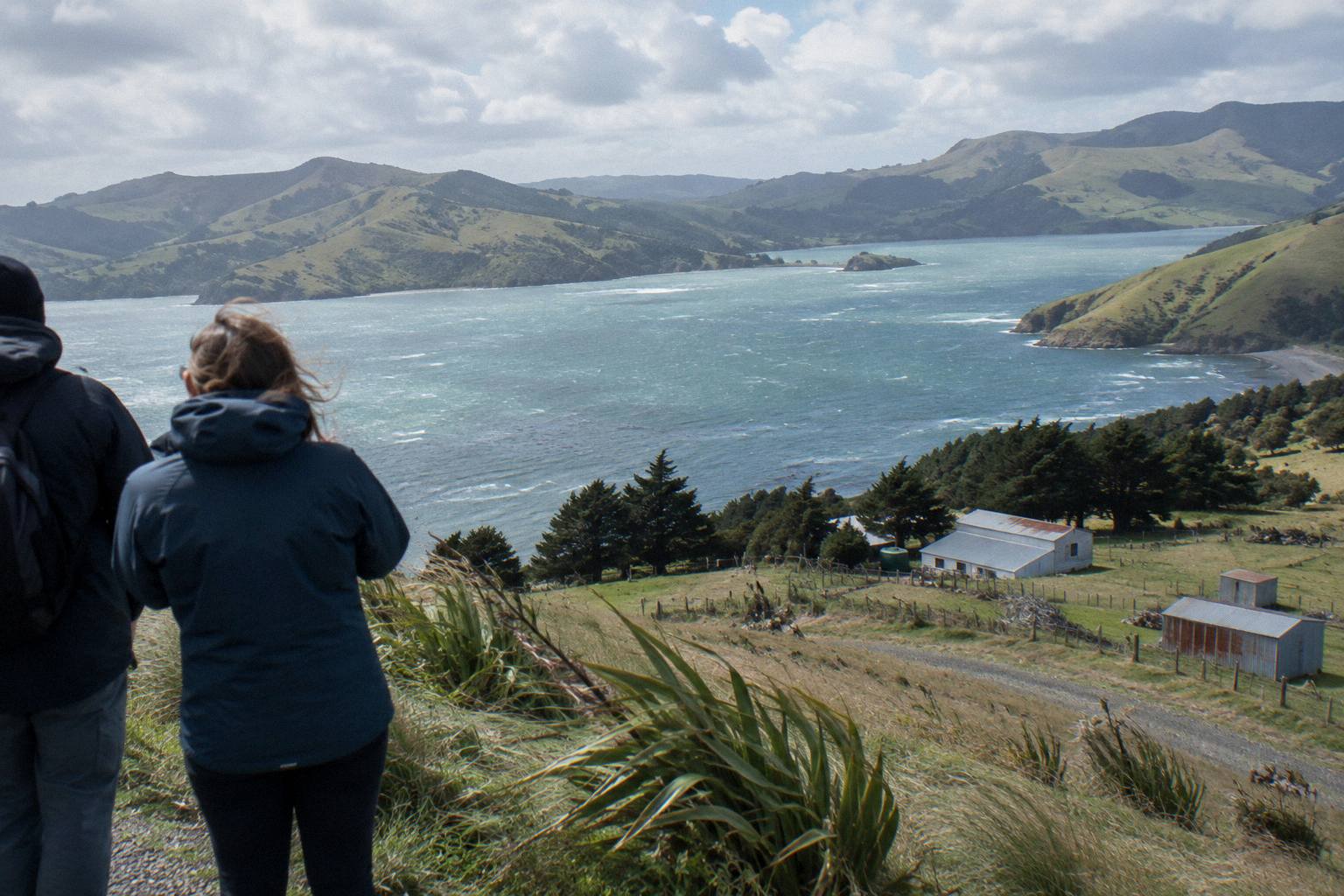
One hour sounds short to first-time readers, and the honest answer is that it is short by design. The itinerary is tight, the stages flow into each other, and the shop at the end is untimed, so a visitor who lingers over knitwear will spend longer on site than the tour itself. Plan for the hour, but do not schedule the next thing in Akaroa for exactly sixty minutes after your slot begins; the drive back down the harbour shore will eat any slack you thought you had.
Alpaca Farm Tour New Zealand: Why Akaroa Is The Sourced Option
For the general query of an alpaca farm tour in New Zealand, this guide can only source one verified, bookable alpaca farm visit: Shamarra, above Akaroa Harbour on Banks Peninsula. It is the only operator with its own official farm-tour page in this research set, with published times, published prices and a 4.9 rating from 139 reviews. No other New Zealand alpaca farm is named here.
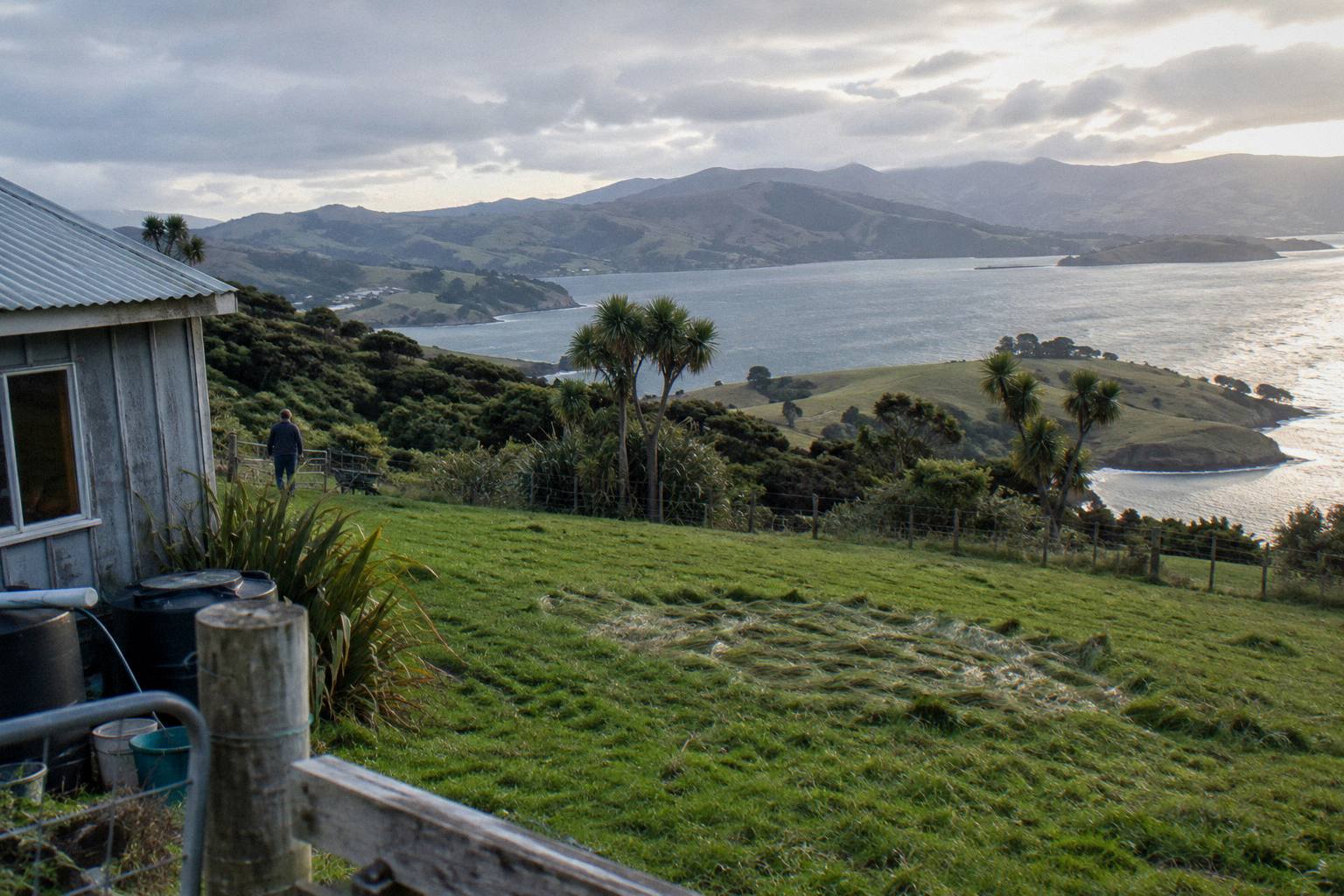
That restraint is deliberate. Plenty of New Zealand farms keep alpacas, but a page that recommends a farm it has not verified is just noise, and inventing alternatives is worse. What the research does support is that Akaroa's alpaca visit is unusually complete: a large herd, an operator who has run tours since 2004, set tour times seven days a week, and a position that puts it within reach of both an Akaroa stay and a Christchurch day trip. General references on the town add context: Akaroa is a small settlement at the end of State Highway 75, its Kāi Tahu Māori name meaning Long Harbour, with French settlers naming the area Port Louis-Philippe. The peninsula's economy rests on fisheries, farming and tourism, and this tour sits exactly on that seam.
The Banks Peninsula backdrop is not decoration. General references describe the peninsula, Māori name Te Pātaka o Rākaihautū, as a rocky east-coast landmass of about 1,200 square kilometres formed by two extinct volcanoes, with two deep harbours, Lyttelton and Akaroa. The farm's harbour setting on that volcanic terrain is the operator's own description, and it shapes the visit: the herd walk comes with views rather than a shed.
How Does Shamarra Compare With Other Farm Visits Around Akaroa?
Shamarra is the peninsula's dedicated alpaca visit at about 1 hour, rated 4.9 from 139 reviews. The closest alternatives differ in kind: a 2.5-hour sheep-farm shore excursion rated 4.5 from 11 reviews, a 2 or 4 hour penguin and sheep-farm tour rated 4.8 from 136 reviews, and an 8-hour private day trip from Christchurch. It is the only one of the four centred on alpacas.
The first comparison is the Akaroa Harbour And Sheep Farm Shore Excursion. It runs about 2.5 hours from 2:00pm, meeting at the Britomart Cannon on the Akaroa waterfront beside the i-SITE, and takes a shared group of up to 22 around a fixed loop: 30 minutes on Akaroa Harbour, 20 at Hilltop Tavern, 15 at Barrys Bay Cheese and 60 at Coombe Farm, with a sheep shearing demonstration, sheepdog work and afternoon tea included, along with port pickup and drop-off. Cruise passengers should note that tenders currently use Drummond's Jetty while the Main Wharf is rebuilt, per the New Zealand Cruise Association port page, never say tendering to the main wharf. The cheese stop has real history behind it: the original Barrys Bay factory dates from 1895, the current building from 1953, and it won the Bledisloe Cup at the British Dairy Show in 1950, all on the factory's own history page. For a deeper look at that side of the peninsula, our Akaroa sheep farm tour guide works through the whole loop.
The second comparison is Pohatu Penguins Scenic Nature Tour With A Working Sheep Farm, which is best understood as a penguin-led scenic tour with a sheep-farm stop rather than a farm show. It runs 2 or 4 hours from 8 Rue Balguerie in Akaroa, travelling by 4WD minivan with a guide and live commentary, stopping at Pohatu Bay, a working sheep farm and penguin colony, a crater rim lookout at 700 m and, on the 4-hour version only, Akaroa Heads Lighthouse Reserve, with tea, coffee and a muffin or cake on the longer option. The from-price of US$58 covers the 2-hour tour; the 4-hour costs more. It is not suitable for wheelchair users or people with mobility impairments, which matters if accessibility drives your choice. Our accessibility guide for Akaroa farm visits works through the full picture, since Shamarra itself is wheelchair and pushchair accessible.
| Tour | Duration | Category | Rating | Booking-page from-price |
|---|---|---|---|---|
| Shamarra Alpaca Farm Tour | About 1 hour | Alpaca farm visit | 4.9 from 139 reviews | US$36 per person |
| Akaroa Harbour And Sheep Farm Shore Excursion | About 2.5 hours | Sheep farm visit | 4.5 from 11 reviews | US$65.90 per person |
| Pohatu Penguins Scenic Nature Tour | 2 or 4 hours | Sheep farm and nature | 4.8 from 136 reviews | US$58 per person, 2-hour tour |
| Full Day Akaroa Day Trip From Christchurch | 8 hours | Private day trip | New listing, no rating yet | US$165 per person, four-adult minimum |
The third comparison is the day trip already described above: private, eight hours, pickup from your Christchurch accommodation, with Shamarra as a listed stop and a minimum booking equivalent to four adult fares. If you are choosing on family grounds, the child price at Shamarra applies from age 3, and our piece on Akaroa farm visits with kids compares the options for younger travellers. If you are choosing on the animal question itself, alpacas against sheep, our alpaca farm or sheep farm comparison lays out the differences side by side. This site, Akaroa Farm Tour, exists precisely to keep these distinctions straight.
Booking, Times And Practical Planning
Book Shamarra in advance; the operator states bookings are essential, and the tour runs at fixed times of 11am, 1pm and 4pm. Cancellation on the booking page is a full refund up to 24 hours before. The farm is wheelchair and pushchair accessible, no transport is provided, and the visit itself takes about an hour, so plan the drive, not the gate time.
Timing the day around those three slots is the main planning decision. From Akaroa village the farm is about 20 minutes away, which makes any of the three times workable from a town base. From Christchurch, the operator's own figure of just over an hour from Christchurch Central to the farm gate means the 11am slot wants an early start and the 1pm is the comfortable one; the visitor site's separate 90-minute, 75 km figure to Akaroa village applies if you plan to pair the farm with town time afterwards. For a full pairing plan, see our Akaroa farm and harbour cruise day itinerary.
| Planning item | Detail | Source basis |
|---|---|---|
| Tour times | 11am, 1pm and 4pm, 7 days a week | Operator |
| Duration | About 1 hour | Operator |
| Booking | Essential | Operator |
| Cancellation | Full refund up to 24 hours before | Booking page |
| Accessibility | Wheelchair and pushchair accessible | Booking page |
| Transport | None provided; self-drive | Operator and booking page |
| Closed | Christmas Day only | Operator |
Weather rarely cancels anything here: the farm is open year round, and the practical questions are what to wear and how firm your footwear is, which our what to wear on an Akaroa farm visit guide answers in detail. If you are wondering whether to build a whole stay around the peninsula rather than a single hour, our Banks Peninsula farm day trip with Akaroa village guide sketches the wider day, and how long an Akaroa farm visit takes settles the timing question across all four tours.
The one date to steer around is Christmas Day, and beyond that the calendar is yours. A last practical note on the 4pm slot: it is the operator's own listed time, so it is a real option, but it means finishing near the end of the afternoon, and the drive back to Christchurch on a winding road in fading light is worth factoring in during the winter half of the year. Whatever you choose, book the slot before you plan the drive, because a fixed 11am, 1pm or 4pm start does not bend to a late arrival.
Common Questions About Shamarra Alpaca Farm Tours
How Long Is The Shamarra Alpaca Farm Tour?
About one hour, per the operator's own tour page. The stages are a brief intro, a safety briefing, fleece to feel, a walk through the herd, feeding the mothers with young, harbour views, then a beverage and home-baked cookie before the shop.
What Times Does The Shamarra Tour Run?
11am, 1pm and 4pm, seven days a week, year round. The only closure is Christmas Day, and the operator states bookings are essential for every session.
What Does Shamarra Cost?
From the operator: NZ$65 per adult, NZ$35 per child aged 3 to 15, and NZ$60 with an NZ SuperGold card. The booking page separately shows a US$36 per person from-price on its own basis; the two are never converted or compared.
Is Transport To Shamarra Provided?
No. No transport is provided on any listing. The farm is about 20 minutes from Akaroa village, and the operator gives 73 km, just over an hour's drive, from Christchurch Central to the farm gate.
Can You Hold Or Cuddle The Alpacas?
No source states any holding or cuddling. The operator's itinerary offers a walk through the herd and feeding the mothers with young, plus fleece to feel. Treat anything beyond that as not offered unless the booking page says otherwise.
What Is Shamarra's Cancellation Policy?
On the booking page, cancel up to 24 hours in advance for a full refund. The farm itself is open year round and closed only on Christmas Day.