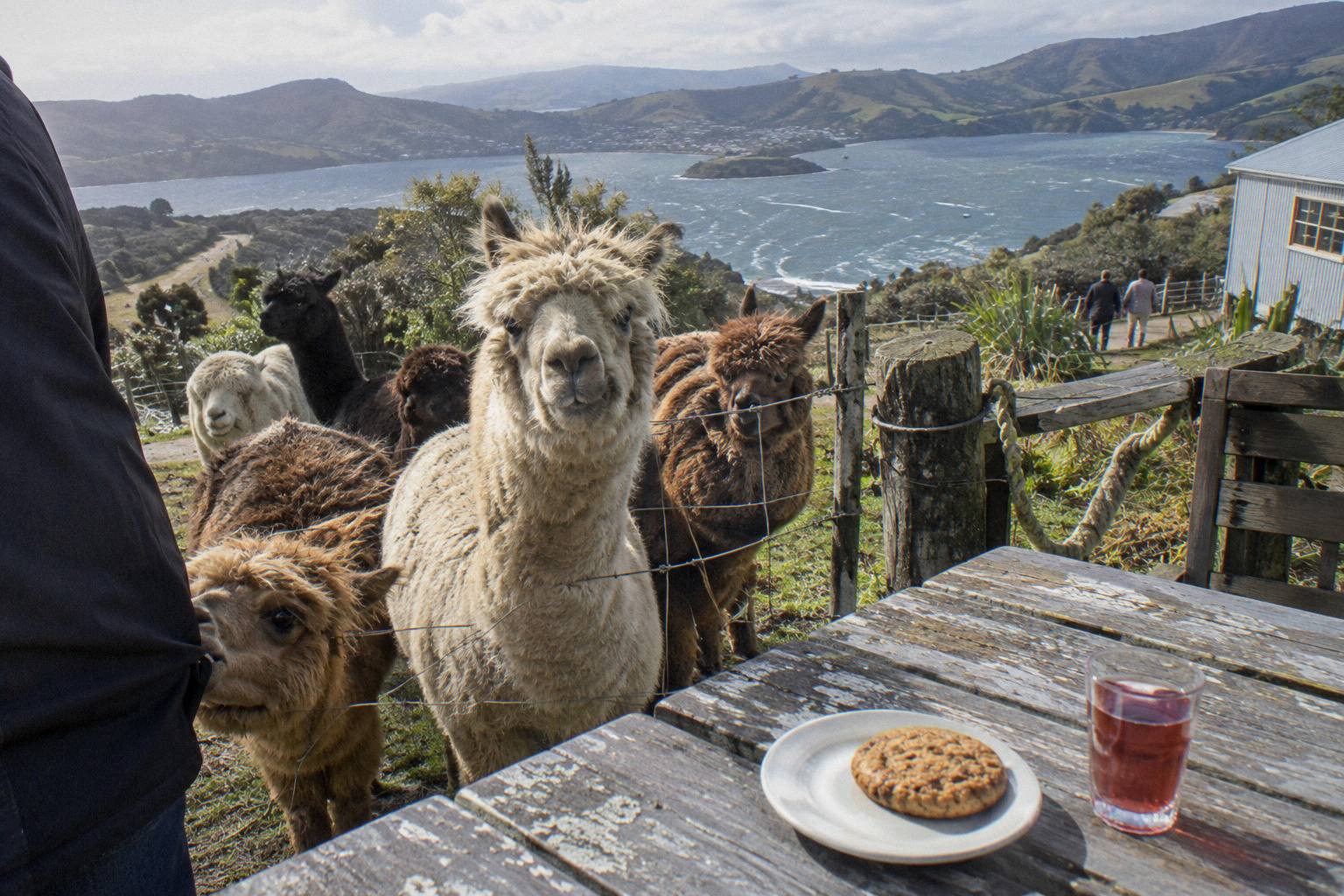
What Is The Point Of An Alpaca Farm?
Why people book an alpaca farm visit in Akaroa, what the hour actually holds, from fleece handling and feeding to the shop, and who it suits best.
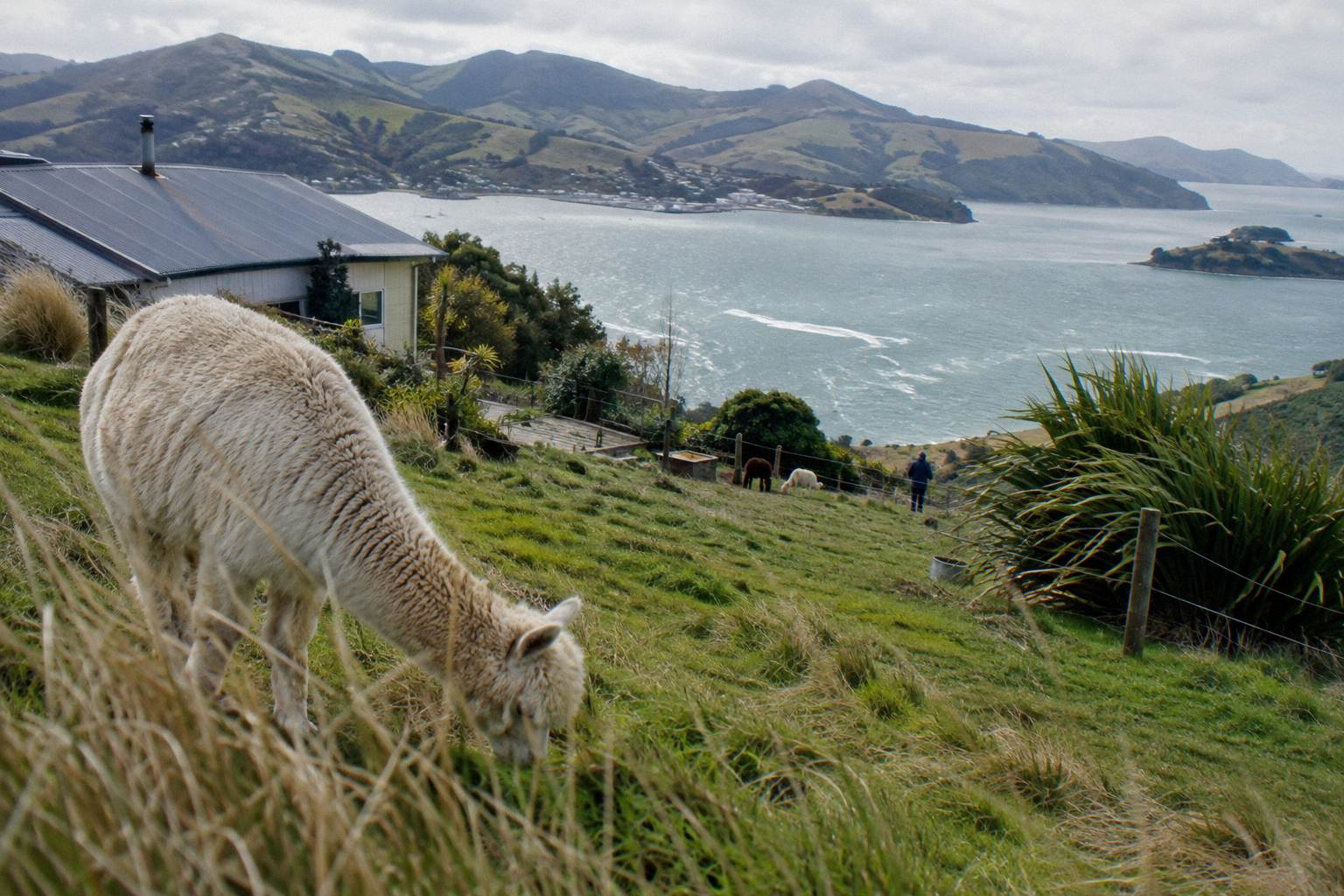
The point of an alpaca farm is contact. You walk through a real herd, you feed the animals by hand, you handle raw fleece that has won awards, and you learn why these animals are farmed at all. General references note alpacas are social herd animals from South America, farmed for soft fibre. A farm visit turns that abstract fact into something you have touched, fed and smelled within a single hour.
That is the honest short version, but it deserves unpacking, because a lot of people arrive at this question having only seen alpacas in photographs. They are odd-looking animals, part camel, part sheep, part cartoon, and the suspicion is reasonable that a visit might amount to standing at a fence for ten minutes and then leaving. At Akaroa's one open farm tour, it does not work that way.
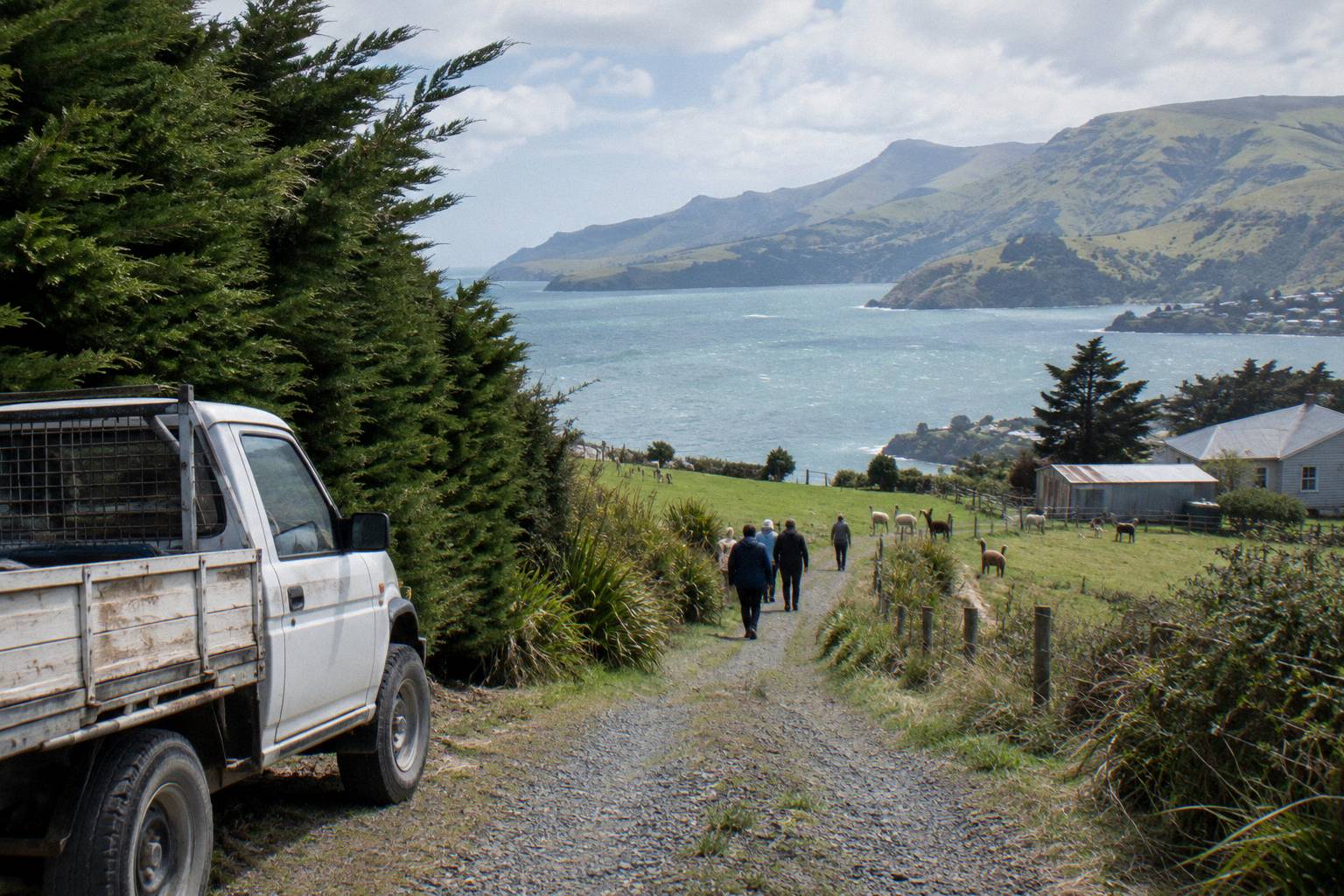
The visit in question is the Shamarra Alpaca Farm Tour, rated 4.9 from 139 reviews, run on a farm at 328 Wainui Main Road, French Farm, about 20 minutes from Akaroa village. The operator, Shamarra Alpaca Farm Tours, is the only operator in this area with its own official farm-tour page, and the picture it paints is of a structured hour rather than a passive look. There is an introduction, a safety briefing, a walk through the herd, a feeding session with the mothers and their young, and a beverage and home-baked cookie at the end.
If you are weighing this against the other farm experiences around Akaroa, the comparison set looks like this:
The question behind the question, usually, is whether an hour with alpacas is worth the drive or the shore-visit time. The answer depends on what you want from a farm: spectacle, contact, or understanding. An alpaca farm delivers the second and third in a way few other farm formats can, because alpacas are handled animals that tolerate visitors walking among them, and because the fibre story gives the visit a point beyond the photo.
What Actually Happens On An Alpaca Farm Tour?
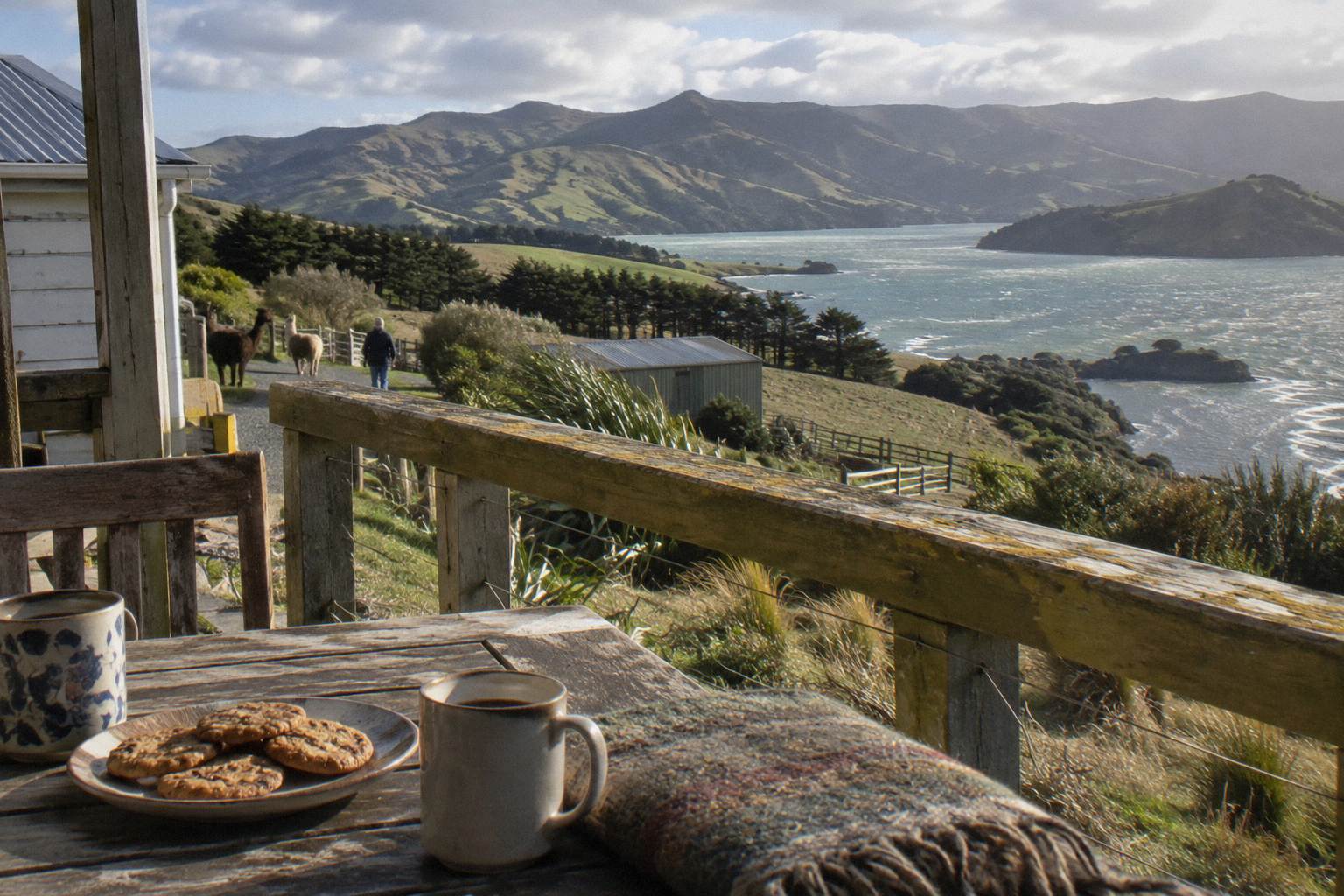
An alpaca farm tour at Akaroa follows a fixed arc over about one hour: a short introduction to alpacas, a safety briefing, fleece on display to handle, a guided walk through the herd, time feeding the mothers with their young, harbour views, and a drink and cookie to finish. The booking page lists entry, the guided tour, the feeding opportunity, refreshments and shop access as included.
The structure matters more than it sounds. Alpacas are not petting-zoo animals in the usual sense; general references describe them as domesticated South American camelids kept in herds, animals that read body language and can spit when distressed, fearful or agitated, mostly at each other and only occasionally at a person. That is precisely why the operator opens with a safety briefing: it is the operator's own line on its official tour page, and it exists so the walk through the herd goes calmly for both species.
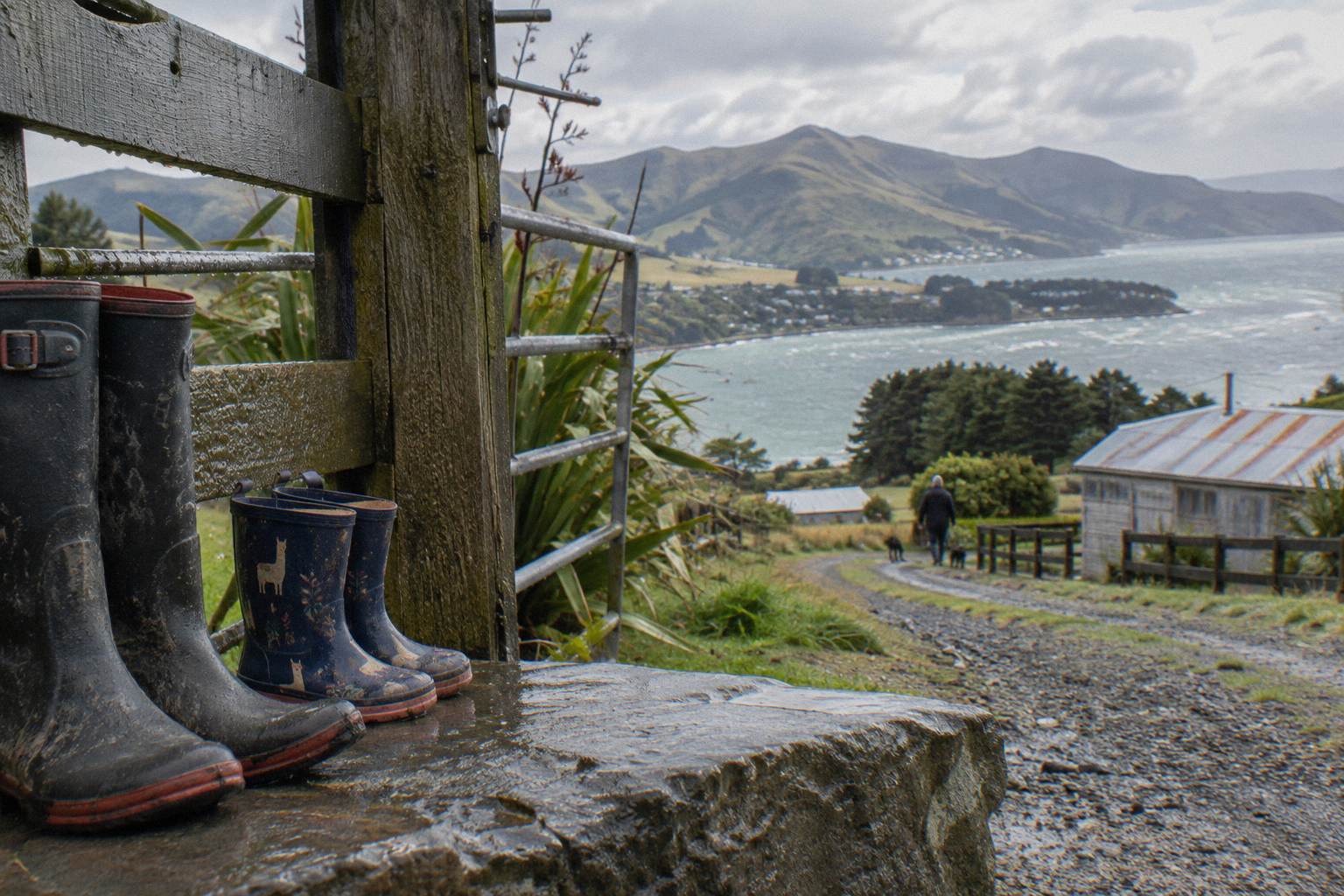
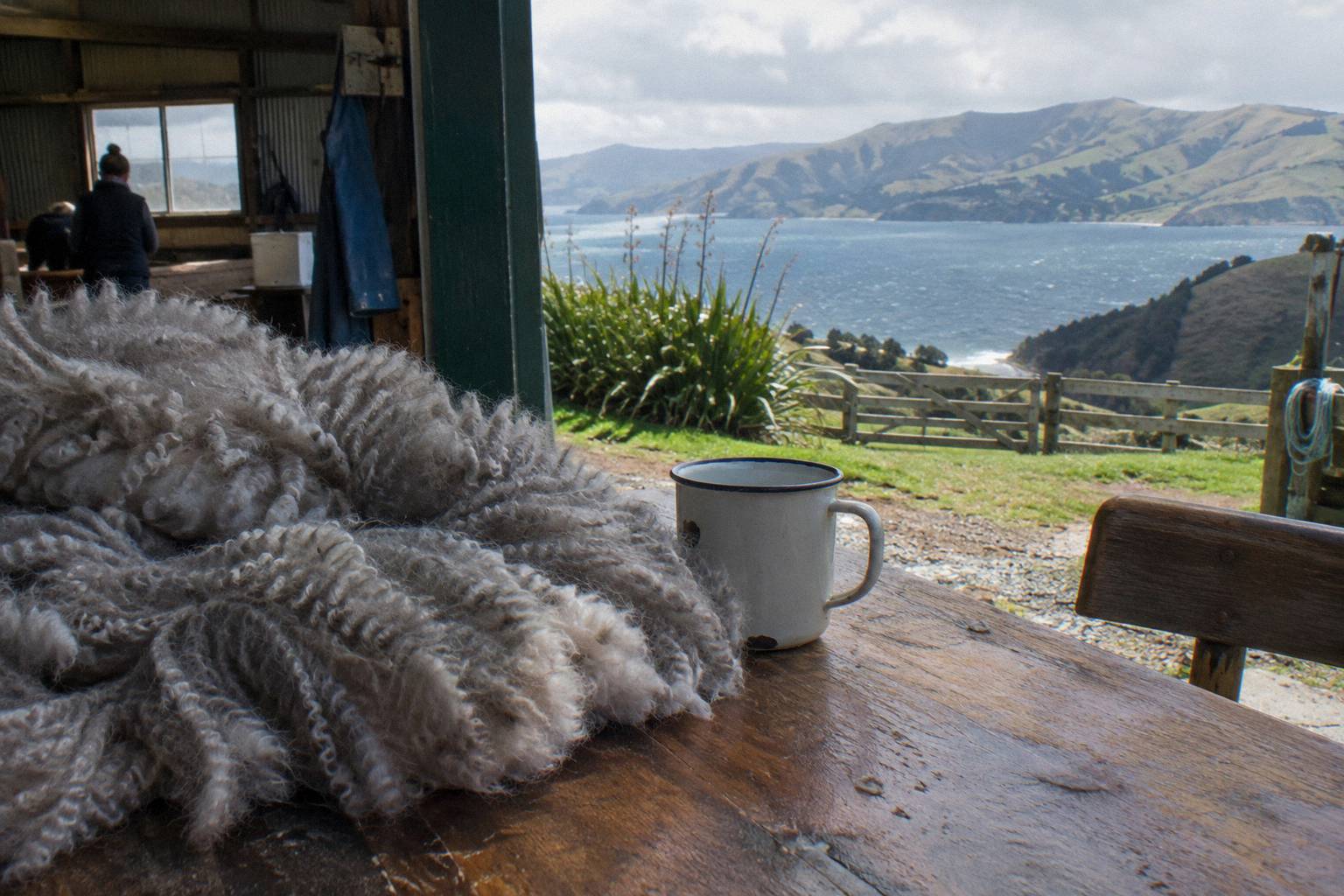
The fleece segment is the part first-time visitors consistently underestimate. Alpacas come in two breeds, the Huacaya with crimped fibre and the Suri with straight locks, and the difference is obvious the moment it is in your hands rather than in a product description. Shamarra displays its award-winning fleece for exactly this purpose. General references note alpaca fibre is used for knitted and woven items much like sheep's wool; the display is the one moment in the hour where the farming rationale behind the whole industry becomes physical.
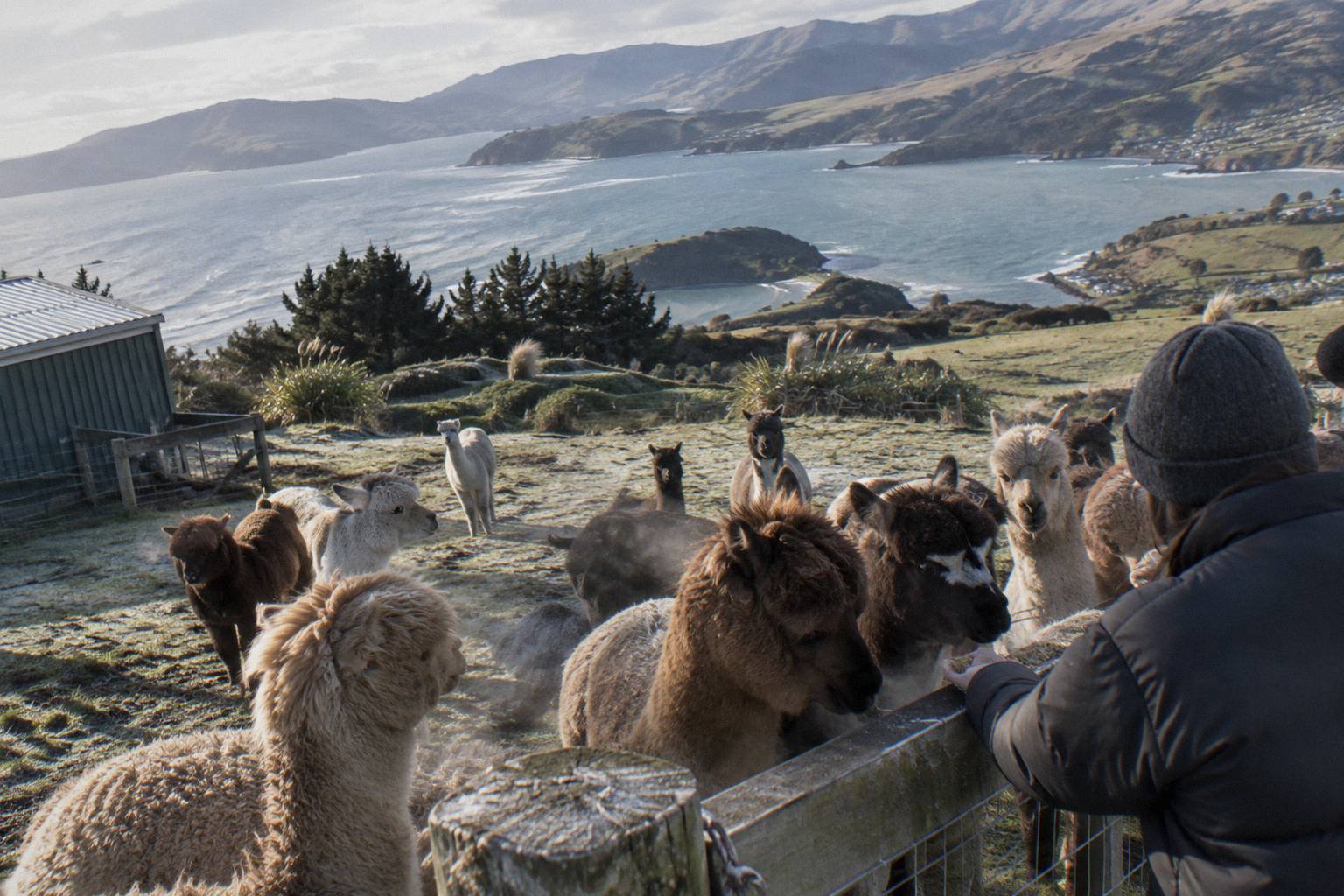
Here is the hour as the operator lays it out, alongside what each part is actually for:
| Segment of the tour | What it involves | Why it exists |
|---|---|---|
| Introduction to alpacas | A brief talk on the animals and the farm | Frames alpacas as herd animals, not pets |
| Safety briefing | How to behave around the herd | Alpacas communicate by body language and can spit when agitated |
| Fleece display | Award-winning fleece to feel | Shows the two breeds and the fibre the farm exists to produce |
| Walk through the herd | Guided walking among the animals | The core contact most visitors come for |
| Feeding session | Feeding the mothers with their young | The hands-on highlight, especially with children |
| Harbour views | Time looking out over the water | The farm sits in an extinct volcano harbour setting |
| Finale | Beverage and home-baked cookie | A pause before the shop, which sells dye-free NZ-made knitwear |
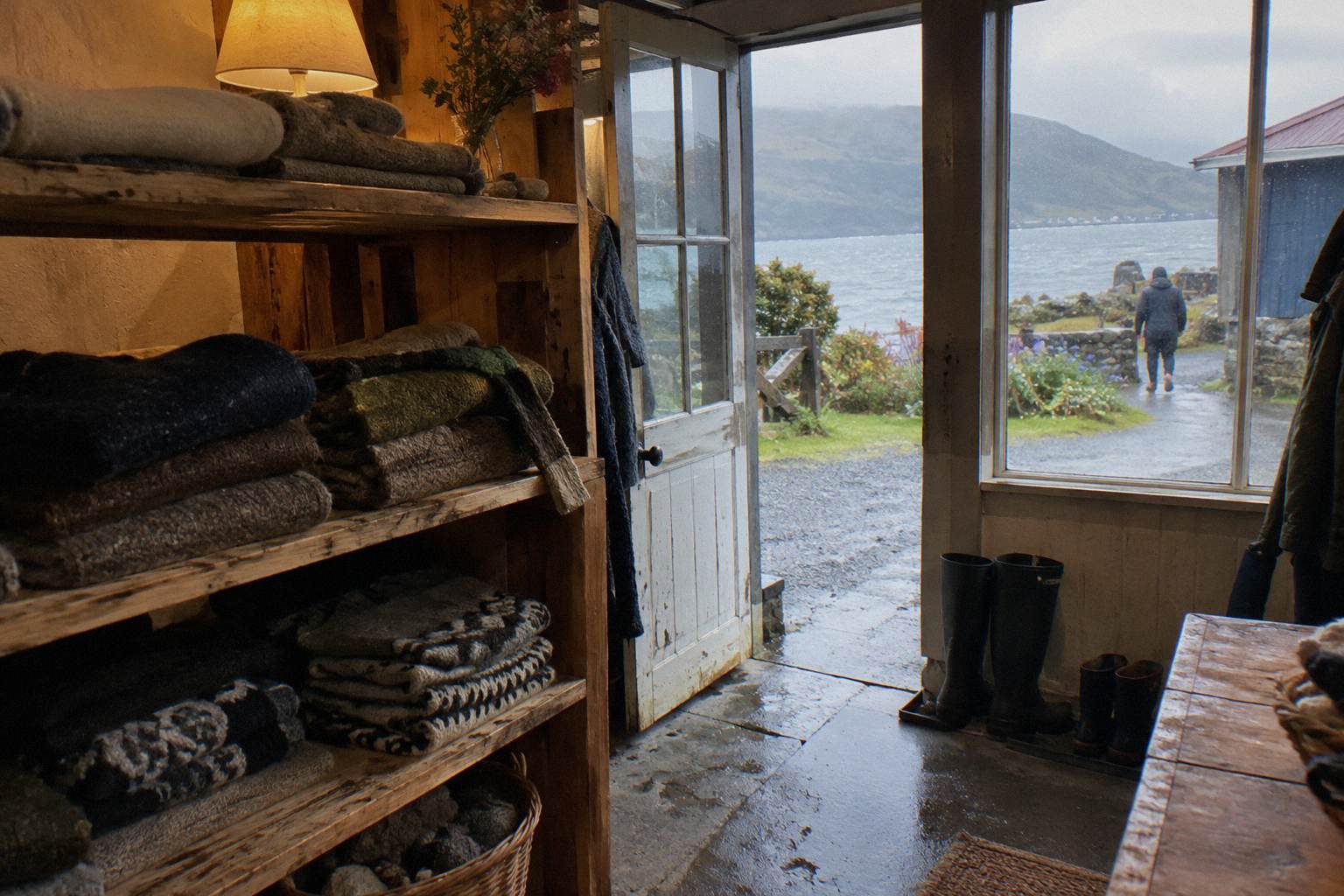
The cookie and the shop are not decoration. The shop sells 100 percent dye-free New Zealand-made knitwear, which is the fibre story arriving at its logical end: animal, fleece, garment, in one place. People who ask what the point of an alpaca farm is often find the answer in that chain, seeing the whole operation from animal to product inside a single hour. More on the practical side of the visit, including timing and what to wear, sits in our guide to Shamarra alpaca farm tours.
One limit worth stating plainly: no transport to the farm is provided. You self-drive, about 20 minutes from Akaroa village, or you contact the operator about arrangements. The farm's own page gives the distance as 73 km, just over an hour's drive from Christchurch Central, while the official visitor site puts Christchurch to Akaroa village at about 75 km and roughly 90 minutes, so plan the farm as slightly nearer than the town if you are coming from the city. If you would rather not drive at all, there is a format that bundles the farm into a bigger day, covered further down.
Do You Actually Get To Feed And Touch The Alpacas?
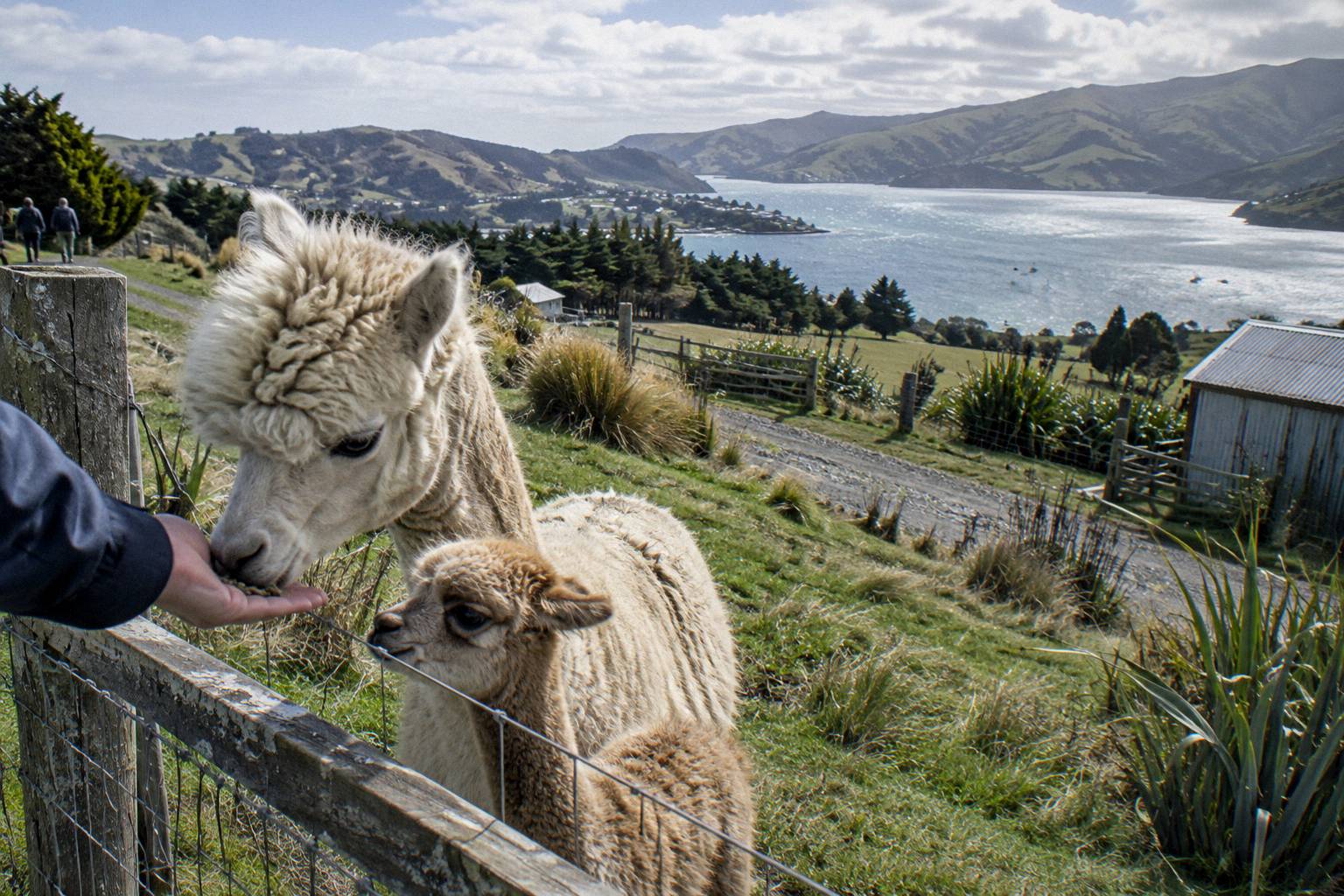
Yes, feeding is a listed inclusion. The booking page for the Shamarra tour lists an opportunity to feed alpacas among what is covered, and the operator's own itinerary names feeding the mothers with their young as a distinct segment of the hour. What is not stated anywhere is holding or cuddling: no source claims it, so nobody should promise it to a child on the drive out.
This distinction, feeding yes, cuddling not stated, is the single most useful thing a parent or an eager visitor can know before booking. Feeding an alpaca from your hand is a genuine interaction: the animal approaches, decides, and takes the food, on its own terms. It is also, usually, the moment cameras come out, and it is the reason the session is placed with the mothers and their young, where the animals are most accustomed to people.
General references add context that makes the interaction richer rather than more nervous. Alpacas are social herd animals living in family groups; they are often confused with llamas; and while all alpacas are capable of spitting, not all do, most spitting is aimed at other alpacas, and most animals give a slight warning first, by blowing air out, raising the head or pinning the ears back. None of this is a claim about Shamarra's own animals, and the farm's safety briefing is there precisely to set expectations. But knowing the background turns a random animal encounter into a legible one: you can see the herd dynamics working around you.
What the farm does not offer, and what nobody should arrive expecting, is a lambing-style show or a shearing demonstration as part of this hour. General references note alpacas are typically sheared once a year in spring, but no shearing calendar or demonstration is stated for this farm. If a shearing show is what you are after, that is a different format entirely, and our piece on whether the Akaroa sheep farm tour includes shearing covers that side of Banks Peninsula. The alpaca hour is quieter, and its point is proximity rather than performance.
Is An Alpaca Farm Visit Good For Kids?
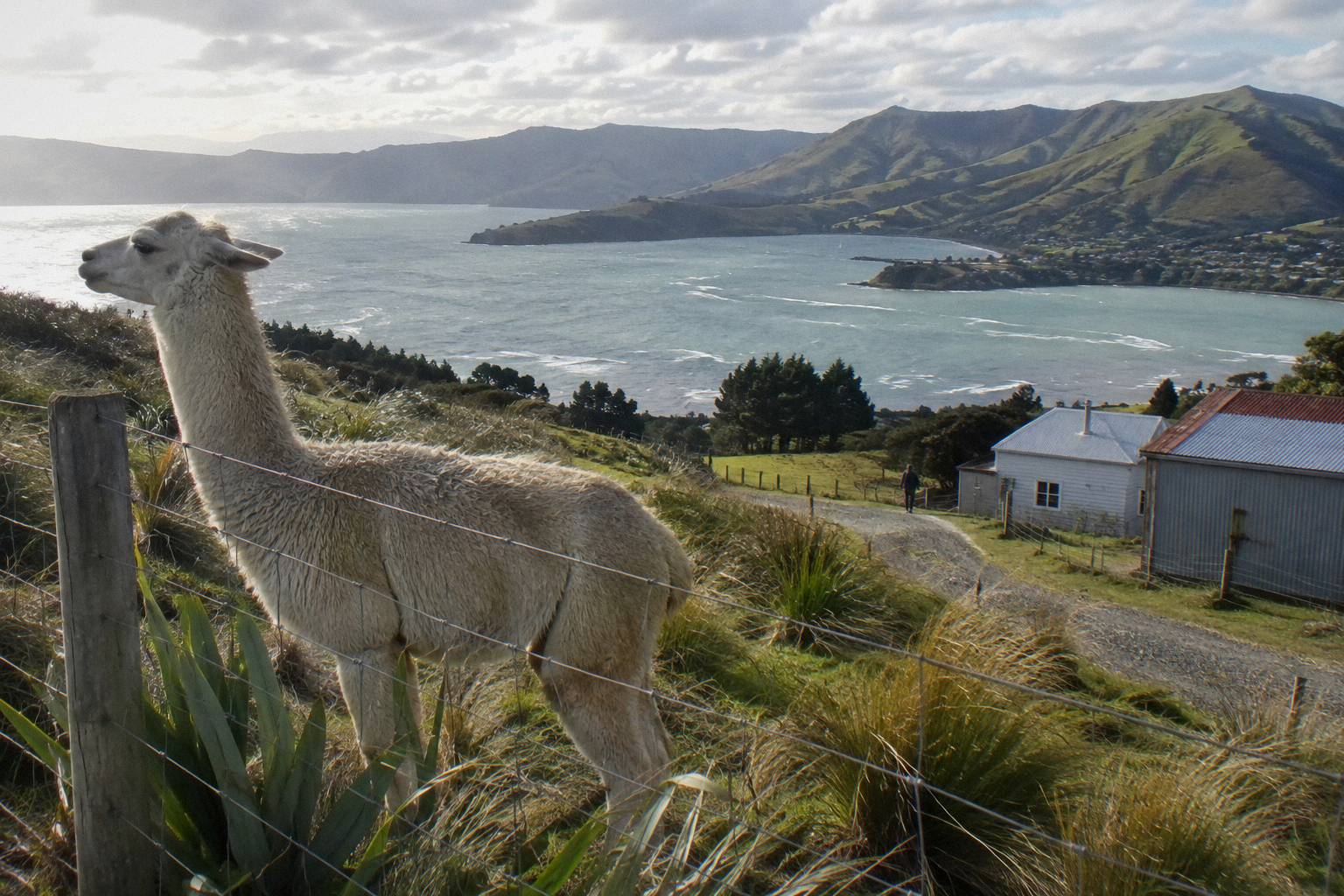
It is one of the more child-workable farm formats around Akaroa. The operator charges NZ$35 per child aged 3 to 15 against NZ$65 per adult, the tour is wheelchair and pushchair accessible, and feeding sessions with young animals tend to hold children's attention in a way a standing demonstration does not. No minimum age is listed on the booking pages, and no under-3 policy is stated anywhere.
The pricing structure tells you the operator expects families: a child rate that cuts the adult price nearly in half, and an accessibility line that mentions pushchairs explicitly. The hour length is also on the family side. General experience around farm visits suggests children's attention holds for about an hour of close animal contact and then falls away sharply, and this tour is sized almost exactly to that window, ending with a cookie before anyone melts down. Our longer piece on farm visits with kids in Akaroa goes deeper on ages and pacing.
The feeding segment is the part that works hardest for children, and it works because it is reciprocal. A child who hands food to a mother alpaca with a young animal beside her is participating in the farm's daily routine rather than watching it. The fleece display, too, is surprisingly effective with children, because softness is something a six-year-old can judge better than an adult can describe.
Two honest cautions. First, feeding is the stated interaction, holding is not, so brief any eager child accordingly. Second, the farm's own page says bookings are essential, and with fixed times at 11am, 1pm and 4pm there is no drifting in at a random hour; families who nap through the 1pm slot have two other chances in a day, and no more. Anyone weighing the decision further may find our piece on whether Akaroa farm visits suit toddlers a useful companion read.
How Long Does A Visit Take And What Does It Cost?
The tour takes about one hour, running at 11am, 1pm and 4pm, seven days a week and year round, closed only on Christmas Day. The operator's own prices are NZ$65 per adult, NZ$35 per child aged 3 to 15, and NZ$60 for SuperGold cardholders. The booking page shows a from-price in US dollars per person; the two figures are different bases and should not be converted or compared.
The one-hour length is the tour's quiet strength and its main constraint. It fits inside a cruise passenger's shore time, inside a family's morning, and inside a Banks Peninsula day trip that also wants a village wander and a harbour cruise. It does not fit a plan that imagines a half-day farm experience with lunch; there is no stated lunch, no stated farm stay attached to this operator, and no stated group size cap. The wider set of guides lives on Akaroa Farm Tour.
The practical numbers in one place:
| Detail | Figure | Source basis |
|---|---|---|
| Duration | About 1 hour | Operator's tour page |
| Times | 11am, 1pm and 4pm, 7 days a week | Operator's tour page |
| Adult price | NZ$65 | Operator's own price |
| Child price (3 to 15) | NZ$35 | Operator's own price |
| SuperGold | NZ$60 | Operator's own price |
| Cancellation | Full refund up to 24 hours before | Booking page |
| Accessibility | Wheelchair and pushchair accessible | Booking page |
| Transport | None provided; self-drive | Operator and booking page |
| Languages | English or Mandarin | Operator's tour page |
Booking is essential, in the operator's own words, so the fixed times fill rather than run. Cancellation is generous at up to 24 hours before for a full refund, which matters for travellers whose plans pivot on weather or a ship's timetable. If the timing question is really a bigger one about how a farm stop fits a full day, our guide to the Christchurch to Akaroa farm day tour lays out the driving and sequencing.
Is The Farm Shop And Fleece Story The Real Point?
For many visitors, yes. The tour ends with a beverage and home-baked cookie and then access to the alpaca shop, which sells 100 percent dye-free, New Zealand-made knitwear. Walking the chain from animal to fleece to finished garment inside one hour is the part of the visit that distinguishes it from a photo stop, and it is the answer that survives the question what is the point.
The shop is easy to dismiss as a retail afterthought, and it is smarter than that. Alpaca fibre is farmed for knitted and woven items much like sheep's wool, and general references describe two distinct fleeces across the two breeds, crimped Huacaya and locky Suri. A visitor who handled the display fleece twenty minutes earlier and now sees the finished knitwear understands the farm's economics in a way no signboard manages. The dye-free line also means the colours trace back to the animals themselves.
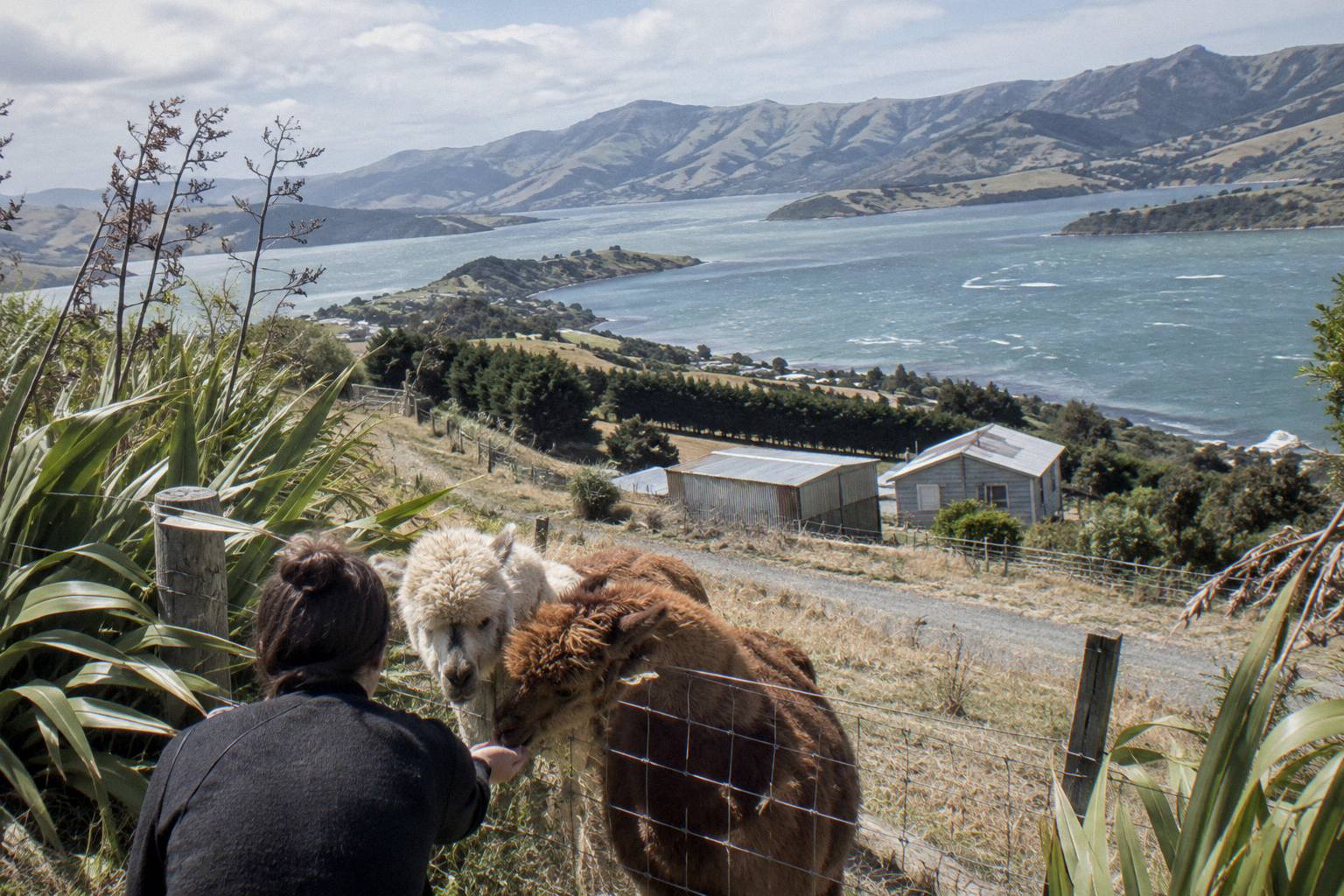
The setting does its own persuasion. The farm's harbour position on an extinct volcano, with water below and the crater rim around, gives the hour a backdrop that most city-adjacent farm visits simply cannot copy, and the itinerary gives you time to look at it. Banks Peninsula was formed by two now-extinct volcanoes, as general references on the peninsula describe, and the farm sits inside the southern caldera's harbour.
The history seals the argument. The farm was founded in 2004 with 5 alpacas and now carries over 170, a twenty-fold growth that a visitor walks through rather than reads about. That is the difference between a farm visit and an attraction: the herd is not maintained for tourists, the tourists walk through a working operation that would exist anyway, which is why the visit feels like it has a point even on a quiet Tuesday.
Is An Alpaca Farm Different From A Sheep Farm Visit?
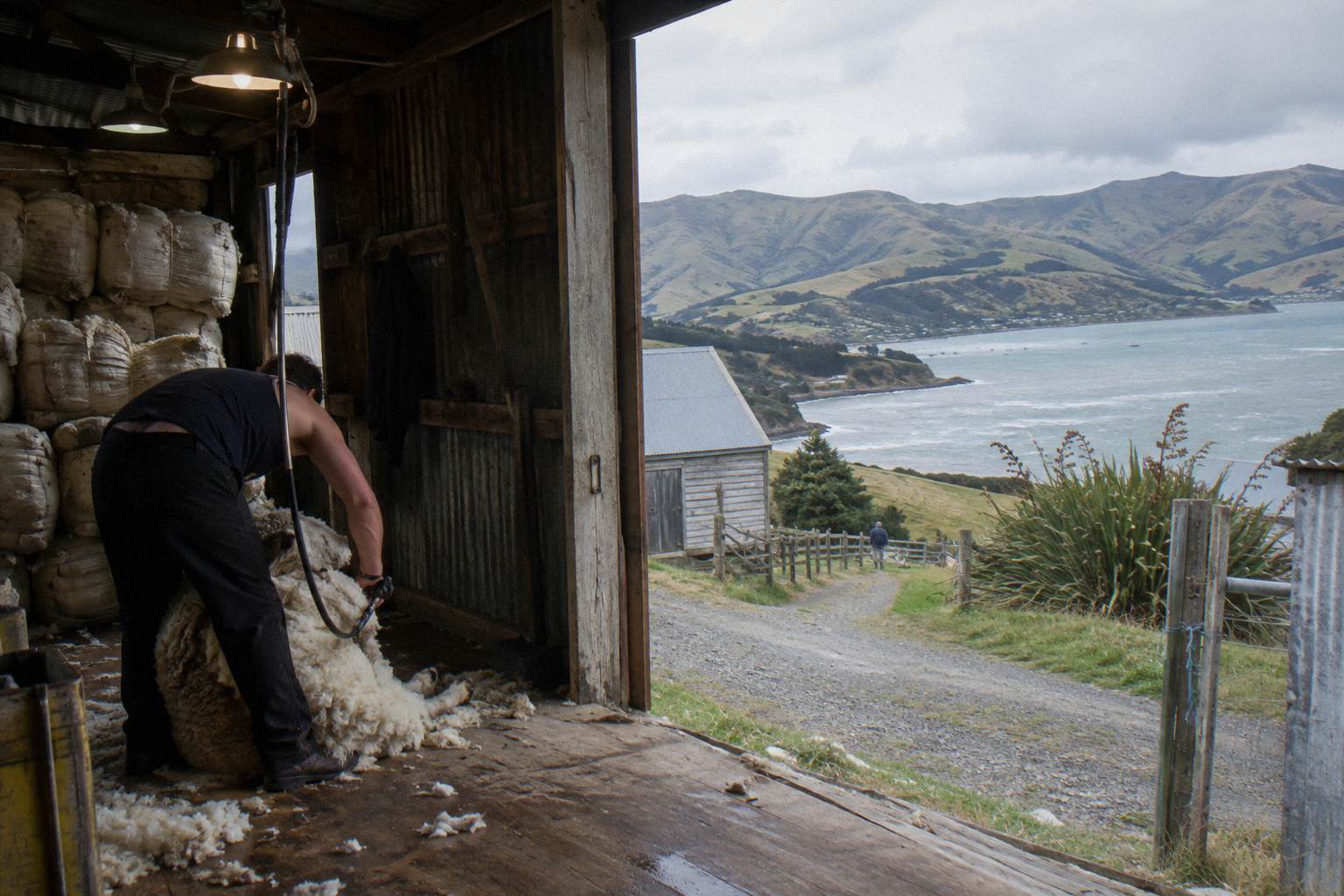
Yes, in format and in contact. The alpaca tour is a walking, feeding, one-hour visit to a single herd. The sheep farm experiences around Akaroa are driven tours built around demonstrations: the shore excursion pairs a sheep shearing demonstration and sheepdog work with afternoon tea at a farm, plus cheese-factory and lookout stops. One puts you among the animals, the other shows you what working dogs and shearers do.
Neither is the better answer in the abstract. Families with young children, visitors short on time, and anyone who wants to touch an animal lean alpaca. Visitors curious about farming as labour, dogs, shearing, musters, lean sheep. The shore excursion runs about 2.5 hours from 2:00pm, rated 4.5 from 11 reviews, and its booking page lists stops of 30 minutes on the harbour, 20 at Hilltop Tavern, 15 at Barrys Bay Cheese and 60 at Coombe Farm, where the shearing and sheepdog demonstration and the afternoon tea happen.
One correction worth having straight if you are combining both: the shore excursion meets at the Britomart Cannon on the Akaroa waterfront beside the i-SITE, and cruise passengers ashore in the current season land at Drummond's Jetty, not the Main Wharf, which is being rebuilt. The cruise association's port page tracks the tender arrangements if your day depends on them.
There is also a third format that swallows the alpaca visit whole: the full-day private trip from Christchurch, about 8 hours, which the booking page structures as a Banks Peninsula scenic drive, the Shamarra alpaca farm stop, free time in Akaroa, and a small-group harbour and dolphin cruise. One honest caution the listing itself makes: tour activity costs and lunch are excluded, and a minimum booking equivalent to four adult fares applies, so check what is covered before committing. Our comparison of the alpaca farm versus the sheep farm at Akaroa walks the choice in more detail.
Who Should Skip It?
Skip the alpaca farm if you want a demonstration rather than contact, a half-day experience rather than an hour, or transport included, because none of those are on offer. Re-time or reconsider if your heart is set on holding an alpaca, since no source states that interaction exists here. And travellers who cannot self-drive or arrange the 20-minute trip from the village should treat the no-transport rule as a hard constraint.
The visit is also, in truth, weather-exposed. It is an outdoor walk through a paddock on a harbour hillside, open year round with the exception of Christmas Day. A wet Banks Peninsula afternoon makes the same hour considerably less magical, which is a good argument for the 11am slot when the day's forecast is marginal, leaving the 1pm or 4pm as fallback. Our piece on the best season for an Akaroa farm visit takes the timing question further.
The visitors who get the most from it are easy to describe: people who like animals close up rather than at a distance, people who ask what things are for rather than only what they look like, and anyone with children in the 3-to-15 band where the child pricing and the feeding session align neatly. People who mainly want a photograph can get one. People who want to understand why anyone farms alpacas at all leave with the answer in their hands.
Common Questions About An Alpaca Farm Visit
What Is The Point Of An Alpaca Farm?
Contact and understanding. You walk through a working herd of over 170 animals, feed the mothers with their young by hand, handle award-winning fleece, and see the fibre story end in a shop of dye-free New Zealand knitwear. The visit turns alpacas from a photograph into something you have touched and learned to read within about an hour.
Can You Hold Or Cuddle An Alpaca At Akaroa?
Feeding is the stated interaction: the booking page lists an opportunity to feed alpacas as an inclusion, and the operator's itinerary names feeding the mothers with their young. Holding or cuddling is not stated in any source for this farm, so it should not be expected or promised.
How Long Does The Shamarra Alpaca Tour Take?
About one hour, with fixed start times at 11am, 1pm and 4pm, seven days a week and year round, closed only on Christmas Day. Bookings are essential in the operator's own words, so the times fill rather than run continuously.
What Does It Cost To Visit The Alpaca Farm?
The operator's own prices are NZ$65 per adult, NZ$35 per child aged 3 to 15, and NZ$60 for SuperGold cardholders. The booking page also shows a from-price in US dollars per person; the two figures are on different bases and are not compared or converted.
Do Alpacas Spit At Visitors?
General references note all alpacas are capable of spitting but not all do, most spitting is aimed at other alpacas rather than people, and most animals give a warning first by blowing air out, raising the head or pinning the ears back. This is background about the species, not a claim about any individual farm's animals, and the operator's tour opens with a safety briefing.
Is The Farm Accessible And Can I Get There Without A Car?
The booking page lists the tour as wheelchair and pushchair accessible. However, no transport to the farm is provided: visitors self-drive, about 20 minutes from Akaroa village, or contact the operator about arrangements. From Christchurch Central the operator gives the farm's distance as 73 km, just over an hour's drive.