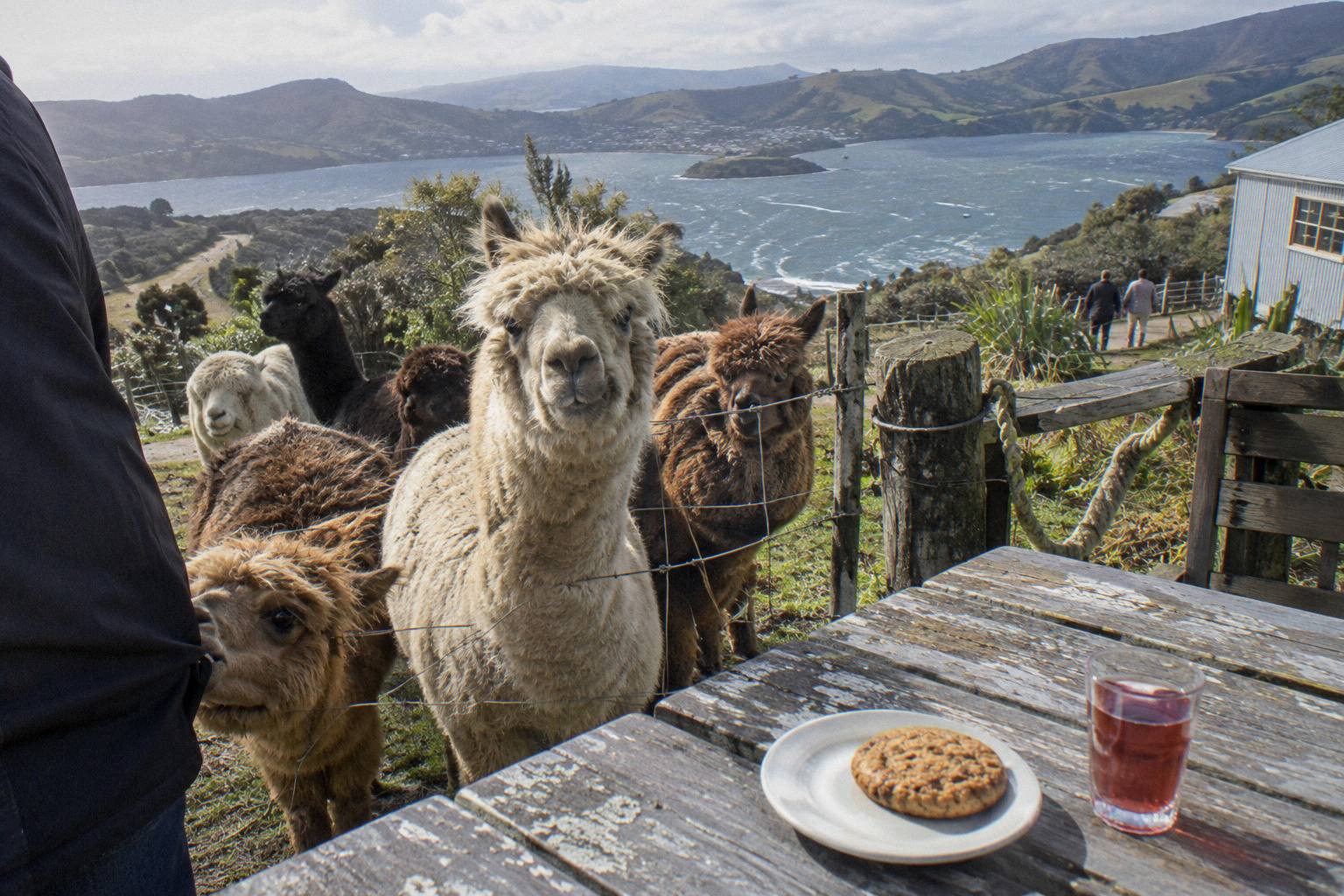
What Is Special About An Alpaca Farm In Akaroa?
What makes an Akaroa alpaca farm visit different: an extinct-volcano harbour setting, a herd of over 170 alpacas, a one-hour tour with feeding, and practical prices and times.
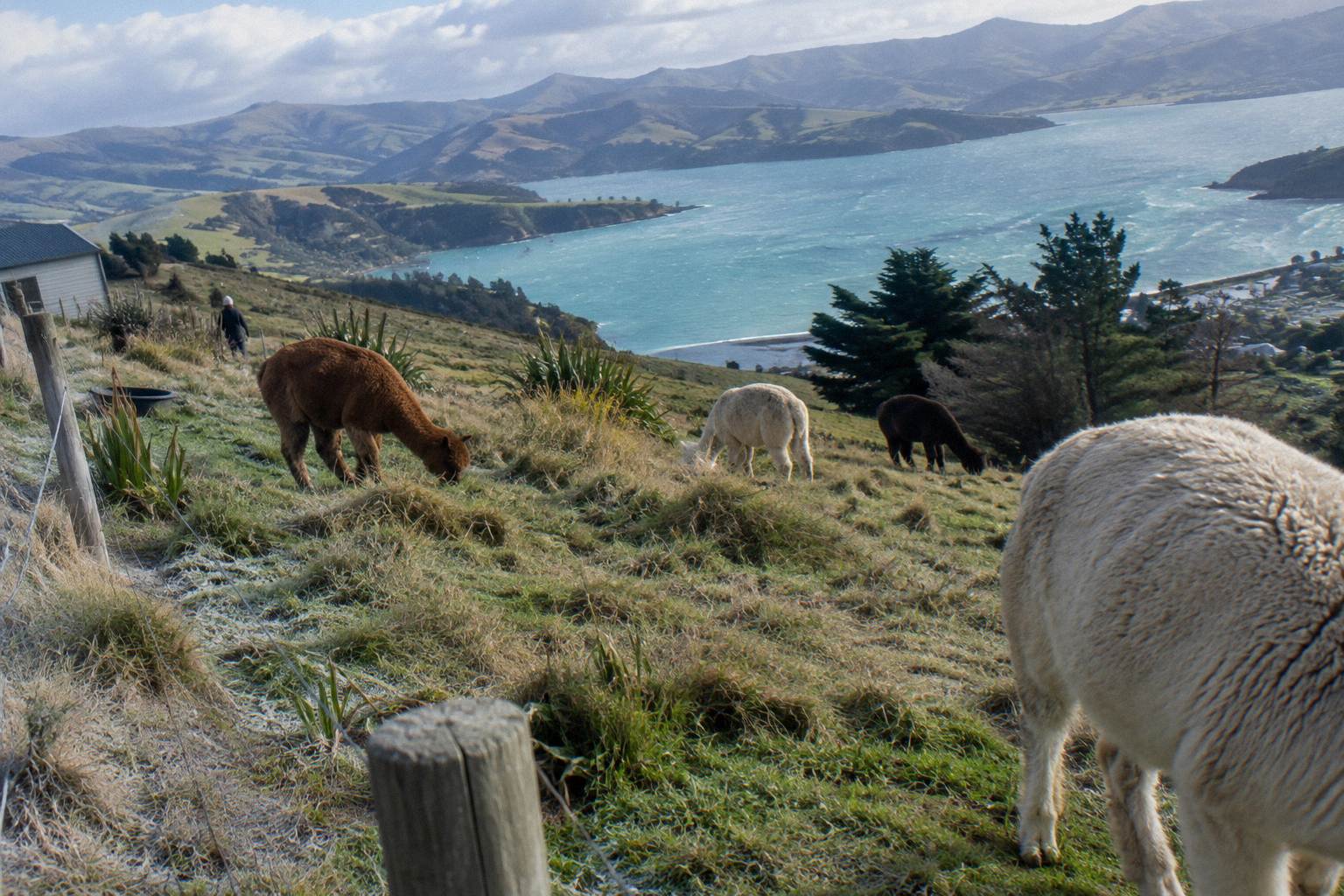
The special part is the combination: an alpaca herd of more than 170 animals living on the slopes of an extinct volcano, with harbour views from the paddocks, a one-hour guided tour that walks you through the herd, and a location only about 20 minutes from Akaroa village. The tour, run by Shamarra Alpaca Farm Tours, is rated 4.9 from 139 reviews and runs daily at 11am, 1pm and 4pm.
Plenty of places let you look at alpacas over a fence. Very few let you do it from inside the flooded crater of a volcano, on a hillside that drops away to a blue harbour, within a short drive of a village whose street names are still French. That combination is what separates an Akaroa alpaca farm visit from the same activity on flat country an hour outside a city, and it is why the question deserves a proper answer rather than a shrug and a photo.
The farm belongs to Shamarra Alpaca Farm Tours, the only operator in this area with its own dedicated farm-tour page on its official site, at 328 Wainui Main Road, French Farm, on the outer side of Akaroa Harbour. It was founded in 2004 with five alpacas. Today the herd numbers over 170, and the tour that shows them off takes about an hour, runs seven days a week, and closes only on Christmas Day.
This site exists to help you decide between exactly those options, and Akaroa Farm Tour keeps the figures for all of them in one place. The rest of this article explains what makes the alpaca farm itself unusual, from its geology to its fleece cabinet, and what a visit actually involves hour by hour.
Why The Setting Matters: A Farm Inside An Extinct Volcano
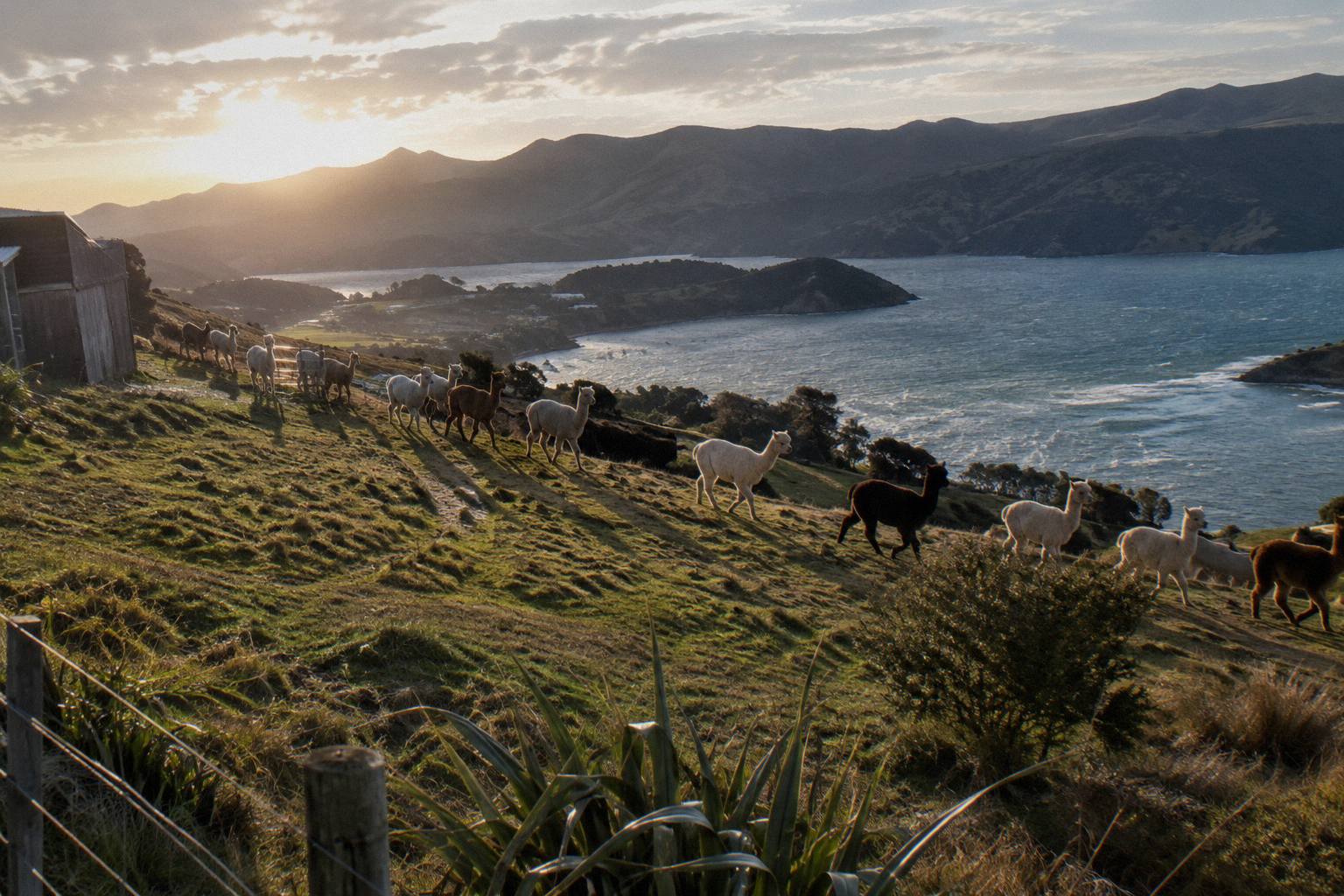
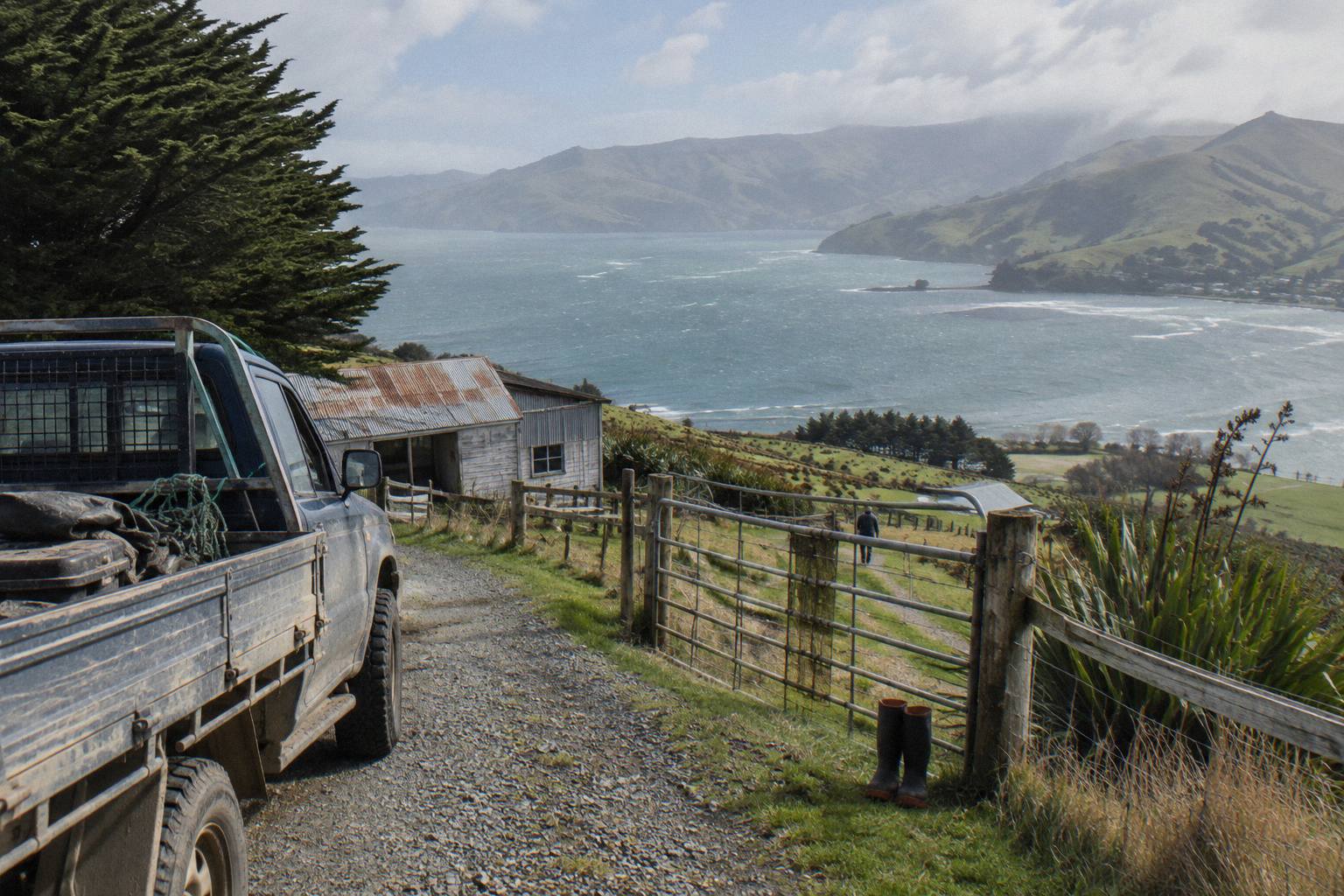
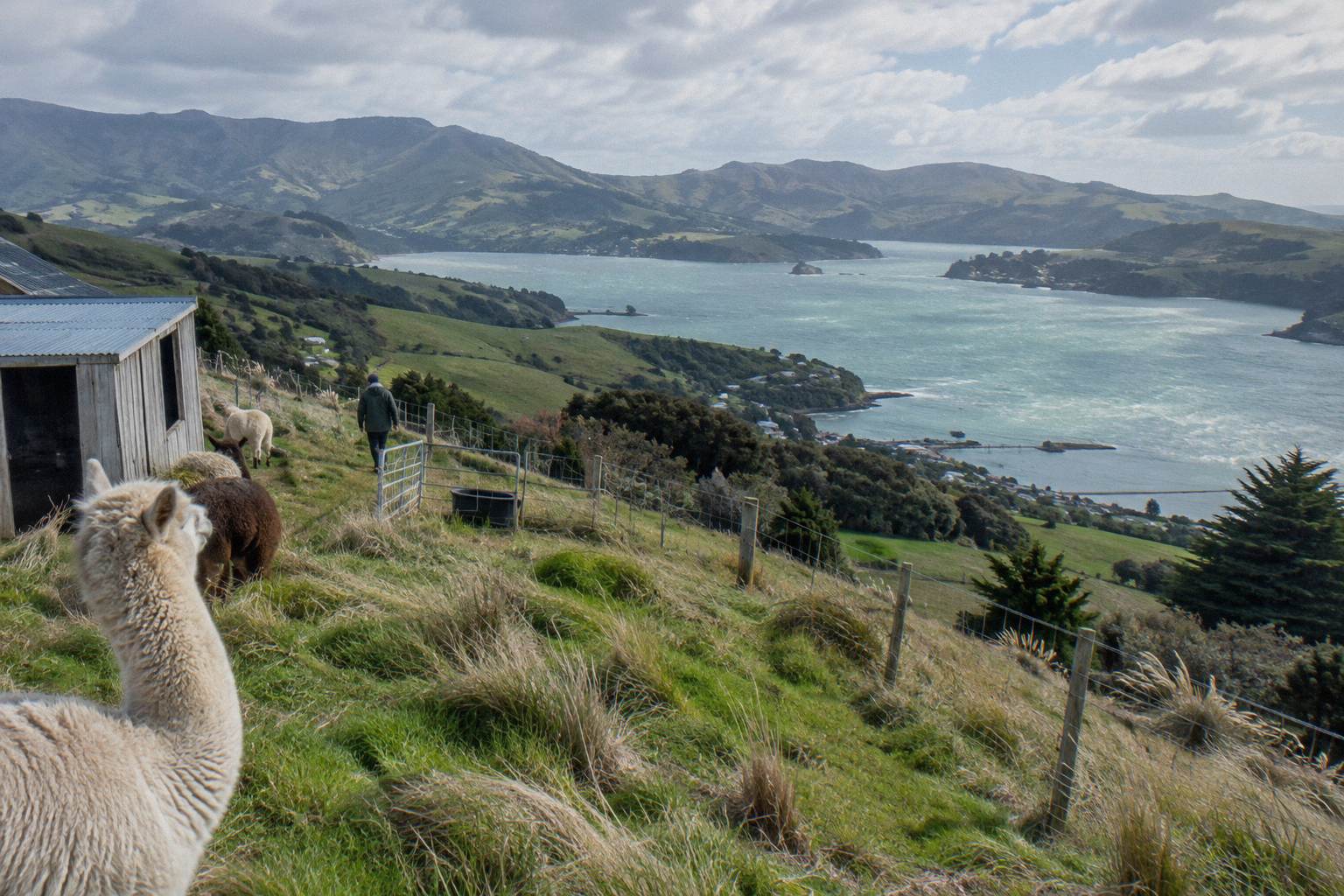
Banks Peninsula, the Māori name of which is Te Pātaka o Rākaihautū, was formed by two now-extinct volcanoes covering roughly 1,200 square kilometres, and Akaroa Harbour sits in the flooded crater of one of them. The alpaca farm sits on the slopes above that harbour, which means the paddocks themselves carry views most farms simply cannot offer.
That is not marketing copy, it is geology. According to general references on Banks Peninsula, the peninsula formed from two extinct volcanoes, and its two deep harbours, Lyttelton and Akaroa, are the drowned remnants of their craters. The operator describes its own setting as a harbour location on an extinct volcano, and once you are standing in the paddocks the description stops sounding like a slogan. The water is below you, the crater rim wraps around the horizon, and the alpacas graze across the middle of it.
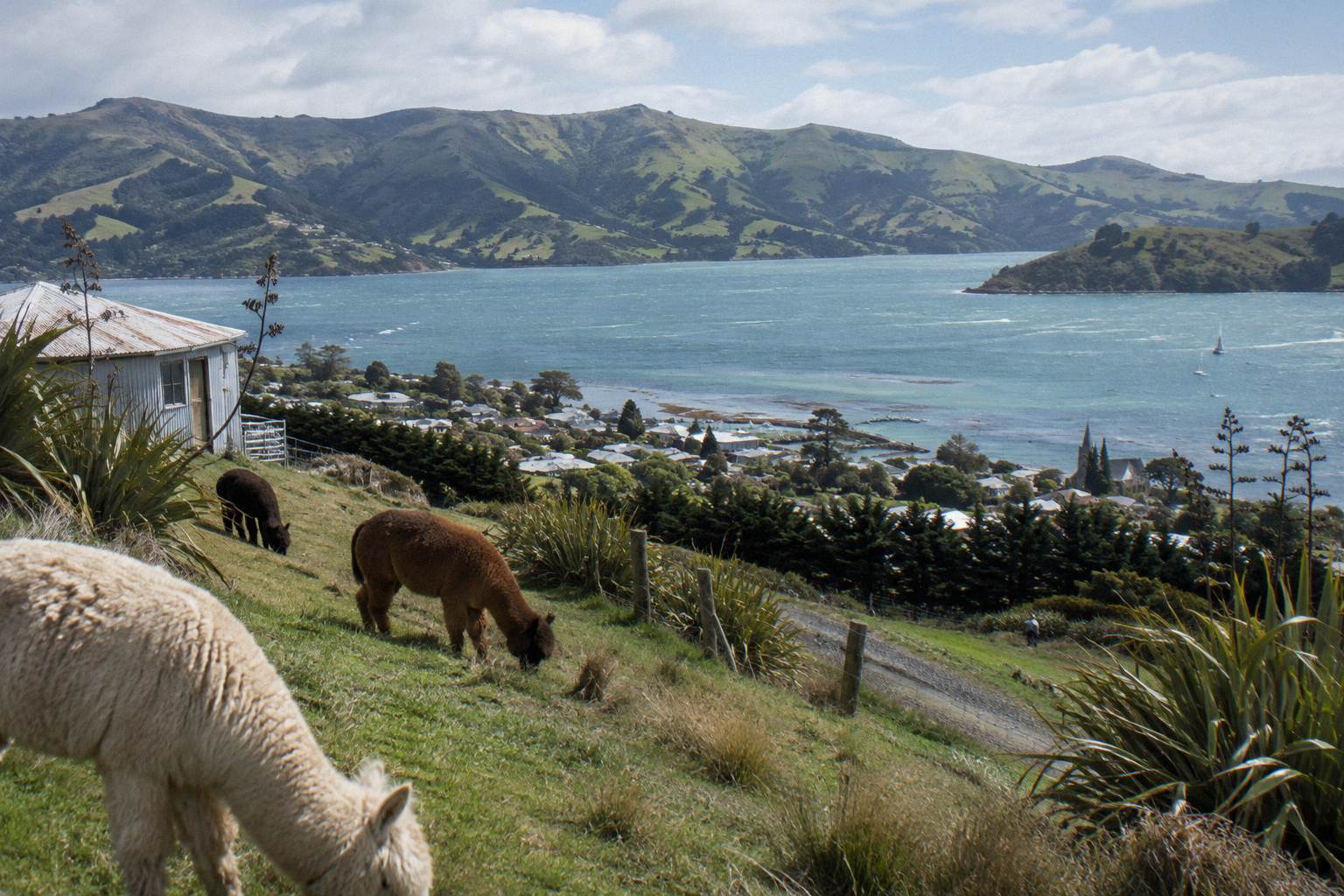
Akaroa itself adds a layer that no other alpaca-farm destination in New Zealand can match. The town's name is Kāi Tahu Māori for Long Harbour, French settlers named the area Port Louis-Philippe, and the town sits at the end of State Highway 75, the road that winds 75 kilometres from Christchurch over the crater rim and down to the water. The peninsula's economy runs on fisheries, farming and tourism, and the alpaca farm sits at the point where those last two overlap.
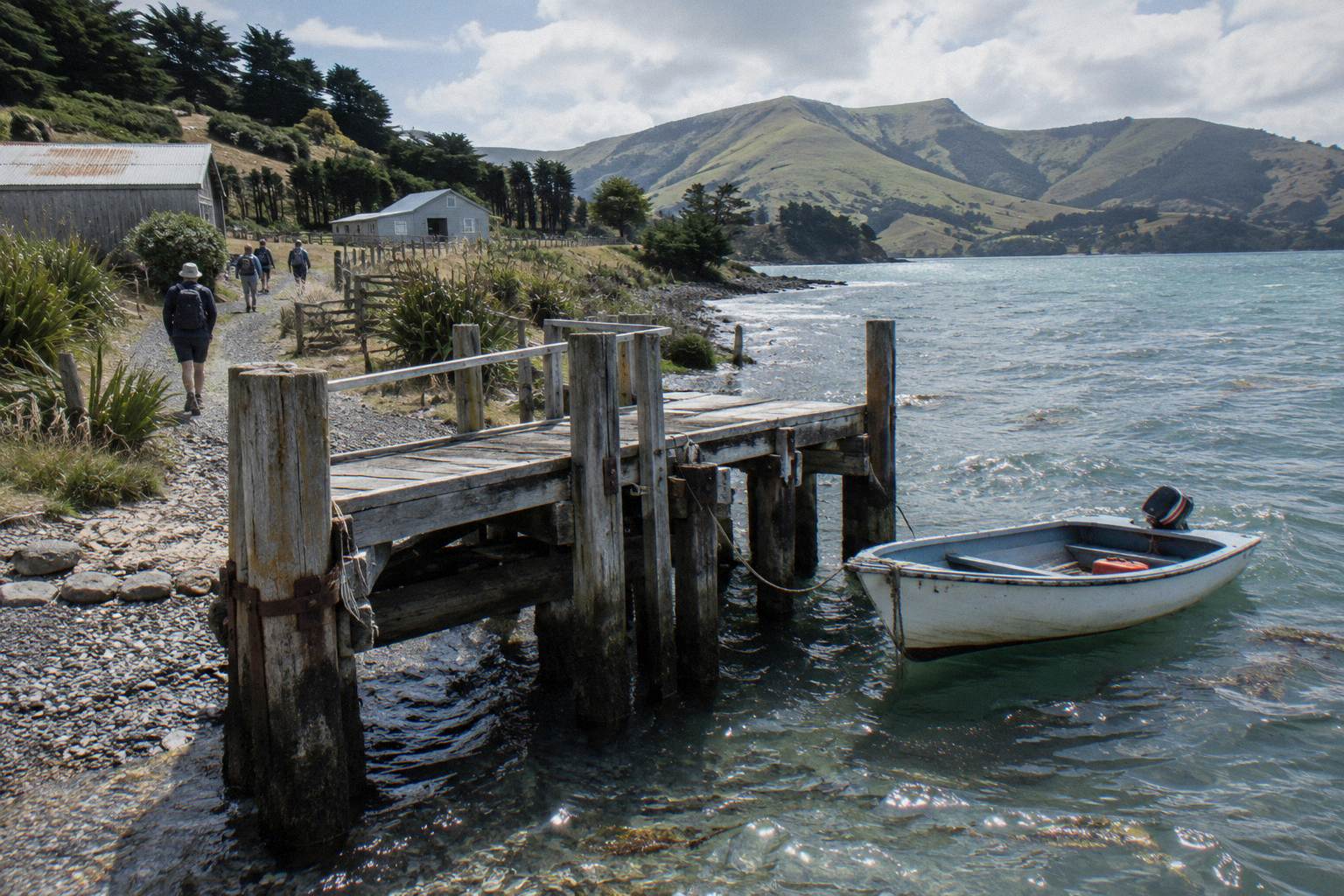
The practical effect on a visit is simple: the views come free with the ticket. The operator's own itinerary lists harbour views as a feature of the tour, between the walk through the herd and the closing beverage and home-baked cookie. On many farm tours the scenery is whatever happens to be behind the animals. Here the scenery is the reason the farm is where it is, and general references on the peninsula explain why the landscape looks the way it does.
What Actually Happens On The Tour
The tour runs about one hour and follows a fixed shape: a brief introduction to alpacas, a safety briefing, award-winning fleece on display to touch, a walk through the herd, a chance to feed the mothers with their young, harbour views, then a beverage and a home-baked cookie before the farm shop. Tours run at 11am, 1pm and 4pm, seven days a week.
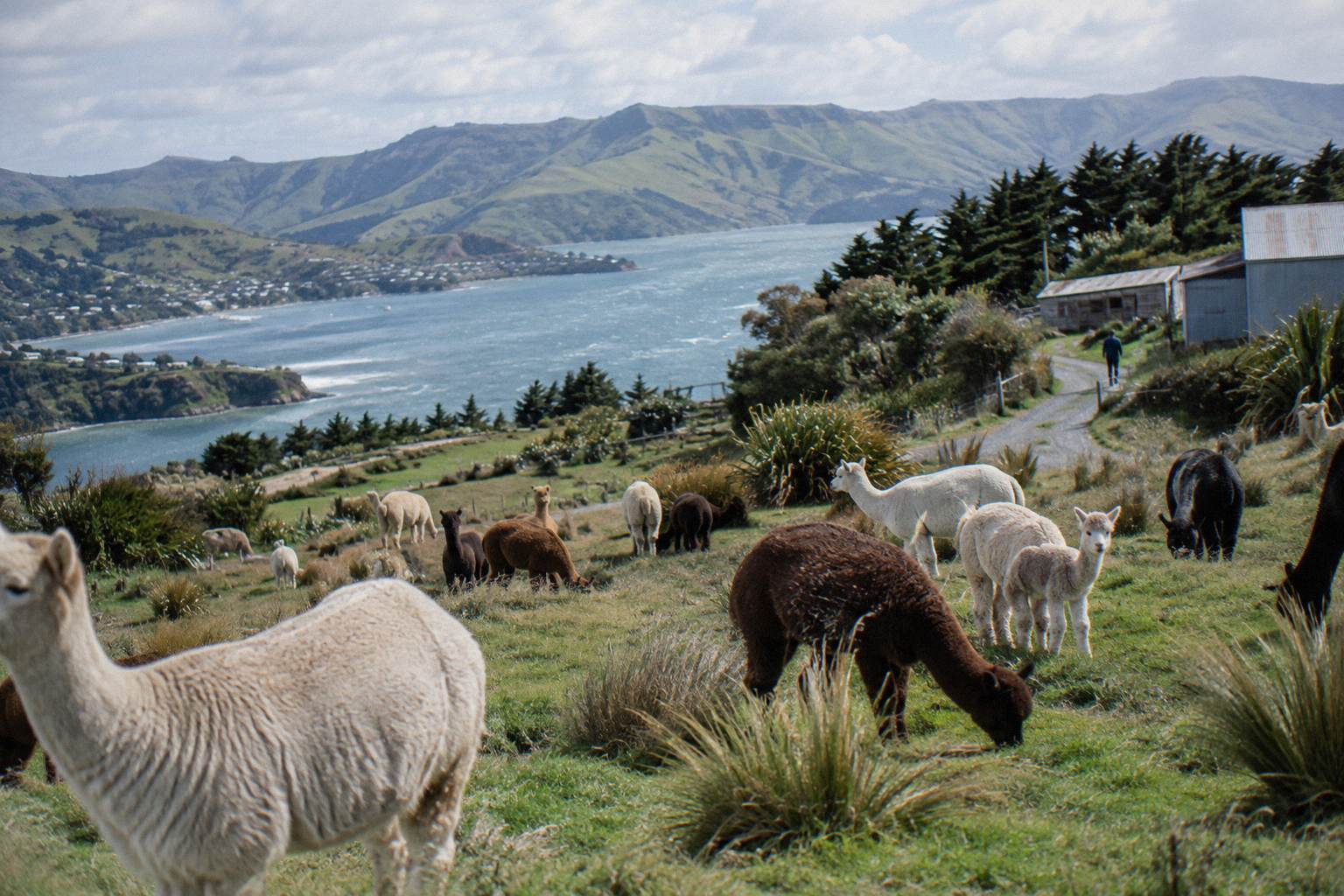
The introduction and safety briefing matter more than they sound. Alpacas are social herd animals that live in family groups, and according to general references they communicate through body language and can spit when distressed, fearful or agitated, mostly at each other and only occasionally at a human. The operator's own safety briefing covers how to behave around the herd so that neither side gets stressed. Most animals give a warning first, general references note, by blowing air out, raising the head and pinning the ears back, which is useful background for anyone visiting any alpaca farm, not just this one.
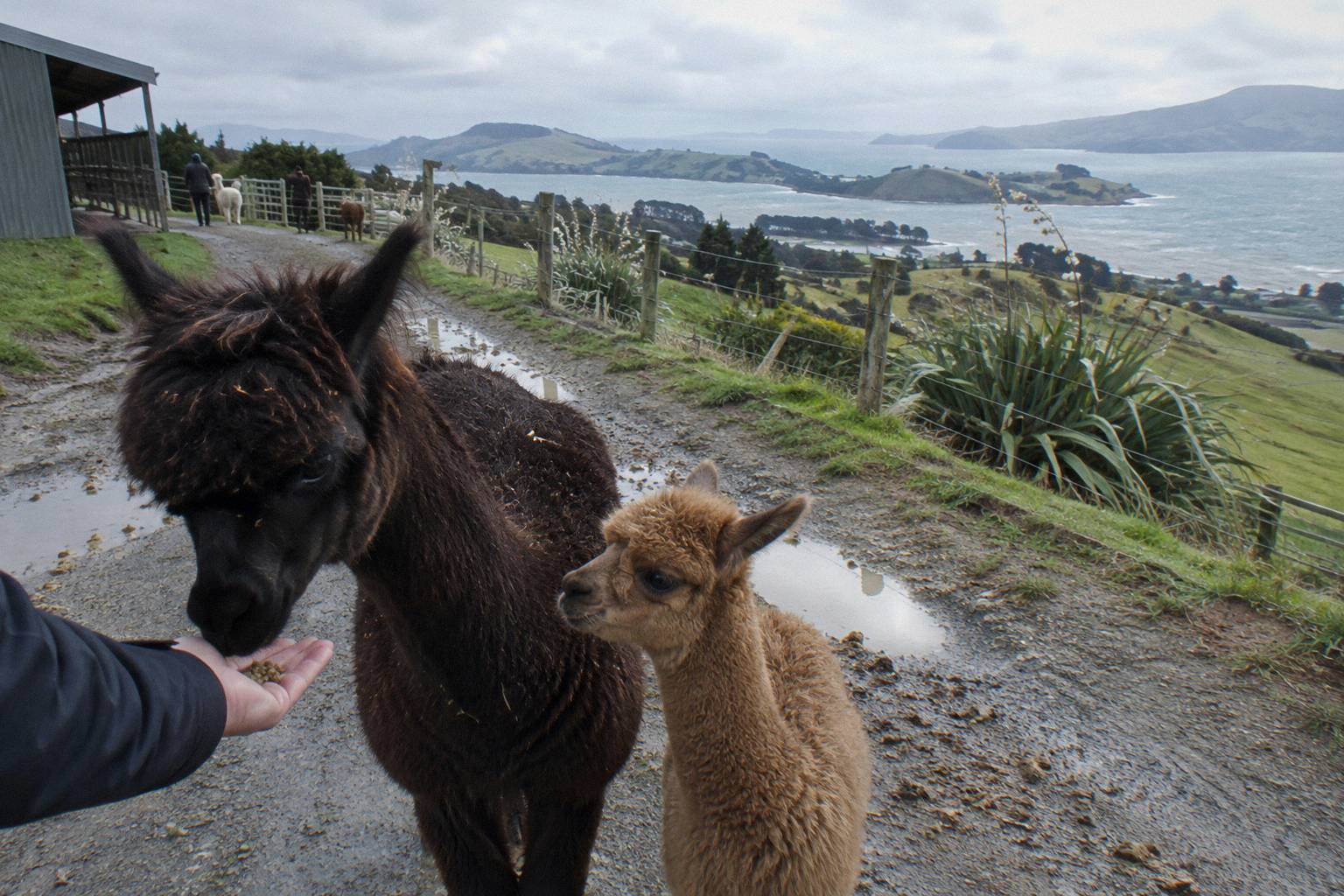
The fleece display is the part that surprises people. The operator shows award-winning fleece that you can actually feel, which turns the abstract idea of alpaca fibre into something concrete before you meet the animals it grows on. General references describe two alpaca breeds, the Huacaya with crimped fibre and the Suri with straight locks, and note that alpaca fibre is used for knitted and woven items much like sheep's wool. The farm shop at the end of the tour sells 100% dye-free, New Zealand-made knitwear, so the fleece-to-garment story closes in one visit.
Feeding the mothers with their young at foot is the emotional centre of the hour. The booking page lists an opportunity to feed alpacas among the inclusions, alongside entry, the guided tour, the beverage and cookie, and shop access. What the sources do not say, and what you should not expect anyone to promise, is that you can hold or cuddle an alpaca: that is not stated anywhere in the operator's material. If handling animals is the goal, read the fine print before assuming.
Is an hour with a herd on a volcano rim worth booking ahead for?
The tour is open year round and closed only on Christmas Day, and the operator's own line on bookings is blunt: bookings essential. Cancellation on the booking page is straightforward, a full refund if you cancel up to 24 hours in advance. More detail on timings and how the visit fits a day is in the guide to how long an Akaroa farm visit takes.
How Many Alpacas, And Where They Came From
The farm started in 2004 with five alpacas and now runs a herd of more than 170, founded by a couple who built the operation over two decades into the peninsula's established alpaca attraction, rated 4.9 from 139 reviews. The scale is the point: this is a working herd, not a petting zoo with three animals in a paddock.
A herd of that size changes what a visit feels like. Alpacas are social herd animals, general references confirm, living in family groups, and a big herd lets you see that social structure in action rather than watching a handful of animals stand about. You are walking through a functioning farm population with mothers, young, and the full range of ages and temperaments that implies, and the tour's design, walking through the herd rather than viewing it from a railing, leans on that scale.
The growth from five animals in 2004 to over 170 today also says something about why the farm has the review base it has. A rating of 4.9 from 139 reviews is not a handful of friends and family; it is a decade-plus of visitors, enough of them to make the number meaningful. The tour is offered in English or Mandarin, which widens that base further and is worth knowing if you are booking for a mixed-language group.
What Alpacas Are Actually Like Up Close
Alpacas are domesticated South American camelids kept in herds, often confused with llamas, and typically sheared once a year in spring, according to general references. They communicate through body language, can spit when distressed or agitated, and give a slight warning first by blowing air out, raising the head and pinning the ears back.
None of that should put anyone off, and none of it is specific to the Akaroa animals, but it is honest background that makes the safety briefing at the start of the tour make sense. Spitting, general references note, is mostly aimed at other alpacas and only occasionally at a human, and not every alpaca spits at all, though all are capable of it. The practical takeaway for a visitor is that calm behaviour and a bit of attention to the animals' signals go a long way. If you want the full picture, the site's piece on whether alpacas spit at visitors covers it in detail.
The confusion with llamas is worth a line because it shapes expectations. Llamas are larger and were traditionally bred as pack animals; alpacas are smaller and bred for their fibre. If you arrive picturing a tall, aloof animal and meet a compact, fleece-heavy herd instead, you had the wrong camelid in mind. The fleece display on the tour, where you can handle award-winning fleeces, makes the difference tangible.
Shearing once a year in spring, the general pattern, means the animals look different by season: rounded and full-coated for much of the year, trimmed after the spring shearing. The sources for this page say nothing about lambing or shearing calendars at the farm itself, so do not plan a visit around catching the shearing; no such dates are published.
Prices, Times And Booking Practicalities
The operator charges NZ$65 per adult, NZ$35 per child aged 3 to 15, and NZ$60 with NZ SuperGold, for a tour of about one hour at 11am, 1pm and 4pm, seven days a week, closed Christmas Day. The booking page lists a from-price of US$36 per person, and cancellation is free up to 24 hours before.
Those two price bases belong to different systems and should not be converted or compared: the NZ$ figures are the operator's own farm-gate prices, the US$ figure is what the live listing shows as a from-price. Whichever route you book through, the tour itself is the same hour, and the inclusions are entry, the guided tour, the feeding opportunity, a beverage and a home-baked cookie, and access to the farm shop.
| Item | Detail | Source |
|---|---|---|
| Duration | About 1 hour | Operator and booking page |
| Tour times | 11am, 1pm and 4pm | Operator |
| Days | 7 days a week, open year round, closed Christmas Day | Operator |
| Adult price | NZ$65 | Operator |
| Child price (3 to 15) | NZ$35 | Operator |
| NZ SuperGold | NZ$60 | Operator |
| Booking page from-price | US$36 per person | Live listing |
| Cancellation | Full refund up to 24 hours before | Booking page |
| Accessibility | Wheelchair and pushchair accessible | Booking page |
| Transport | None provided; self-drive or contact the operator | Both listings |
Two practical notes sit behind the table. First, bookings are essential in the operator's own words, and with only three fixed times a day the popular slots fill, particularly in the cruise season when shore visitors stack their afternoons. Second, no transport is provided to the farm, so you either drive yourself or contact the operator about arrangements; the farm is about 20 minutes from Akaroa village. For the wider picture of what farm visits around Akaroa cost, the guide to Akaroa farm visit prices collects the figures for all four tours on this site.
Getting There: Twenty Minutes From The Village, An Hour From Christchurch
The two Christchurch figures differ for a real reason: the farm is on the harbour side before the village, so it is slightly nearer the city than Akaroa itself. The official visitor site's 75 km and 90 minutes applies to the village, on a road that is sealed but winding, running through Tai Tapu and Little River. The operator's 73 km and just over an hour applies to its own farm gate from Christchurch Central. Do not mix the two when planning a day.
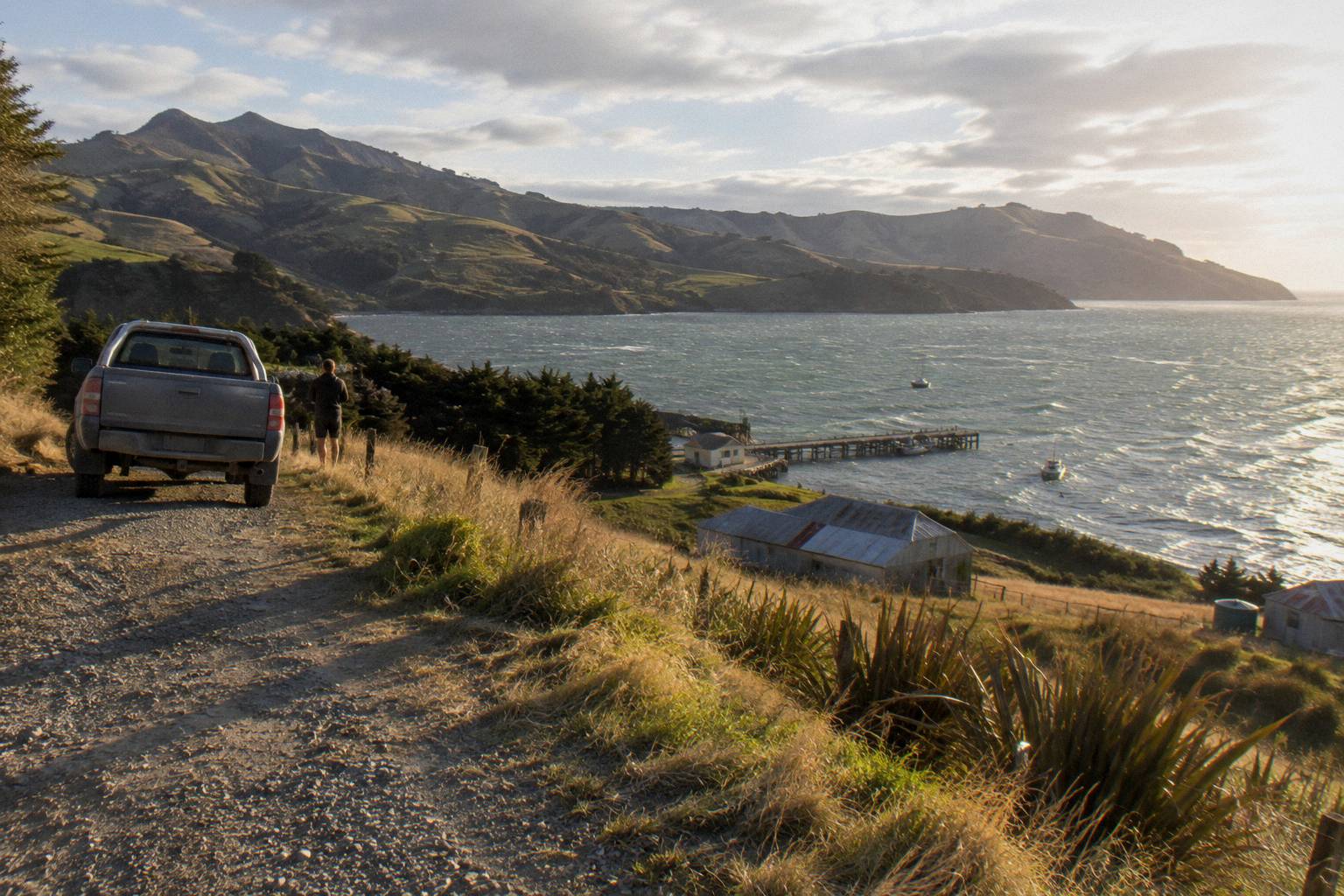
The road is the one part of the trip that deserves respect. State Highway 75 crosses the crater rim and descends to the harbour in a series of switchbacks, which is spectacular and slow. The last petrol before Akaroa is at Little River, a detail the official visitor site flags and one that has caught out more than one visitor in a rental car. Coach options named on that site include Akaroa French Connection and Canterbury Trails, and the official drive-time page is worth a read for planning the route from Christchurch.
For anyone without a car, the practical question is whether to fold the farm into a guided day instead. That is exactly what the full-day private trip from Christchurch does, and it is the option to weigh if self-driving a volcanic peninsula does not appeal.
The day trip is a private group of about 8 hours with pickup at your Christchurch accommodation, a scenic Banks Peninsula drive, the Shamarra farm stop, free time in Akaroa, and a harbour and dolphin cruise. Note the booking page lists tour activity costs as excluded, so check what is covered before booking; the from-price is US$165 per person and the minimum booking equals four adult fares. The site's guide to a Banks Peninsula farm day trip with Akaroa village breaks the itinerary down.
How The Alpaca Farm Compares With The Other Farm Visits Near Akaroa
The alpaca tour is the shortest and cheapest of the main farm visits at about one hour, while the sheep-farm shore excursion runs about 2.5 hours with transport and afternoon tea, the Pohatu Penguins nature tour runs 2 or 4 hours with a farm and penguin-colony stop, and the Christchurch day trip spans 8 hours. The right pick depends on transport, time and which animals you want.
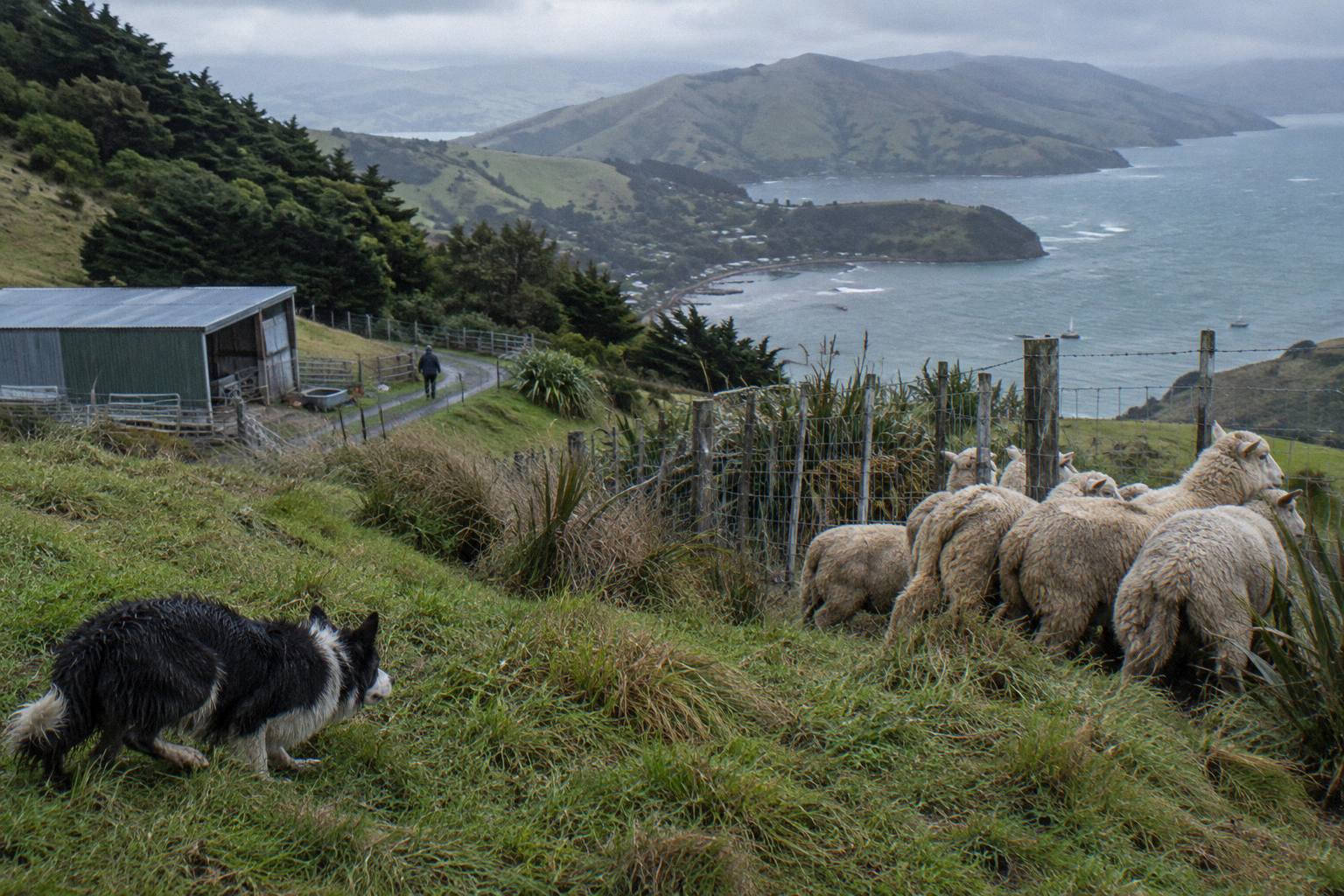
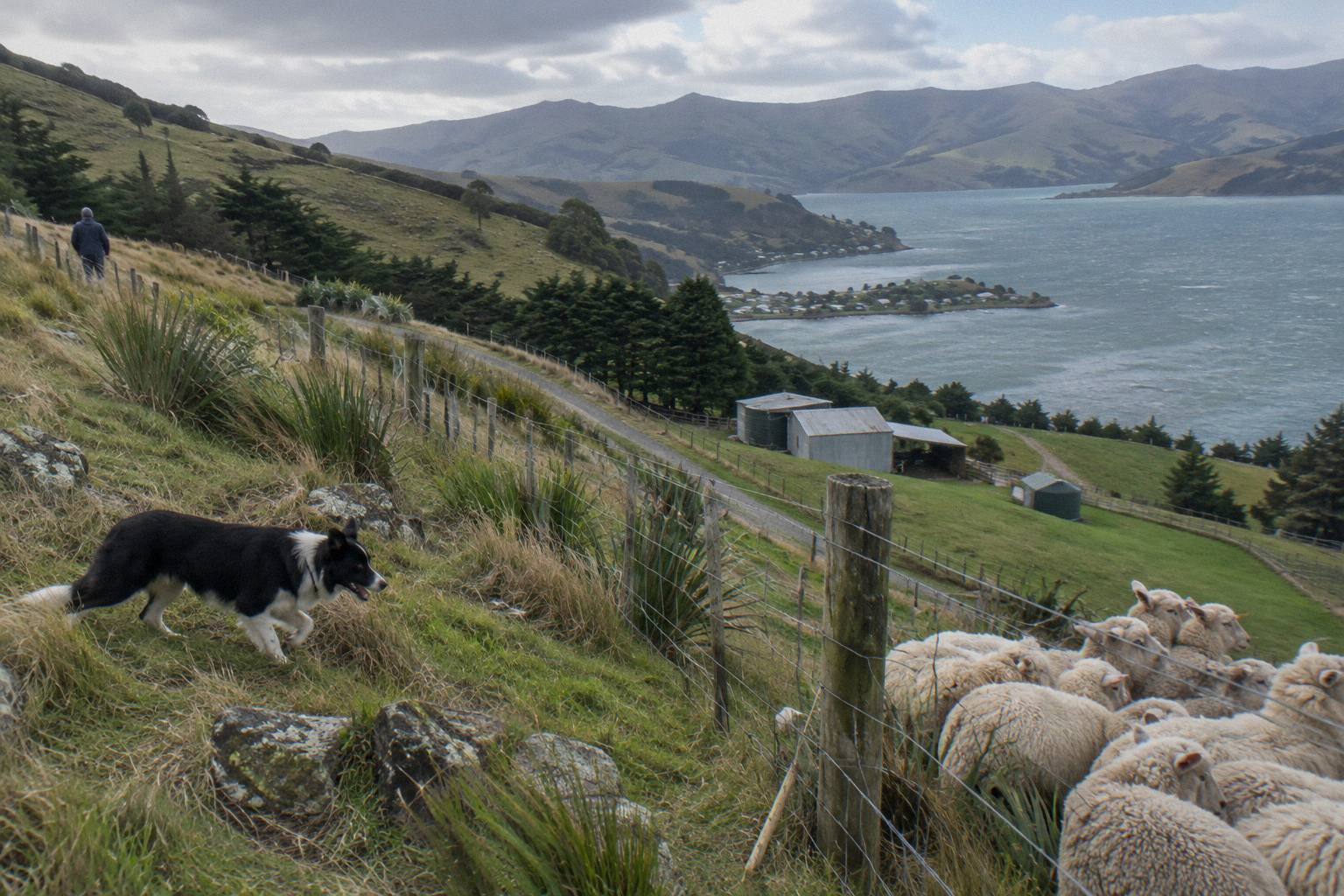
Each one answers a different version of the same question. The alpaca tour is the pure farm visit: you drive there, you spend an hour in the herd, you leave. The shore excursion is built for cruise passengers, with port pickup, a sheep shearing demonstration and sheepdog work at Coombe Farm, and a 2:00pm start from the Britomart Cannon on the Akaroa waterfront. The Pohatu tour is wildlife-first, a 4WD minivan trip to Pohatu Bay, a working sheep farm and penguin colony, with a crater-rim lookout at 700 m and, on the 4-hour version, the Akaroa Heads Lighthouse Reserve. The day trip wraps the alpaca farm inside a full peninsula loop from Christchurch.
| Visit | Duration | From-price | Transport | Rating |
|---|---|---|---|---|
| Shamarra Alpaca Farm Tour | About 1 hour | US$36 per person | None provided | 4.9 from 139 reviews |
| Akaroa Harbour And Sheep Farm Shore Excursion | About 2.5 hours | US$65.90 per person | Port pickup and drop-off | 4.5 from 11 reviews |
| Pohatu Penguins Scenic Nature Tour | 2 or 4 hours | US$58 per person (2-hour) | 4WD minivan | 4.8 from 136 reviews |
| Full Day Akaroa Day Trip From Christchurch | 8 hours | US$165 per person | Christchurch accommodation pickup | No reviews yet |
Two comparisons deserve honesty. The shore excursion's rating comes from a small base of 11 reviews, so treat it as a thin signal rather than a verdict. The day trip is a new listing with no reviews yet at all, which is not a criticism, just a fact to weigh against its higher from-price.
The shore excursion also earns its place for cruise passengers with an afternoon ashore, and the meeting point detail matters: cruise ships anchor in the harbour and tender ashore, and through the 2026/27 season tenders use Drummond's Jetty, about 180 m north-east of where the Main Wharf is being rebuilt, per the port authority's page on Akaroa cruise operations. The excursion meets at the Britomart Cannon beside the i-SITE, a short walk from the wharf area.
For a fuller head-to-head on the two animal experiences, the guide on choosing an alpaca farm or a sheep farm at Akaroa works through the trade-offs, and the piece on whether the Akaroa sheep farm tour is worth it covers the shearing question directly.
Timing A Visit Around The Year
The farm is open year round and closed only on Christmas Day, with the same three daily tour times in every season, so the main timing variable is weather and daylight rather than an operating calendar. No lambing dates, shearing dates or seasonal closures are published for the farm, so there is no magic week to chase.
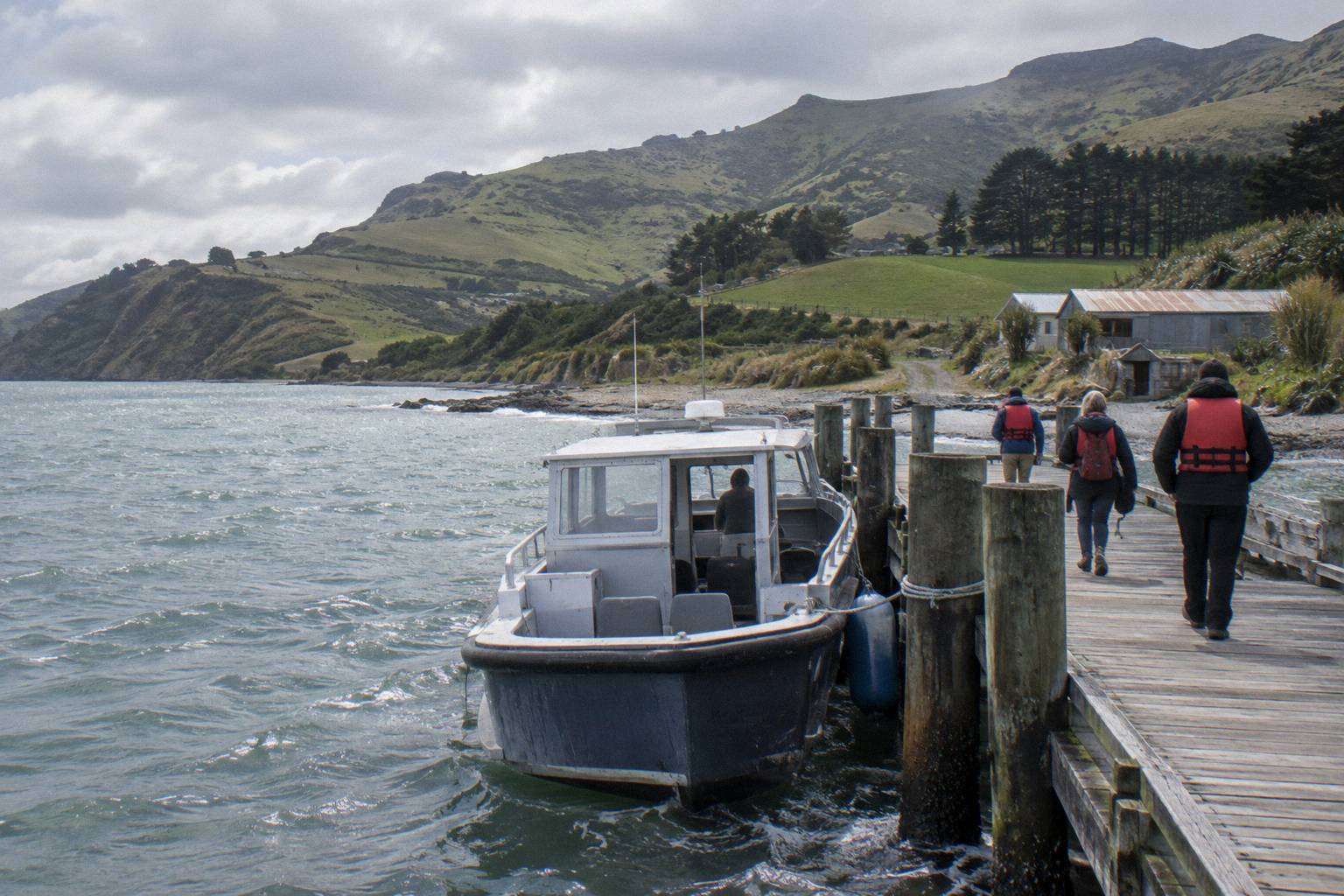
That year-round schedule is rarer than it sounds. Plenty of farm attractions in seasonal destinations shut for winter or trim to weekends, and the operator's open year round, seven days a week line means a June visit works the same as a January one. The harbour setting cuts both ways: the same crater rim that gives the views also gathers weather, so a fine day here is spectacular and a wet one is genuinely wet. There is no published policy on weather cancellations, so if the forecast looks grim, that is a conversation with the operator.
Spring deserves one honest note. General references say alpacas are typically sheared once a year in spring, so visitors either side of that window will see noticeably different coats on the herd. That is general background, not a farm-specific calendar, but it explains why photographs from October and February can look like different farms. For season-by-season planning across all the farm visits, the guide on the best season for an Akaroa farm visit has the detail, and the blog on the best time of year to visit an alpaca farm covers the alpaca-specific angles.
The one date to write down is Christmas Day, the only closure. Everyone else who wants a slot should book ahead: three times a day, bookings essential, and a 24-hour free-cancellation window if plans move.
Common Questions About Alpaca Farms In Akaroa
What Is Special About An Alpaca Farm In Akaroa?
The combination: a herd of over 170 alpacas on the slopes of an extinct volcano above Akaroa Harbour, a one-hour guided tour that walks you through the herd and lets you feed the mothers with young, and a location about 20 minutes from Akaroa village. The tour is rated 4.9 from 139 reviews.
How Long Does The Alpaca Farm Tour Take?
About one hour, running at 11am, 1pm and 4pm, seven days a week. The farm is open year round and closed only on Christmas Day, and the operator states that bookings are essential.
How Much Does The Shamarra Alpaca Tour Cost?
The operator charges NZ$65 per adult, NZ$35 per child aged 3 to 15, and NZ$60 with NZ SuperGold. The booking page lists a from-price of US$36 per person. The two figures are on different bases and should not be converted or compared.
Can You Hold Or Cuddle The Alpacas?
That is not stated anywhere in the operator's material. The tour includes a walk through the herd and an opportunity to feed the mothers with their young, plus a beverage and a home-baked cookie, but no holding or cuddling is promised.
Is Transport To The Alpaca Farm Provided?
No. Neither the operator nor the booking page provides transport. You self-drive to 328 Wainui Main Road, French Farm, about 20 minutes from Akaroa village, or contact the operator about arrangements.
Is The Farm Accessible For Wheelchairs And Pushchairs?
The booking page lists the tour as wheelchair and pushchair accessible. Anyone with specific mobility needs should confirm the details with the operator before booking, since the tour includes walking through the paddocks.
If the hour in the herd sounds right, or you would rather fold it into a full peninsula day or a cruise afternoon, the three main routes to the alpacas are below.