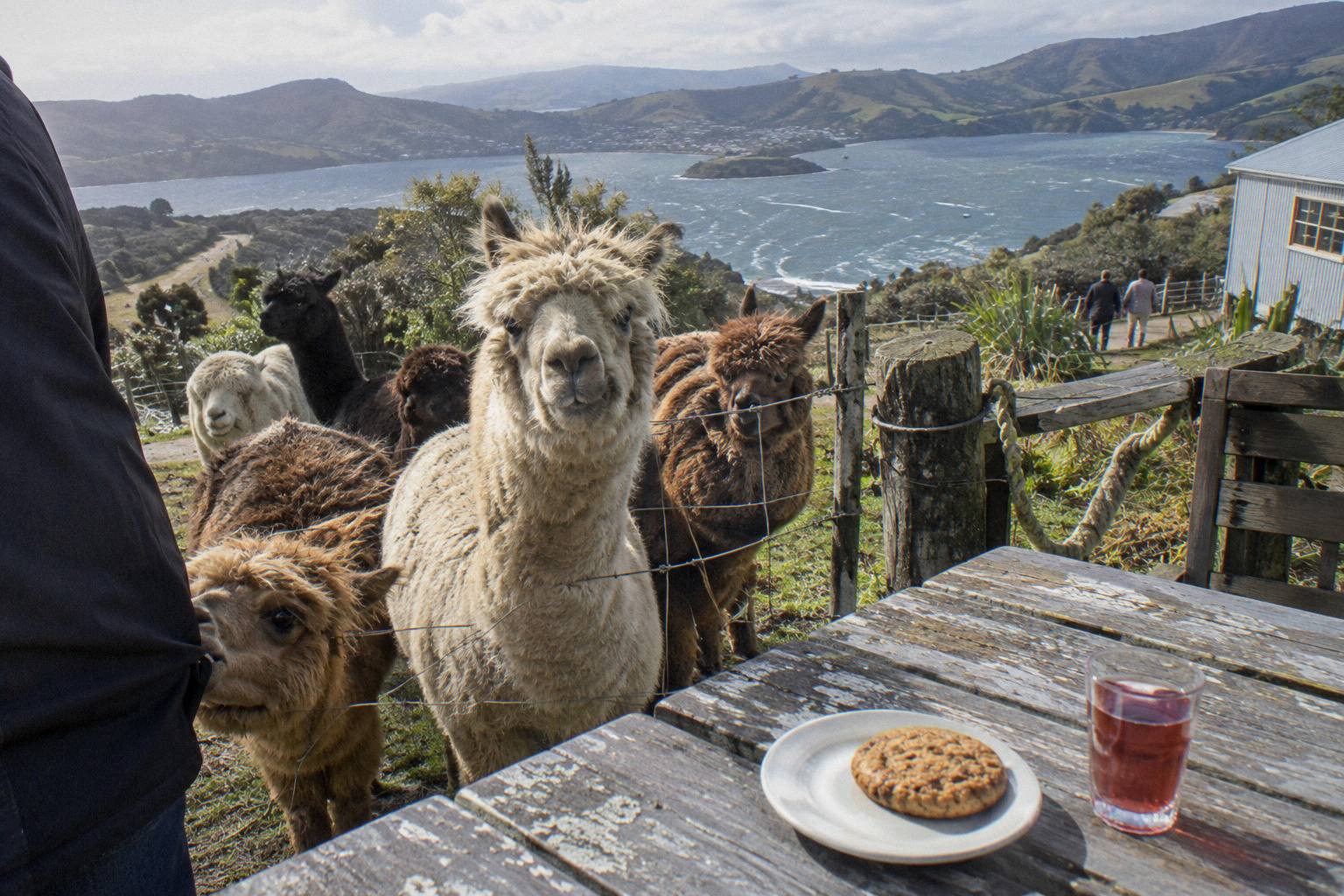
Can You Hold And Feed Alpacas In Akaroa?
Yes, you can feed alpacas in Akaroa on the Shamarra farm tour, which includes a walk through the herd and feeding the mothers with young. Holding is not part of the listed itinerary.
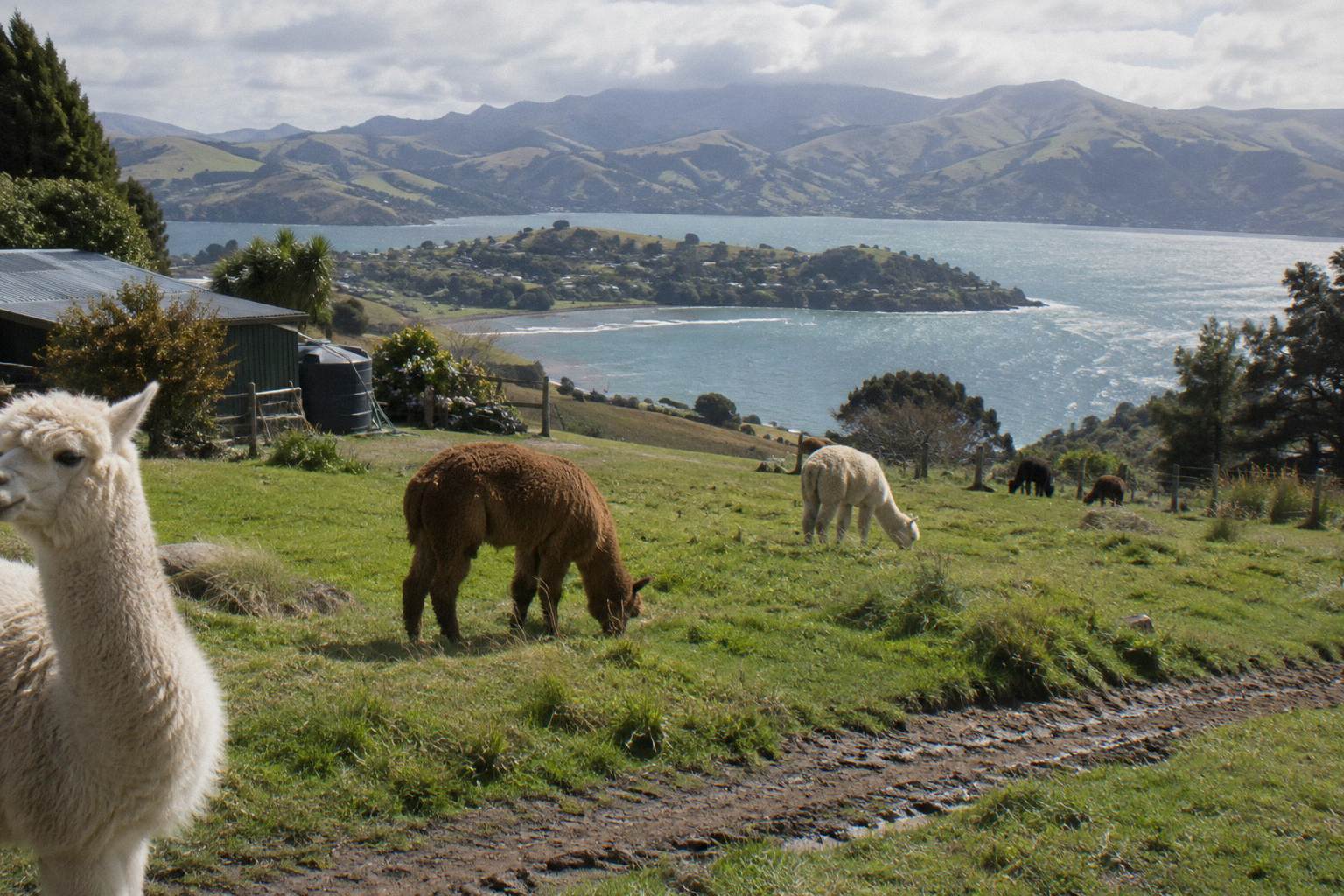
Yes, you can feed alpacas in Akaroa. The Shamarra Alpaca Farm Tour, about 20 minutes from Akaroa village at 328 Wainui Main Road, lists an opportunity to feed the mothers with young as part of its roughly 1 hour tour. Holding or cuddling an alpaca is not stated on the operator's page or the booking listing: if that matters to you, ask the operator directly before booking.
That is the short answer, and it splits neatly into two questions that are often assumed to be the same thing. Feeding is a designed part of the visit. Holding is not part of the published itinerary at all, which is different from being forbidden: the operator simply makes no promise about it either way, and the honest position is to say so rather than to fill the gap with a guess.
The farm itself is the only one in this area with its own official farm-tour page. Shamarra was founded in 2004 with 5 alpacas and now runs a herd of over 170, on a harbour-side property on the flanks of an extinct volcano on Banks Peninsula. Tours run at 11am, 1pm and 4pm, seven days a week, year round, and the farm is closed only on Christmas Day. Bookings are essential, which matters more than it sounds: a one-hour tour with fixed departure times fills up, especially in the cruise season when a ship's worth of passengers is ashore for the day.
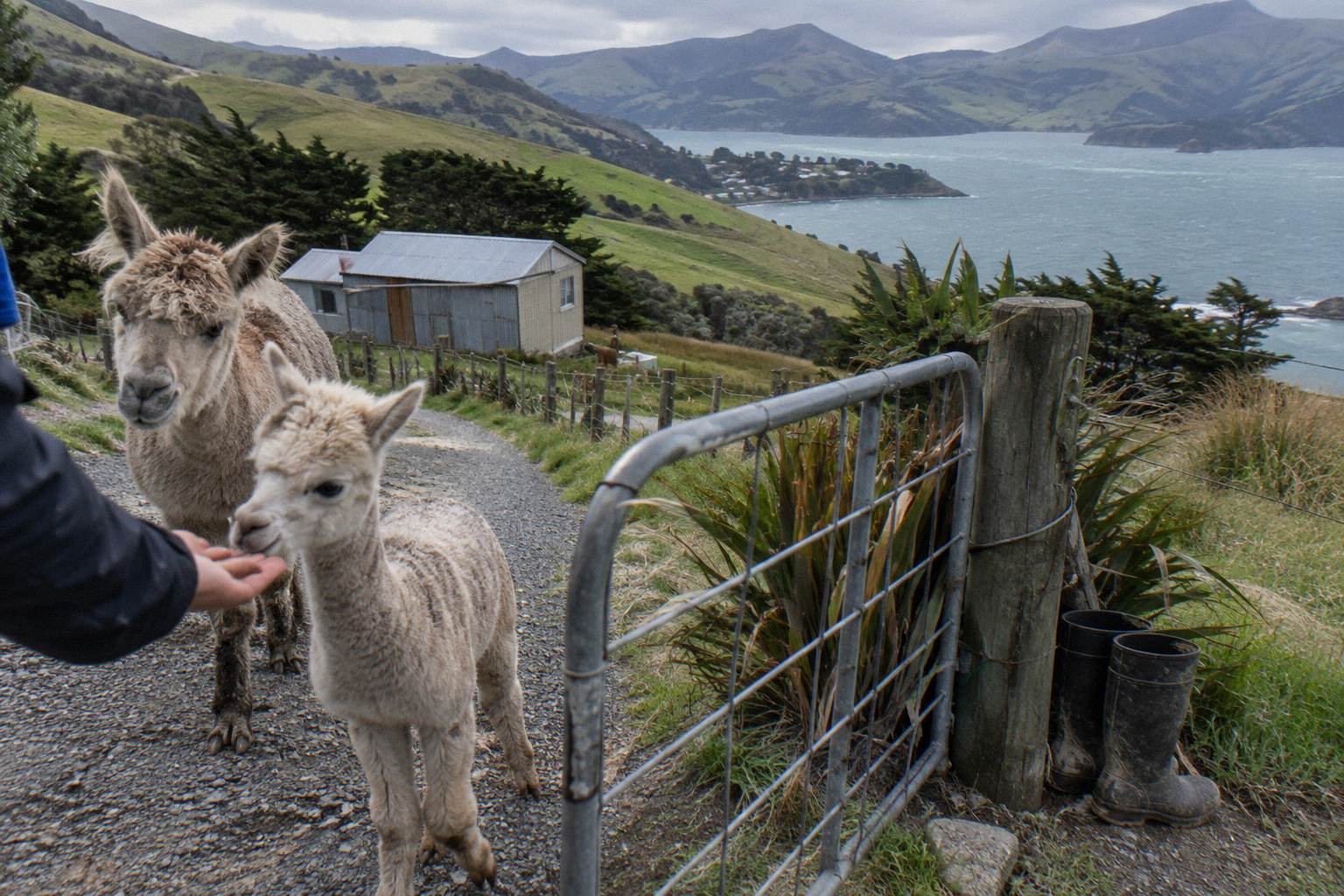
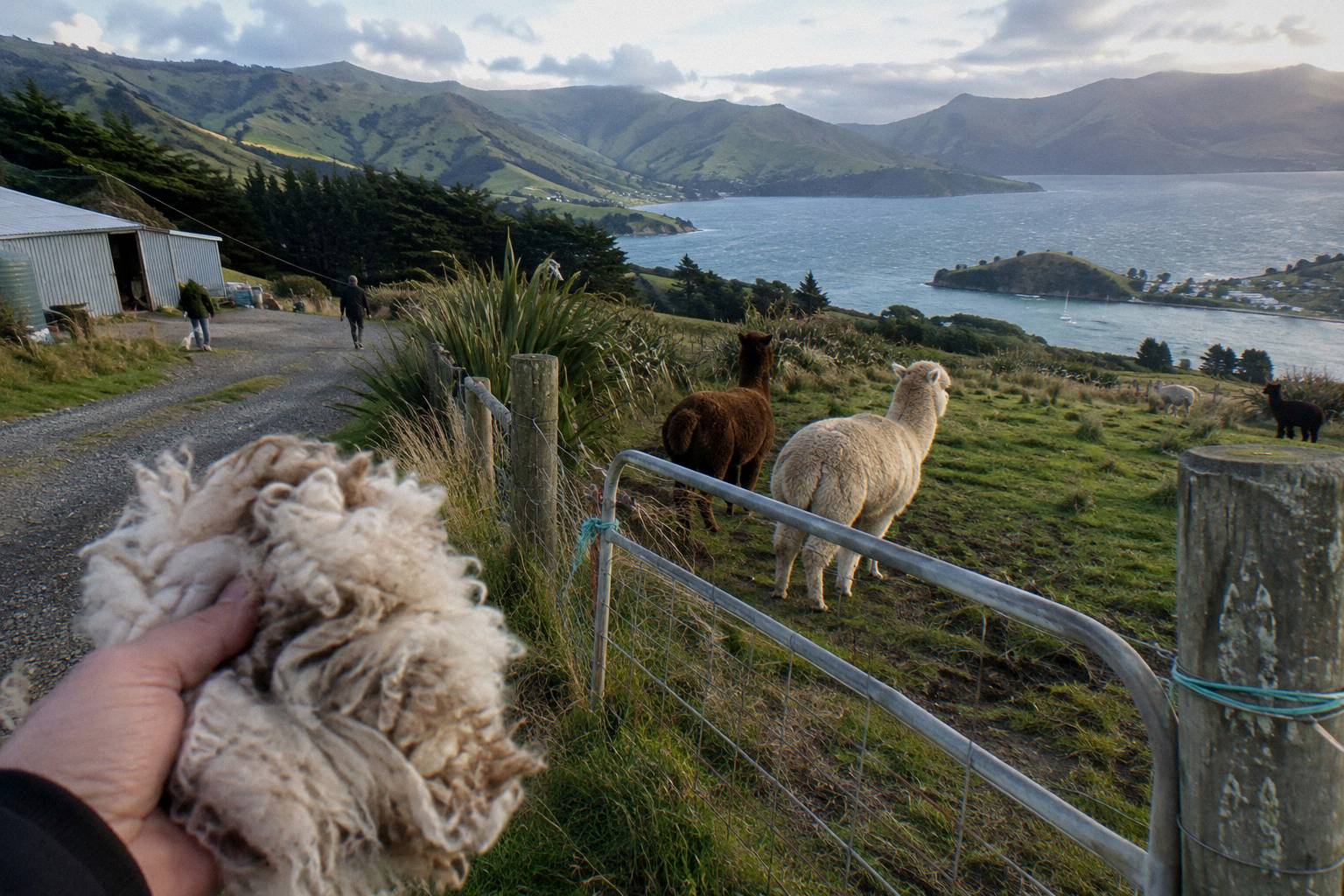
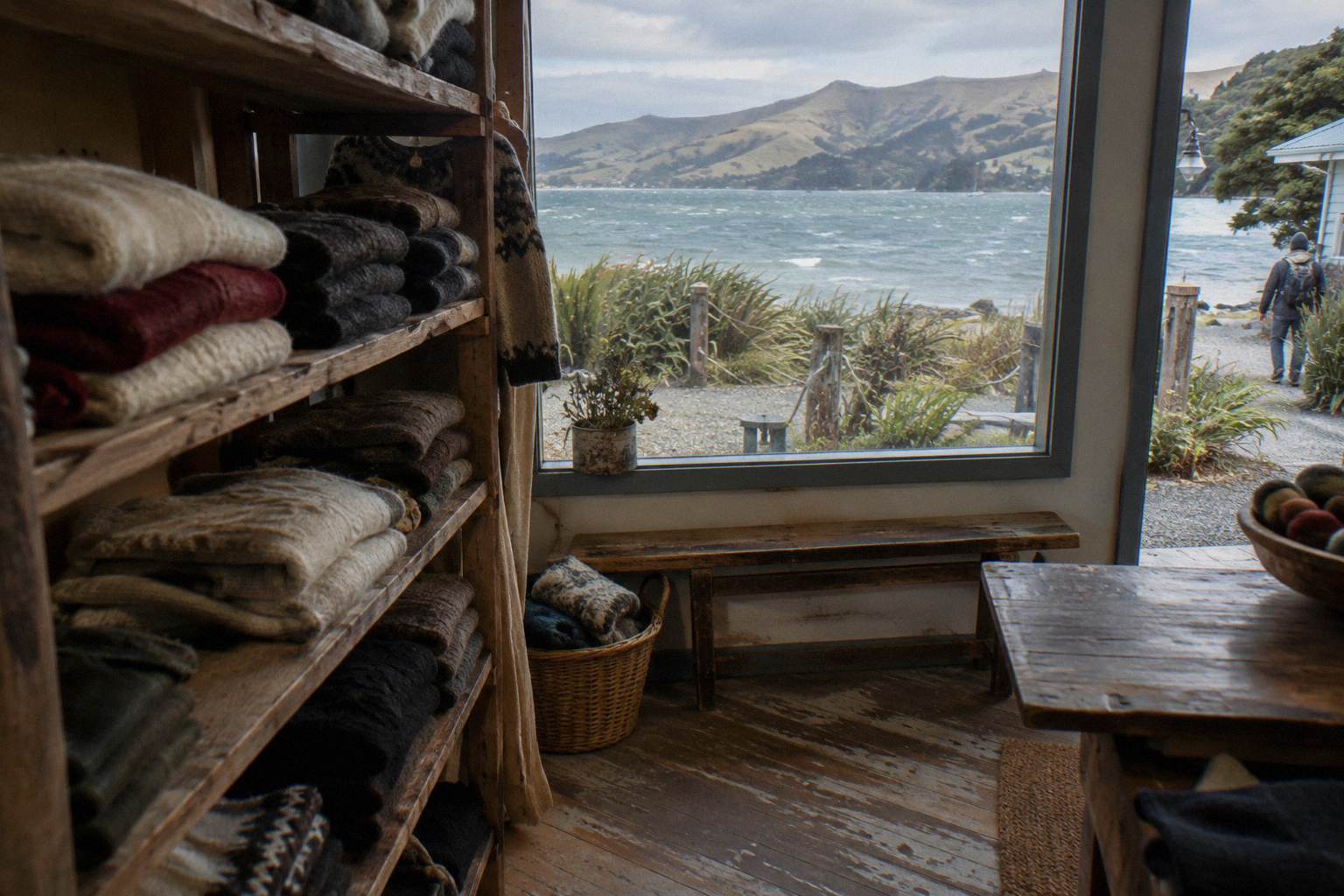
The published itinerary gives a clear shape to the hour. It starts with a brief introduction to alpacas, then a safety briefing from the operator's own guide, then award-winning fleece on display that you can feel, a walk through the herd, the feeding session with the mothers and their young, harbour views, and a beverage with a home-baked cookie at the end before the farm shop, which sells 100% dye-free New Zealand-made knitwear. Tours run in English or Mandarin.
If you are weighing this against the other animal encounters around Akaroa, these three visits cover the range: the alpaca farm itself, a full day trip from Christchurch that includes the farm stop, and a sheep-farm shore excursion built for cruise passengers.
For a broader look at what a farm visit around here can involve, our guide to what you can do on an Akaroa farm visit covers the full spread of activities, and the deeper question of why alpaca farm visits are worth the time is worth reading if you are on the fence.
What The Shamarra Tour Actually Includes, Hour By Hour
The booking listing for the tour includes entry to the farm, a guided tour, an opportunity to feed alpacas, a beverage and a home-baked cookie, and access to the farm shop. It does not include transport: no transfers are provided, so you self-drive to the farm gate or contact the operator about getting there.
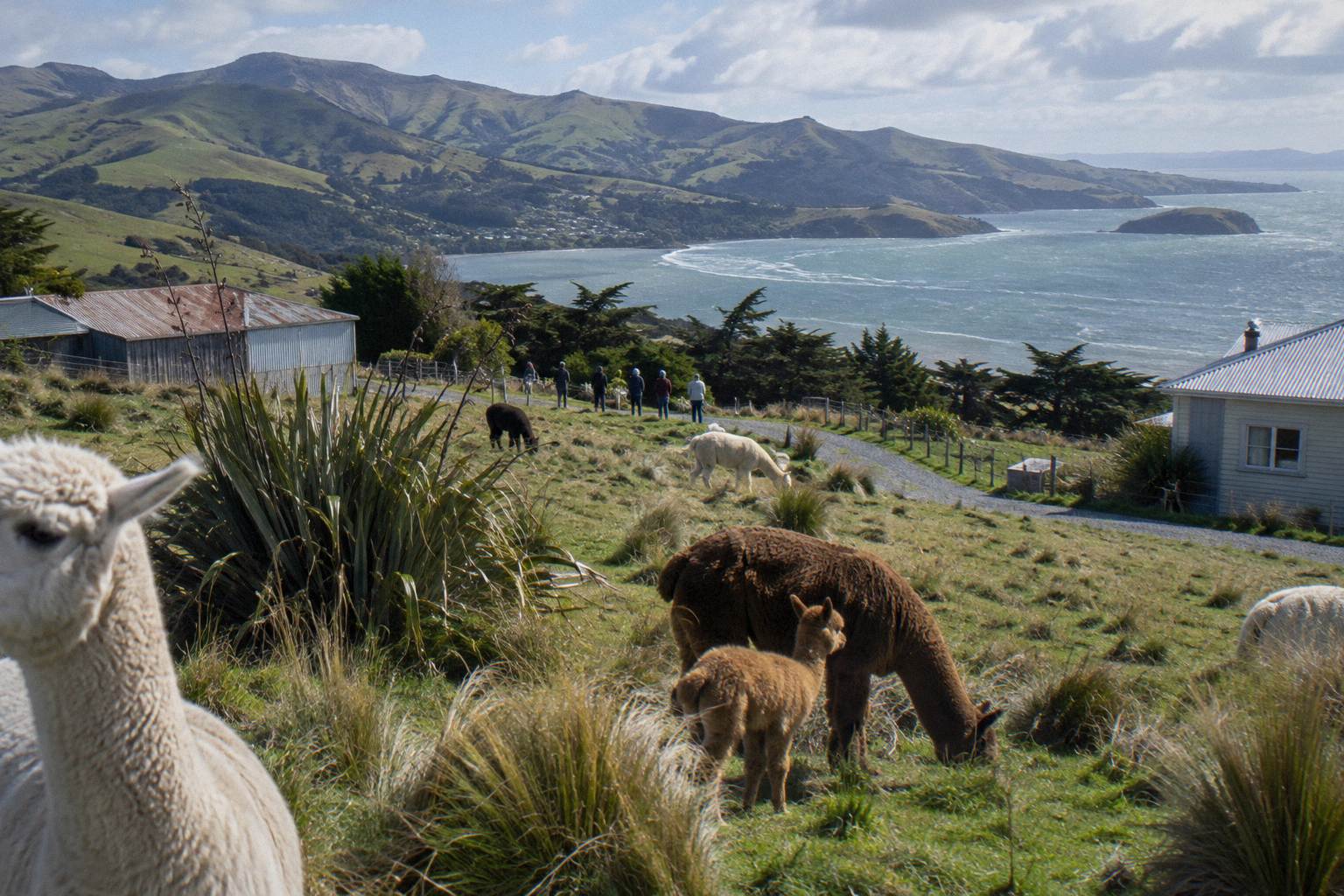
The value of a listing that itemises its inclusions is that you can check the promise against what you actually want. Feeding appears in black and white on both the operator's own itinerary ("feeding the mothers with young") and the booking listing ("opportunity to feed alpacas"). Notice the wording on the listing: an opportunity to feed, not a guarantee of how long the feeding lasts or which animals you will feed. The operator's own page is more specific, naming the mothers with their young as the group you feed, which is a deliberate choice: mothers with crias at foot are usually the most settled, most people-friendly animals in a herd, and the session is built around them.
Here is what the hour looks like against the operator's published itinerary:
| Stage of the tour | What happens | Stated by |
|---|---|---|
| Introduction | A brief intro to alpacas | Operator itinerary |
| Safety briefing | The operator's own briefing before contact | Operator itinerary |
| Fleece display | Award-winning fleece on display to feel | Operator itinerary |
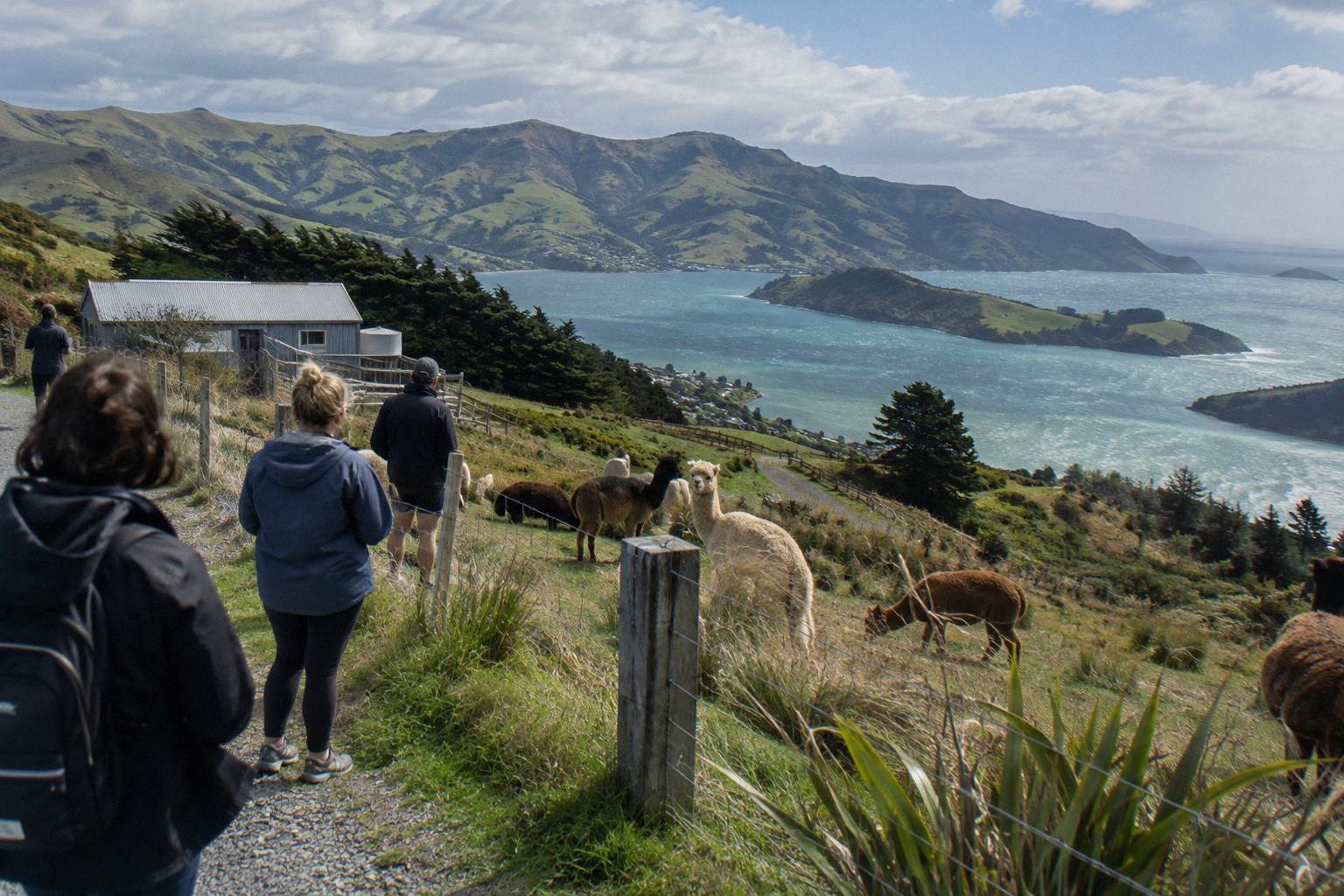
| Herd walk | A walk through the herd | Operator itinerary |
| Feeding | Feeding the mothers with young | Operator itinerary and booking listing |
| Views | Harbour views from the farm | Operator itinerary |
| Finish | Beverage and a home-baked cookie, then the shop | Operator itinerary and booking listing |
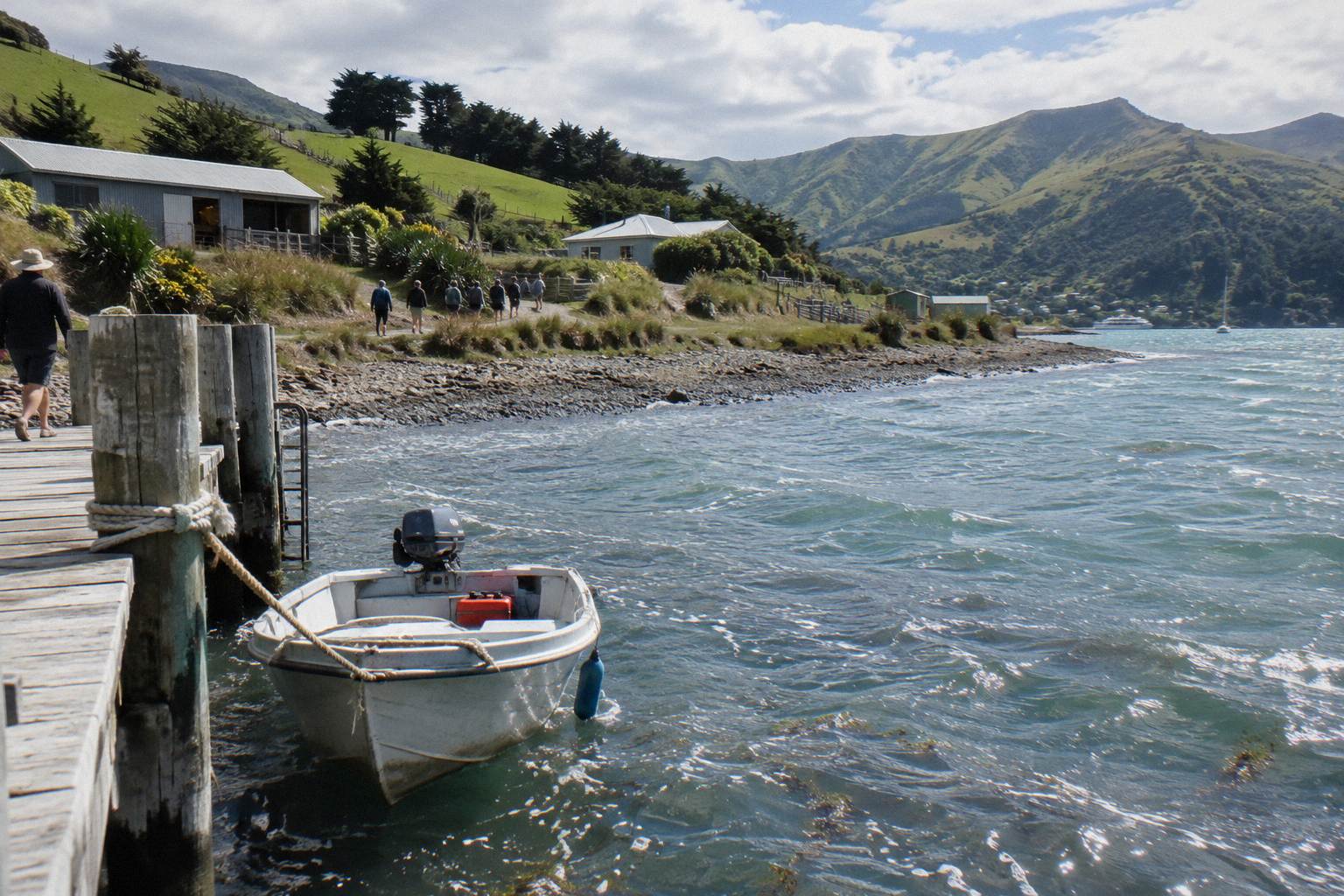
The farm sits on Wainui Main Road in French Farm, which the operator places about 20 minutes from Akaroa village and 73 km, just over an hour's drive, from Christchurch Central. Those two distances describe different journeys: the farm is on the northern side of the harbour, closer to Christchurch than the village is. If you are basing yourself in Akaroa township, budget a short drive each way on top of the hour on the farm.
Planning a visit raises a practical question we get often: how long an Akaroa farm visit takes end to end, and the answer for this one is refreshingly contained, about an hour on the farm plus travel.
If hands-on animal contact is the reason you are booking, this is the tour that delivers it.
One more inclusion worth flagging: the tour is wheelchair and pushchair accessible, per the booking listing, and you can cancel up to 24 hours in advance for a full refund. Those two policies remove most of the planning risk for families and for anyone with a pushchair in tow.
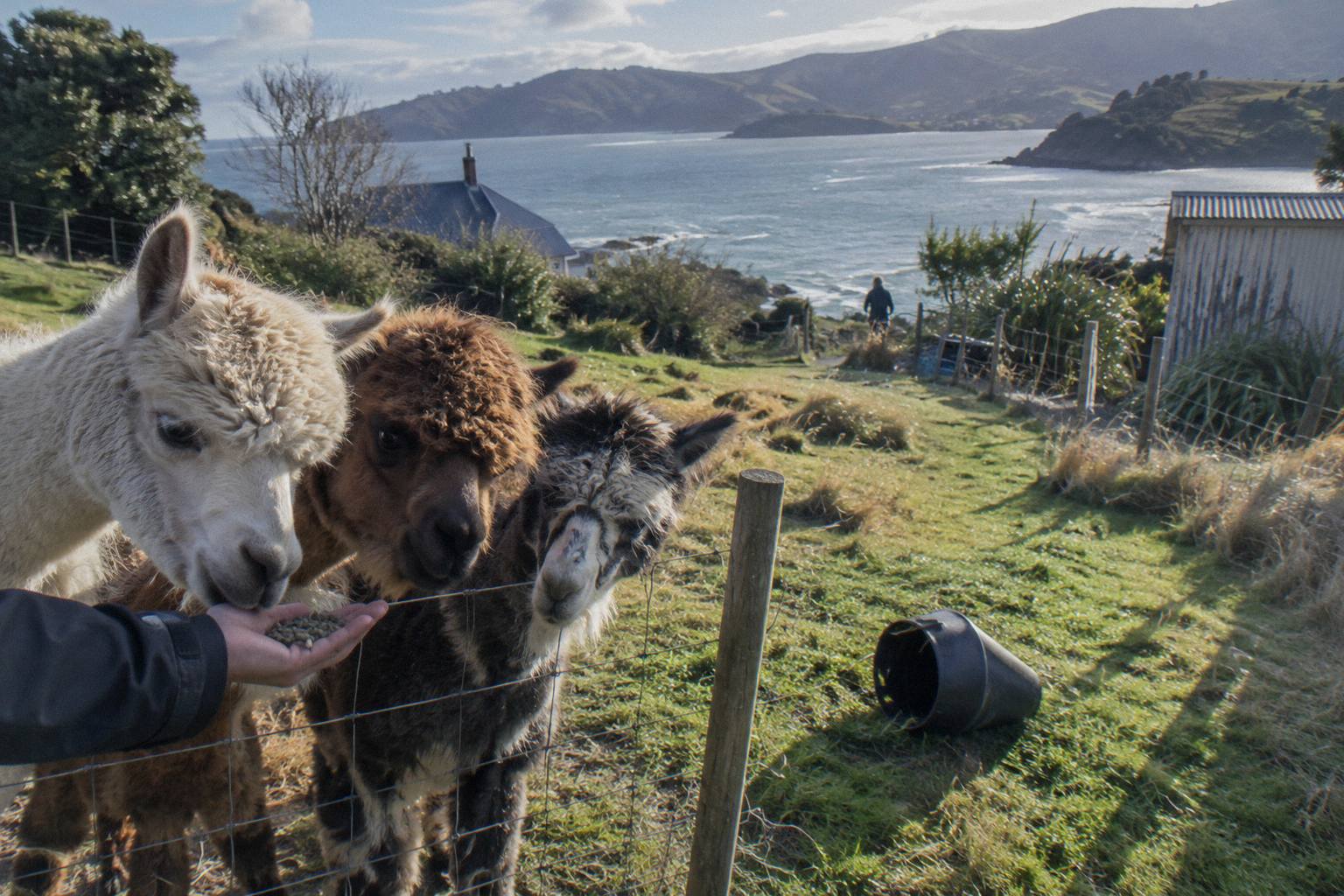
How The Feeding Session Works
Feeding happens inside the herd, on the operator's schedule, after a safety briefing. The operator's itinerary places it after the fleece display and the walk through the herd, with the mothers and their young as the animals being fed. The tour runs about 1 hour in total, so the feeding is a segment of that hour rather than the whole visit.
The sequence matters. By the time the feeding session arrives you will have walked through the herd, which lets the animals see you at a distance first. Alpacas are, by general references on the species, social herd animals that live in family groups, and a herd that has watched a group of visitors walk calmly through its paddock is a herd that is far more likely to approach open hands. The operator's design, walking first and feeding after, follows the logic of how camelids actually behave rather than rushing to the photo moment.
What you feed them and how the session is managed on the ground is the operator's to explain on the day; neither the official page nor the booking listing itemises the feed or the mechanics. That is a fair omission in a short itinerary, and it is the kind of detail the guide covers in the briefing. What is stated, plainly, is that the opportunity exists and that it is included in the ticket.
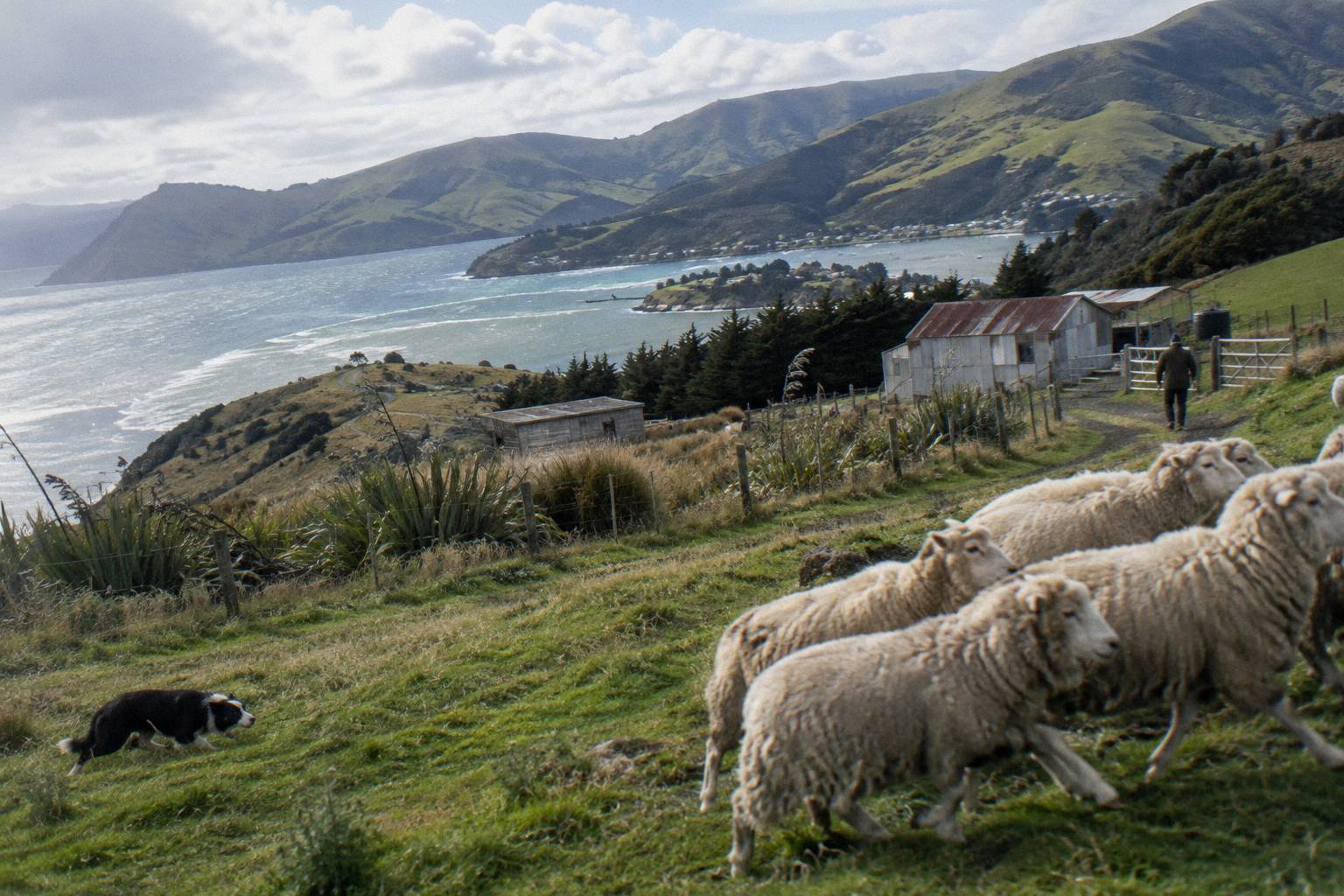
For families, the child pricing makes this one of the more affordable hands-on animal experiences in the region. The operator charges NZ$65 per adult, NZ$35 per child aged 3 to 15, and NZ$60 for NZ SuperGold cardholders, with the booking listing showing a from-price of US$36 per person on its own basis. Do not try to reconcile the two figures: they are quoted on different bases, and the operator's NZ$ prices are the ones to check against your own group. The tour is rated 4.9 from 139 reviews, a genuinely large review pool for a farm visit of this size.
Two questions families ask most often land outside what any listing here states. Whether under-3s are free, and how big each tour group is, are simply not stated by the operator or on the listing. Ask the operator before booking rather than assuming, because a gap in a listing is a gap, not a yes.
Do Alpacas Spit At Visitors?
General references on the species say alpacas can spit to show dominance when distressed, fearful or agitated, but not all alpacas spit, and spitting is mostly aimed at other alpacas, only occasionally at a human. Most give a warning first: blowing air out, raising the head, pinning the ears back. None of this is claimed about Shamarra's own animals; it is species background.
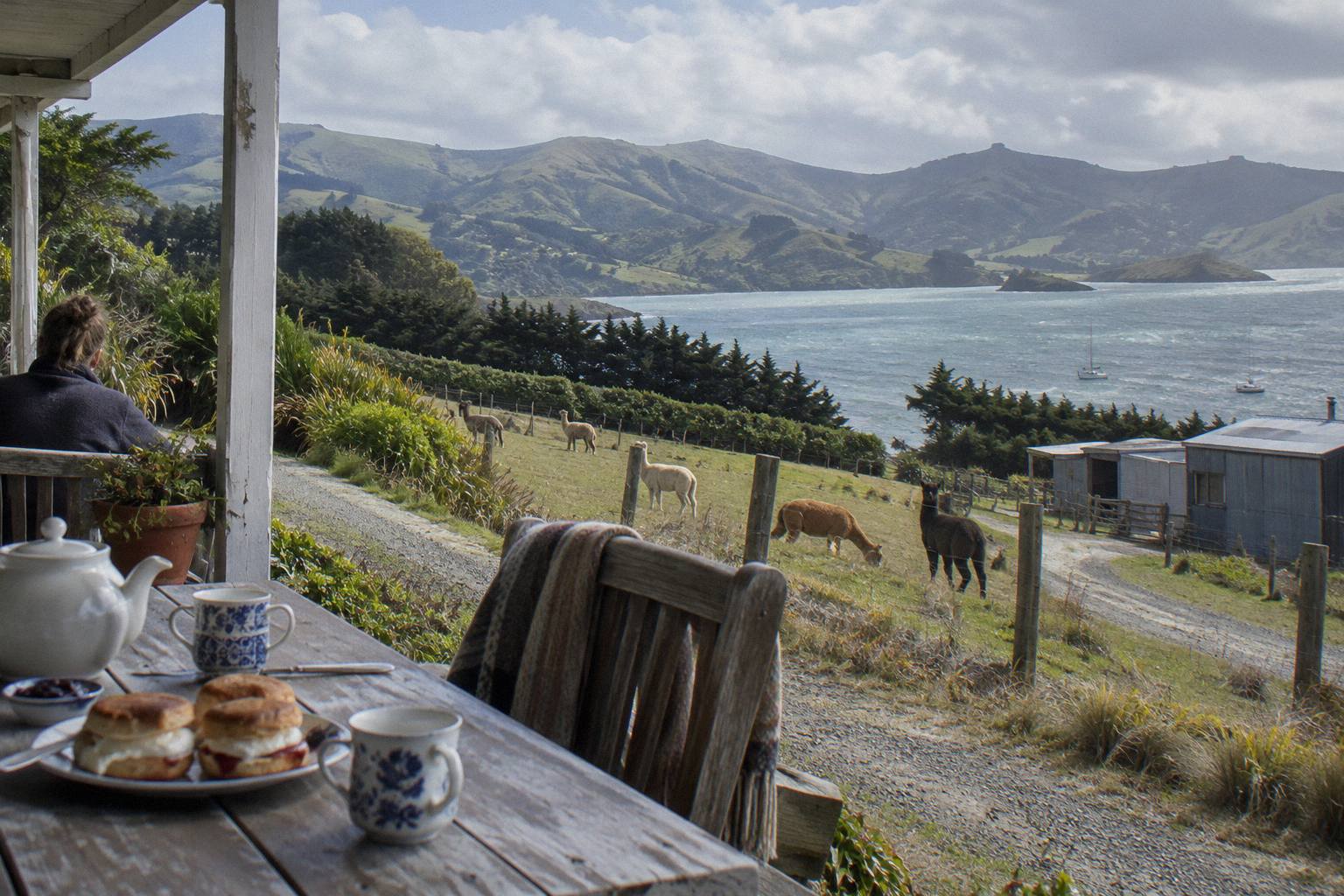
This is where the operator's safety briefing earns its place in the itinerary. Because alpacas communicate through body language, the useful skill on a farm visit is not avoiding alpacas but reading them, and that is exactly what a guide-led briefing is for. The published itinerary puts the briefing before any contact with the herd, which is the correct order: learn the signals, then walk in.
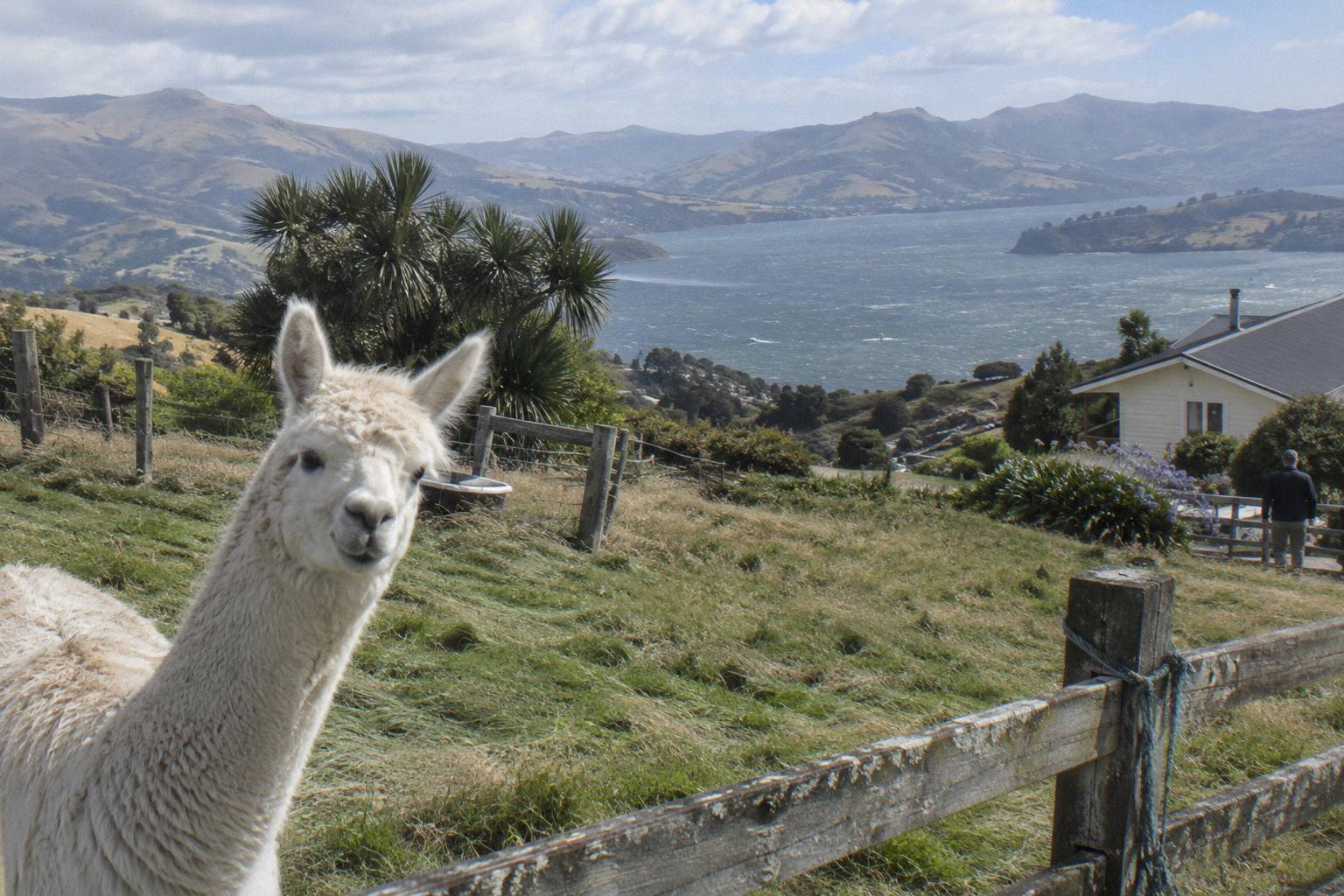
The general background on the species, from standard references on the alpaca, adds a few points that make a visit richer rather than scarier. There are two breeds, Huacaya with crimped fibre and Suri with straight locks, and the fleece display at Shamarra, award-winning fleece you can actually feel, is the moment those differences stop being vocabulary and start being something your hands understand. Alpacas are typically sheared once a year, in spring, and their fibre is used for knitted and woven items much like sheep's wool, which is the thread that runs from the paddock to the dye-free knitwear in the farm shop. They are also, the same references note, frequently confused with llamas.
If the spit question is what has you hesitating, we have written a full answer in whether alpacas spit at visitors, and the short version is reassuring: the behaviour exists, it is rare at humans, and the warning signs are visible seconds in advance to anyone who has been briefed.
Can You Hold An Alpaca? The Honest Gap In The Listing
Holding or cuddling an alpaca is not stated anywhere for the Akaroa farm tour: not on the operator's official page, not on the booking listing. The listed hands-on contact is feeding the mothers with young, feeling the fleece on display, and walking through the herd. If holding matters to you, ask the operator directly before you book.
This deserves its own section because it is the single most common assumption people bring to an alpaca farm visit. Somewhere between photographs of people hugging alpacas and the general cuddliness of the species, the idea takes root that a farm tour includes picking one up or cuddling one for a photo. On the evidence available here, that is not part of the published offer. The gap is real and we will not paper over it.
Saying "not stated" is a deliberate choice, and it is worth being clear about what it means. It does not mean holding is banned, and it does not mean it never happens on any farm anywhere. It means no source for this tour promises it, and an honest article does not convert an absence into an assurance in either direction. The correct action for a reader who wants it is simple: contact the operator and ask, before booking, whether any holding or cuddling is possible on the day of your visit. The operator's tour page carries full contact details.
There are good reasons farms are careful here, and they apply to any alpaca operation, not just this one. Alpacas are not lap animals; they are herd animals that read body language, and being lifted or restrained by a stranger is exactly the kind of situation the species background associates with distress. A farm that structures its contact around feeding, where the animal chooses to approach an open hand, is designing for both the animal's comfort and the visitor's safety. If a genuine hold-and-photograph experience exists anywhere in the region, it will be stated on that operator's own page, and the right way to find it is to look for the statement, not to hope.
The related question of booking logistics, covered in full in whether you need to book an Akaroa farm visit in advance, matters here too: if you are asking the operator a question before you go, ask it early enough that the 11am, 1pm or 4pm slot you want is still open when the answer comes back.
Booking, Prices And Timing: The Practical Picture
Tours run at 11am, 1pm and 4pm, seven days a week, year round, closed Christmas Day, and bookings are essential. Operator prices are NZ$65 per adult, NZ$35 per child aged 3 to 15, and NZ$60 NZ SuperGold; the booking listing shows a from-price of US$36 per person. Cancel up to 24 hours in advance for a full refund.
Pulling the practical facts into one place makes the decision easier, especially for visitors building a day around the visit:
| Detail | Stated position |
|---|---|
| Tour length | About 1 hour |
| Departure times | 11am, 1pm and 4pm, 7 days a week |
| Opening | Year round, closed Christmas Day, bookings essential |
| Operator prices | NZ$65 adult, NZ$35 child (3 to 15), NZ$60 NZ SuperGold |
| Listing from-price | US$36 per person (a from-price on the listing's own basis) |
| Cancellation | Cancel up to 24 hours in advance for a full refund |
| Accessibility | Wheelchair and pushchair accessible |
| Transport | None provided; self-drive or contact the operator |
| Languages | English or Mandarin |
The no-transport point is the one that catches visitors out. The farm is at 328 Wainui Main Road, French Farm, and neither the operator nor the listing provides transfers. If you are staying in Akaroa village, it is about a 20-minute drive; if you are relying on the coach services from Christchurch, which arrive in the village rather than at the farm gate, you will need a plan for that last leg. The official visitor site for the region, akaroa.com's maps and planning page, is the source for the 75 km, roughly 90-minute drive from Christchurch along State Highway 75, and for the coach operators that serve the route. Note the last petrol before Akaroa is at Little River, which matters more than you would expect on a peninsula with long gaps between towns.
For cruise passengers the arithmetic is tighter but workable, and we cover it properly in whether cruise passengers have time for an Akaroa farm visit. The one detail to get right ashore is where you land: tenders currently use Drummond's Jetty while the Main Wharf is rebuilt, not the main wharf itself. The New Zealand Cruise Association's Akaroa port page tracks that arrangement, which is expected to hold into the 2027/28 season.
Two Other Ways To Reach The Same Alpacas
Two other tours on this site include a farm element alongside the alpaca visit or as an alternative to it. A private full-day trip from Christchurch lists the Shamarra farm as one of its stops, and a 2.5-hour shore excursion runs a sheep-shearing demonstration with afternoon tea for cruise days. Neither is the same product as the one-hour farm tour itself.
The full-day option deserves a careful read rather than a hopeful one. The full day Akaroa day trip from Christchurch is a private group of about 8 hours with pickup at your Christchurch accommodation, a Banks Peninsula scenic drive, the Shamarra farm stop, free time in Akaroa, and a small-group harbour and dolphin cruise. It shows a from-price of US$165 per person, with a minimum booking equivalent to four adult fares, and it is a new listing with no rating yet. The detail that matters: the booking page lists tour activity costs as excluded, so never assume the farm admission or the cruise fare is inside that number. Check what is covered before you book.
For cruise passengers whose time ashore is measured in hours, the sheep-farm alternative takes a different shape. The Akaroa Harbour And Sheep Farm Shore Excursion runs about 2.5 hours from 2:00pm, meets at the Britomart Cannon on the Akaroa waterfront beside the i-SITE, and takes a shared group of up to 22 to Coombe Farm for a sheep shearing demonstration, sheepdog work and afternoon tea, with stops at Akaroa Harbour, Hilltop Tavern and Barrys Bay Cheese along the way. It is rated 4.5 from 11 reviews, a small review base, and lists a from-price of US$65.90 per person. It has no alpaca contact at all: it is the sheep-farm choice, not a substitute for the alpaca feeding.
The comparison between the two farm types is worth making deliberately rather than by accident, and our guide to choosing between the alpaca farm and the sheep farm in Akaroa walks through it: one is an hour of hands-on feeding with a herd of over 170 animals, the other is a demonstration of working farm skills with afternoon tea. Families with young children usually land on the alpacas; visitors curious about farming as a trade often prefer the shearing and dog work. Neither is the wrong answer.
For anyone still assembling the wider picture, Akaroa Farm Tour exists to keep these distinctions straight across every visit on the peninsula, because the difference between a listed inclusion and a hopeful assumption is exactly the difference between a good day out and a disappointing one.
Common Questions About Holding And Feeding Alpacas In Akaroa
Can You Hold And Feed Alpacas In Akaroa?
Yes to feeding: the Shamarra Alpaca Farm Tour lists an opportunity to feed the mothers with young, alongside a walk through the herd and fleece you can feel. Holding or cuddling is not stated on the operator's page or the booking listing, so ask the operator directly if that is what you are hoping for.
Can I Feed The Alpacas On The Shamarra Tour?
Yes. Feeding is a listed inclusion on the booking listing and appears on the operator's own itinerary as feeding the mothers with young, placed after the safety briefing, the fleece display and the herd walk.
Do Alpacas Spit At People?
General references on the species say all alpacas are capable of spitting but most spit at other alpacas, only occasionally at a human, and most give a visible warning first by blowing air out, raising the head or pinning the ears back. This is species background, not a claim about any particular farm's animals.
How Much Does The Alpaca Farm Tour Cost?
The operator charges NZ$65 per adult, NZ$35 per child aged 3 to 15 and NZ$60 for NZ SuperGold cardholders. The booking listing separately shows a from-price of US$36 per person on its own basis.
Is Transport To The Alpaca Farm Included?
No. No transport is provided by the operator or the listing. The farm is at 328 Wainui Main Road, French Farm, about 20 minutes' drive from Akaroa village, so you self-drive or contact the operator about options.
Can I Cancel The Alpaca Tour If My Plans Change?
Yes, up to 24 hours in advance for a full refund, per the booking listing. Inside that window the operator's own terms apply, so if you are booking around a cruise schedule, leave margin for the ship timetable.